
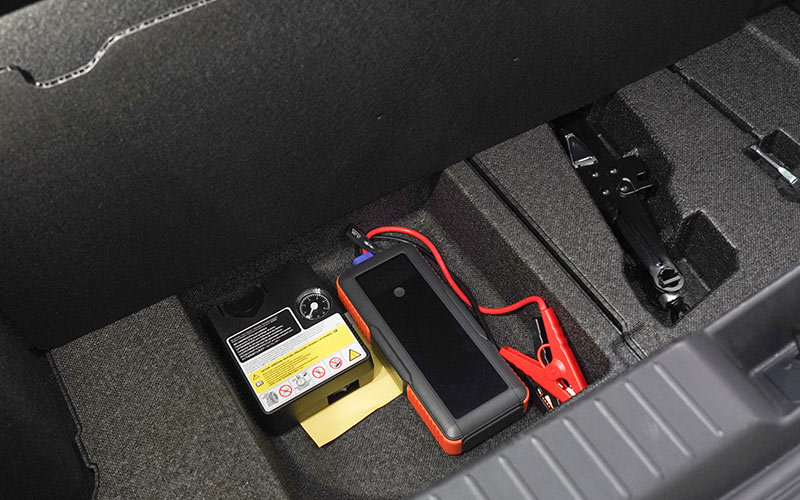
Portable jump starters have become increasingly popular as a reliable solution for unexpected battery failures. Many drivers now keep one in their vehicle at all times. While convenient, improper in-car storage can pose potential risks. This article explains the benefits of carrying a jump starter, why in-vehicle storage can be dangerous, and how to store it safely.
Benefits of Keeping a Jump Starter in Your Car
A jump starter is a portable power unit that allows drivers to restart a dead battery without relying on another vehicle. Modern models are compact, lightweight, and easy to store.
- Immediate response during emergencies
Drivers can restart their car without waiting for roadside assistance. - Useful as a mobile power bank
Many devices support USB charging, providing power during outdoor activities or emergencies.
Why In-Vehicle Storage Can Be Dangerous
Storing a jump starter inside your car requires attention to temperature fluctuations. Extreme heat or cold can damage the unit or create safety hazards.
High Temperatures: Risk of Battery Degradation and Fire
Most jump starters use lithium-ion batteries, which are sensitive to heat.
In summer, a car’s interior can exceed 60°C (140°F), leading to:
- Battery swelling
- Significant performance degradation
- In rare cases, fire or explosion
Low Temperatures: Reduced Output in Winter
In freezing conditions, lithium-ion batteries may lose performance.
This can result in the jump starter failing to deliver enough power to start your engine when you need it most.
How to Safely Store a Jump Starter in Your Vehicle
1. Keep it away from direct sunlight
Store it in the glovebox, center console, or under the seat where temperature changes are less severe.
2. Avoid long-term storage in extreme seasons
During peak summer or winter, keep your jump starter indoors when it’s not needed.
Bring it into the car only for long drives or planned road trips.
3. Check and recharge regularly
Jump starters naturally lose charge over time.
Recharging once a month helps maintain optimal performance.
4. Use a heat-resistant protective case
A durable, insulated case minimizes temperature impact and protects the device from shocks or impacts.
Conclusion: Useful but Requires Proper Storage
A jump starter is an essential safety tool for any driver, but improper in-car storage can be dangerous.
Understanding the risks—especially related to heat and cold—allows you to use and store your device safely and effectively.
By following the right storage practices, you can rely on your jump starter when unexpected battery issues arise.