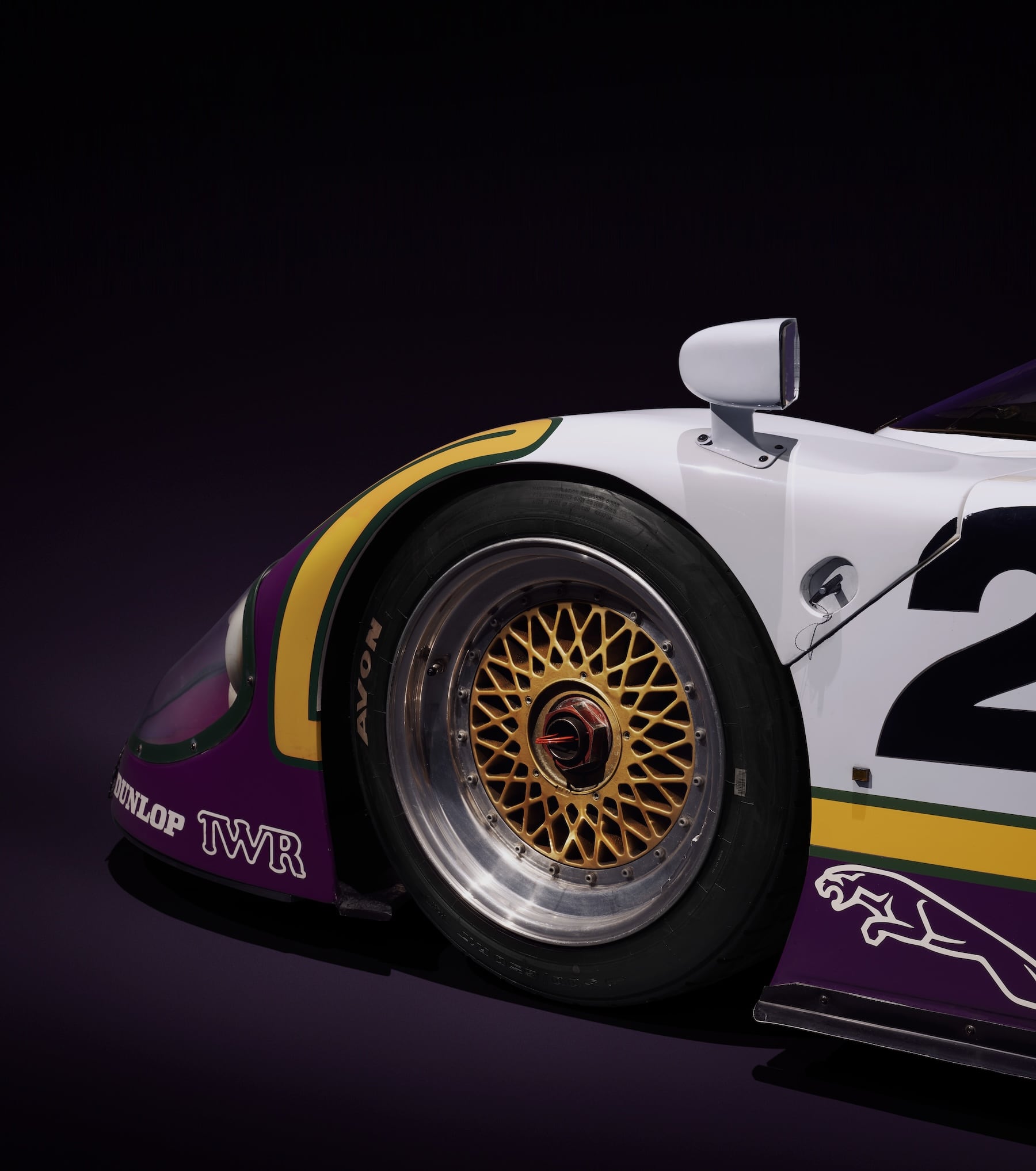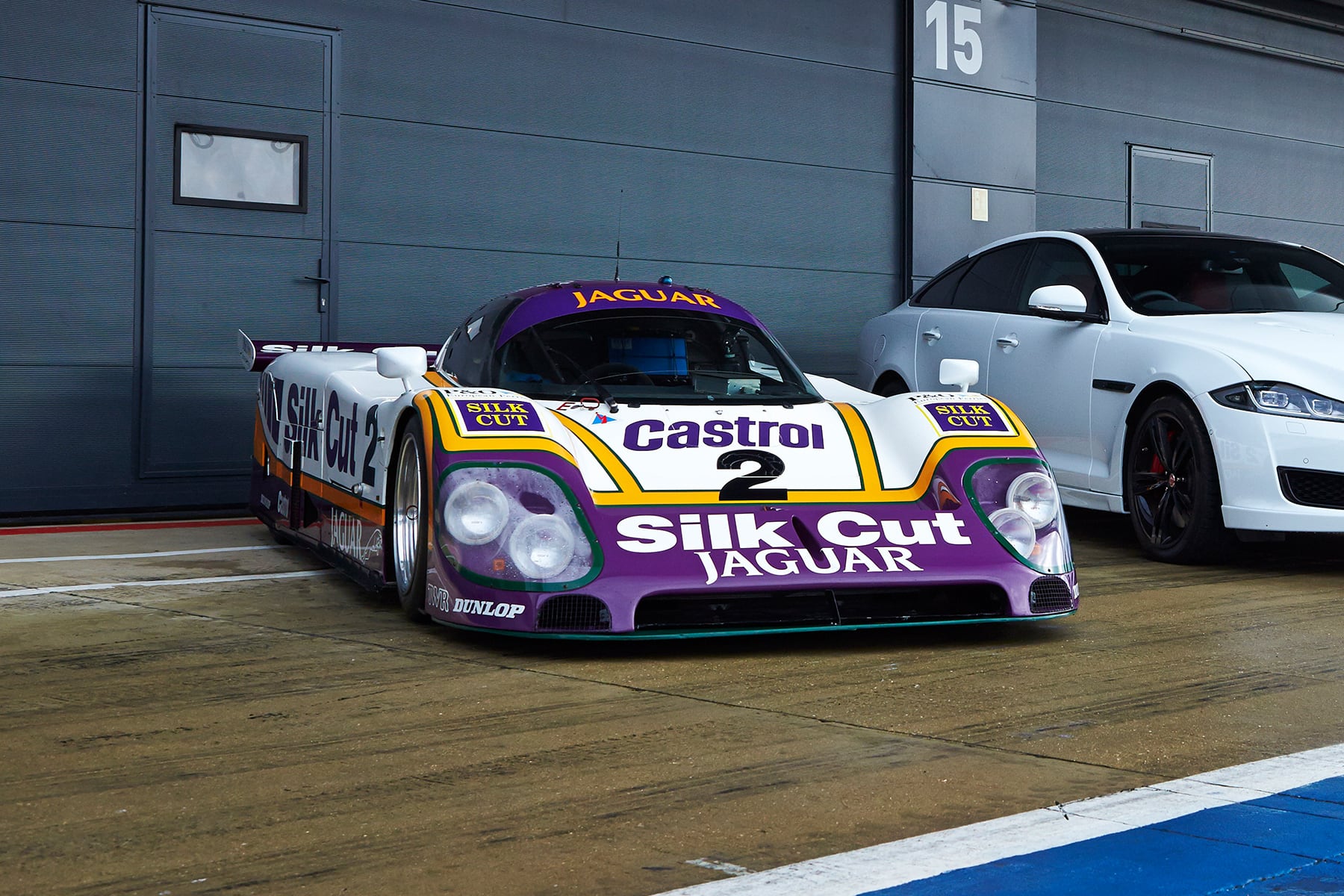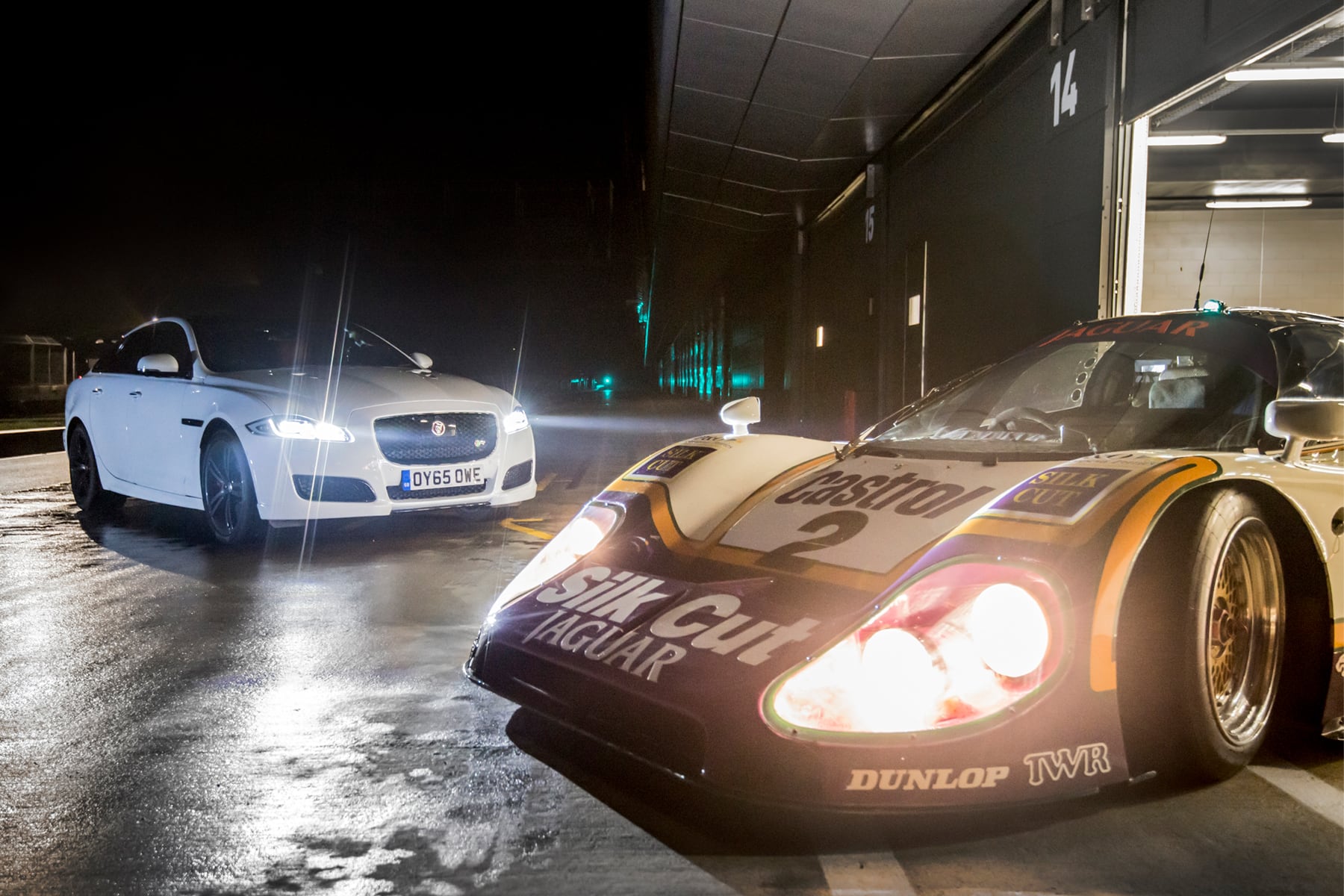
In June 1988, at the Circuit de la Sarthe in France, a Jaguar sports prototype wearing the distinctive purple and white Silk Cut livery brought an end to one of the most dominant eras in endurance racing. The car was the Jaguar XJR-9 LM, a Group C prototype powered by a naturally aspirated 7.0-litre V12 engine. Its victory at the 1988 24 Hours of Le Mans gave Jaguar its first overall win at the legendary endurance race in 31 years.
Designed by Tony Southgate and developed by Tom Walkinshaw Racing (TWR), the XJR-9 LM represented the convergence of Jaguar’s traditional V12 heritage and the advanced engineering of the Group C era. More than a successful racing car, it remains one of the defining machines of Jaguar’s motorsport history.
The XJR-9: An Evolution of the Group C Prototype
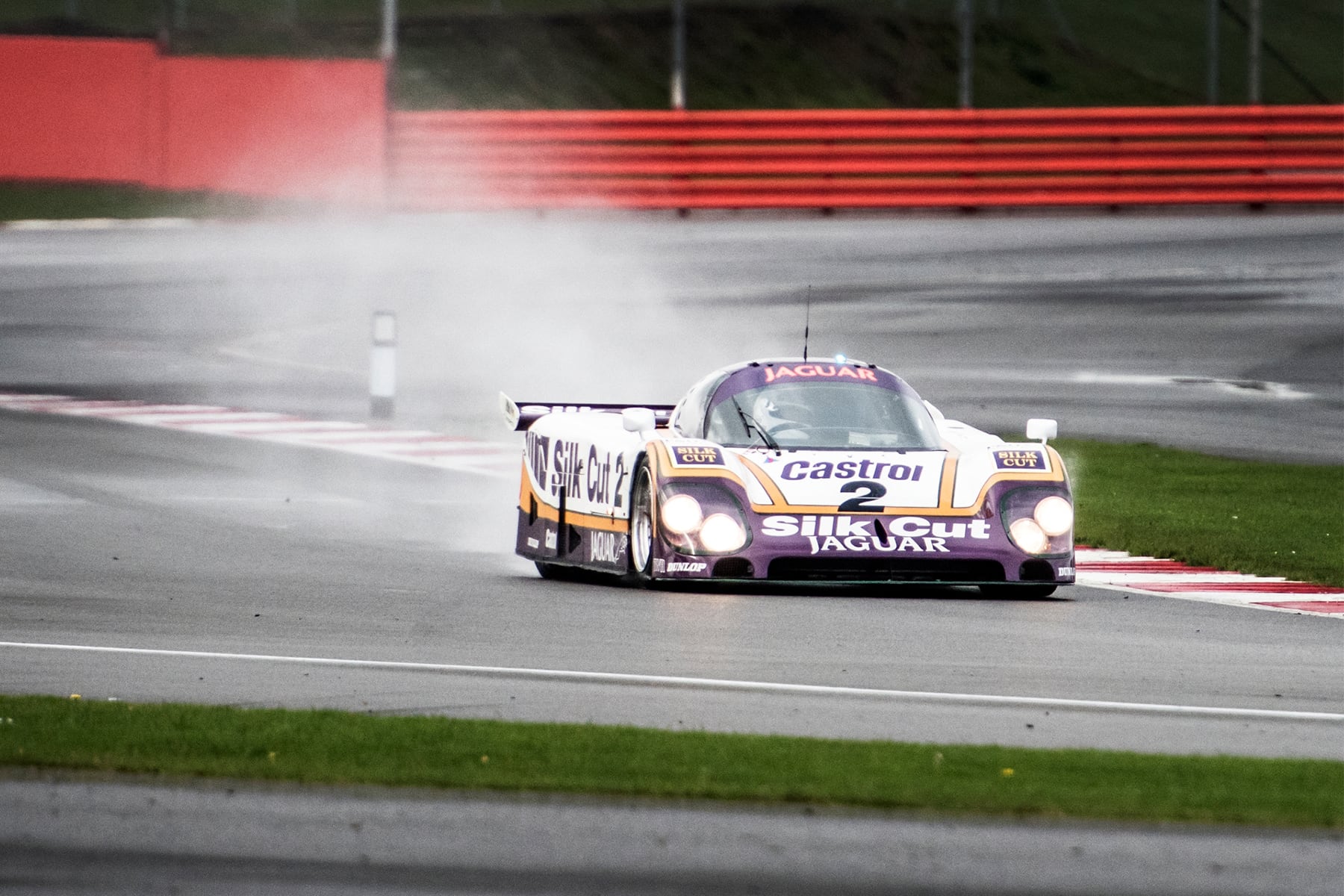
The Jaguar XJR-9 was developed for competition in the FIA World Sports-Prototype Championship (WSPC) and North America’s IMSA Camel GTP series. Making its racing debut at the 1988 24 Hours of Daytona, it was engineered to compete across two very different endurance racing environments.
The design was led by Tony Southgate, an accomplished engineer with experience in Formula One and sports car racing. Construction and competition operations were entrusted to Tom Walkinshaw Racing, led by team principal Tom Walkinshaw.
The XJR-9 was the next step in a development programme that had produced the XJR-6 in 1986 and the championship-winning XJR-8 in 1987. Through the successive generations of the XJR series, Jaguar and TWR had steadily refined their approach to Group C competition. The XJR-9 represented the programme reaching a new level of maturity.
At the heart of the car was an engine configuration closely associated with Jaguar’s identity: a V12. Derived from the 5.3-litre V12 used in production models such as the Jaguar XJS, the racing engine was enlarged to 7.0 litres and extensively developed for competition. In its 7.0-litre configuration, it produced approximately 750 bhp.
At a time when turbocharged engines were becoming increasingly dominant in Group C, Jaguar remained committed to a large-capacity, naturally aspirated V12. Its displacement, power delivery and unmistakable exhaust note gave the XJR-9 a character distinctly different from many of its rivals.
The XJR-9 LM: Aerodynamics Developed for Le Mans
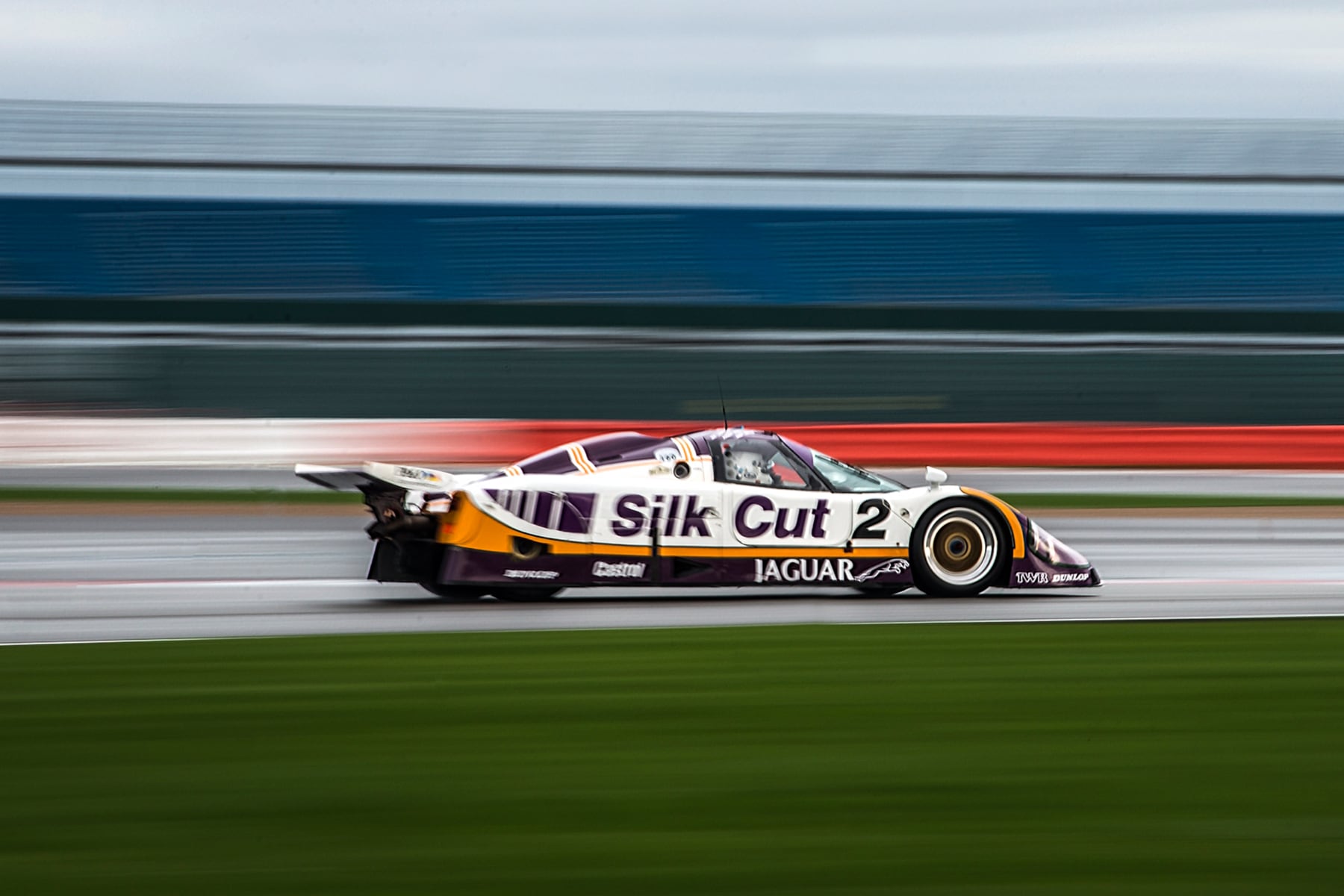
The XJR-9 was built in different configurations to suit the demands of its respective championships and circuits. Among them was the XJR-9 LM, a specialised version developed specifically for the 24 Hours of Le Mans in 1988.
As its designation suggests, the LM specification was tailored to the unique demands of the Circuit de la Sarthe. One of the circuit’s defining features was the Mulsanne Straight, an exceptionally long stretch where aerodynamic efficiency and outright speed played a decisive role.
Achieving high downforce was important, but it could not come at the expense of excessive aerodynamic drag. To maximise straight-line performance, the XJR-9 LM adopted a dedicated low-drag aerodynamic package, distinct from the configuration used on shorter circuits.
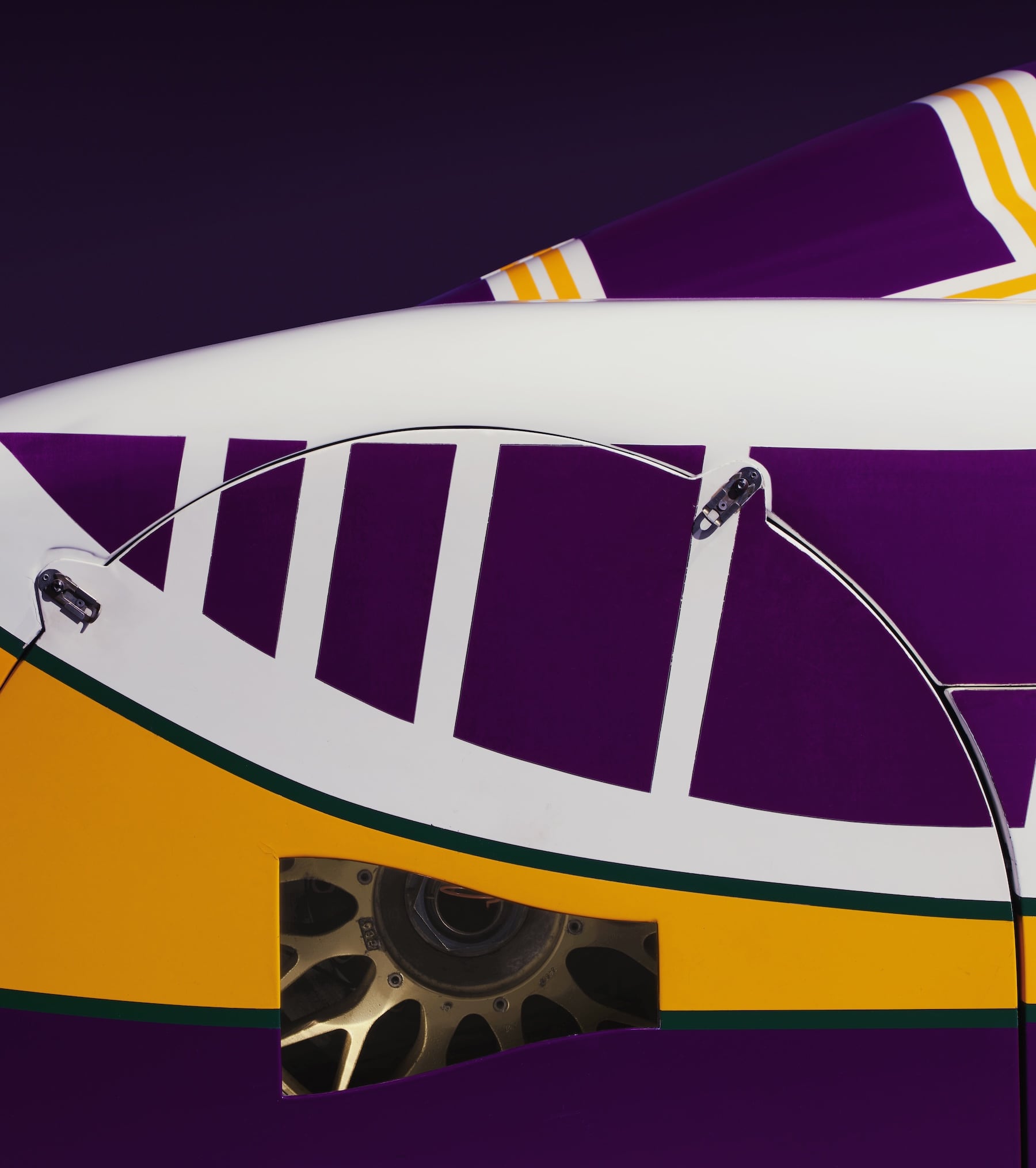
The package incorporated a lower rear spoiler and revised bodywork designed to reduce resistance through the air. The objective was straightforward: allow the car to reach and sustain higher speeds along the Mulsanne Straight while retaining the stability required for endurance racing.
This was more than an exercise in outright top speed. At Le Mans, aerodynamic efficiency had a direct influence on fuel consumption, tyre loads and the overall demands placed on the car throughout a full 24-hour race. The XJR-9 LM was therefore an expression of a broader engineering philosophy: adapting the entire car to the particular characteristics of the circuit.
1988: Jaguar Ends Porsche’s Seven-Year Le Mans Reign
The 1988 edition of the 24 Hours of Le Mans became one of the defining encounters between Jaguar and Porsche.
Porsche had dominated the event from 1981 through 1987, securing seven consecutive overall victories with its 956 and 962C prototypes. Heading into the 1988 race, the German manufacturer remained the benchmark, with its cars occupying the leading positions in qualifying.
Jaguar, meanwhile, arrived with five XJR-9 LM entries prepared by TWR. Finished in the unmistakable purple and white Silk Cut livery, the British prototypes faced a formidable challenge against the established Porsche works team.
Although Porsche proved particularly strong in qualifying, Jaguar demonstrated impressive pace during the race itself. Among the five entries, the number 2 car, driven by Jan Lammers, Johnny Dumfries and Andy Wallace, became the focal point of the contest.
Over the course of 24 hours, the trio completed 394 laps, covering approximately 5,333 kilometres. The Jaguar crossed the finish line in first place, 2 minutes and 36 seconds ahead of the second-placed Porsche 962C.
One of the most memorable details of the race came during its closing stages. Jan Lammers encountered clutch-related problems and had to preserve the car by keeping it in fourth gear. Despite the mechanical difficulty, the Jaguar remained in contention and made it to the chequered flag.
The result brought Porsche’s seven-year winning streak at Le Mans to an end. For Jaguar, it was the first overall victory at the event since the D-Type’s success in 1957, marking a remarkable return to the top of the endurance racing world after 31 years.
A Championship-Winning Season in 1988
The XJR-9’s achievements extended far beyond its triumph at Le Mans.
In the 1988 FIA World Sports-Prototype Championship, Jaguar secured six victories with the XJR-9 and claimed the team title. Martin Brundle also won the drivers’ championship, giving Jaguar a double championship success.
The car proved competitive in North America as well. In the IMSA Camel GTP series, the XJR-9 made a winning debut at the 1988 24 Hours of Daytona and secured another victory at the season finale in Del Mar.
Success on both sides of the Atlantic demonstrated the versatility of the XJR-9 platform. Whether competing in the European World Sports-Prototype Championship or the North American IMSA GTP series, it established itself as one of the leading endurance racing prototypes of its generation.
With its naturally aspirated V12, sophisticated aerodynamics and carefully developed chassis, the XJR-9 combined traditional Jaguar engineering character with the demands of contemporary prototype racing.
A Defining V12 Chapter in Jaguar Motorsport History
The 24 Hours of Le Mans has long been central to Jaguar’s motorsport identity. During the 1950s, the C-Type and D-Type established the marque as one of the leading names in international sports car racing, securing a series of victories at the Circuit de la Sarthe.
Following the D-Type’s final overall victory in 1957, however, Jaguar spent three decades away from the top step of the Le Mans podium. The marque’s return to the forefront of endurance racing was driven by its collaboration with TWR and the evolution of the XJR prototype programme. The XJR-9 LM represented one of its greatest achievements.
The success continued in 1990, when its successor, the XJR-12, secured an overall victory and second place at Le Mans, further strengthening Jaguar’s position in endurance racing.
Today, the 1988 Le Mans-winning XJR-9 LM remains an enduring symbol of Jaguar’s racing heritage. Its naturally aspirated V12, distinctive Silk Cut livery and landmark victory over Porsche combine to make it far more than a successful racing car.
It stands as an icon of the Group C era — a period when engineering ambition, mechanical character and the pursuit of endurance racing supremacy came together in some of the most memorable sports prototypes ever built.