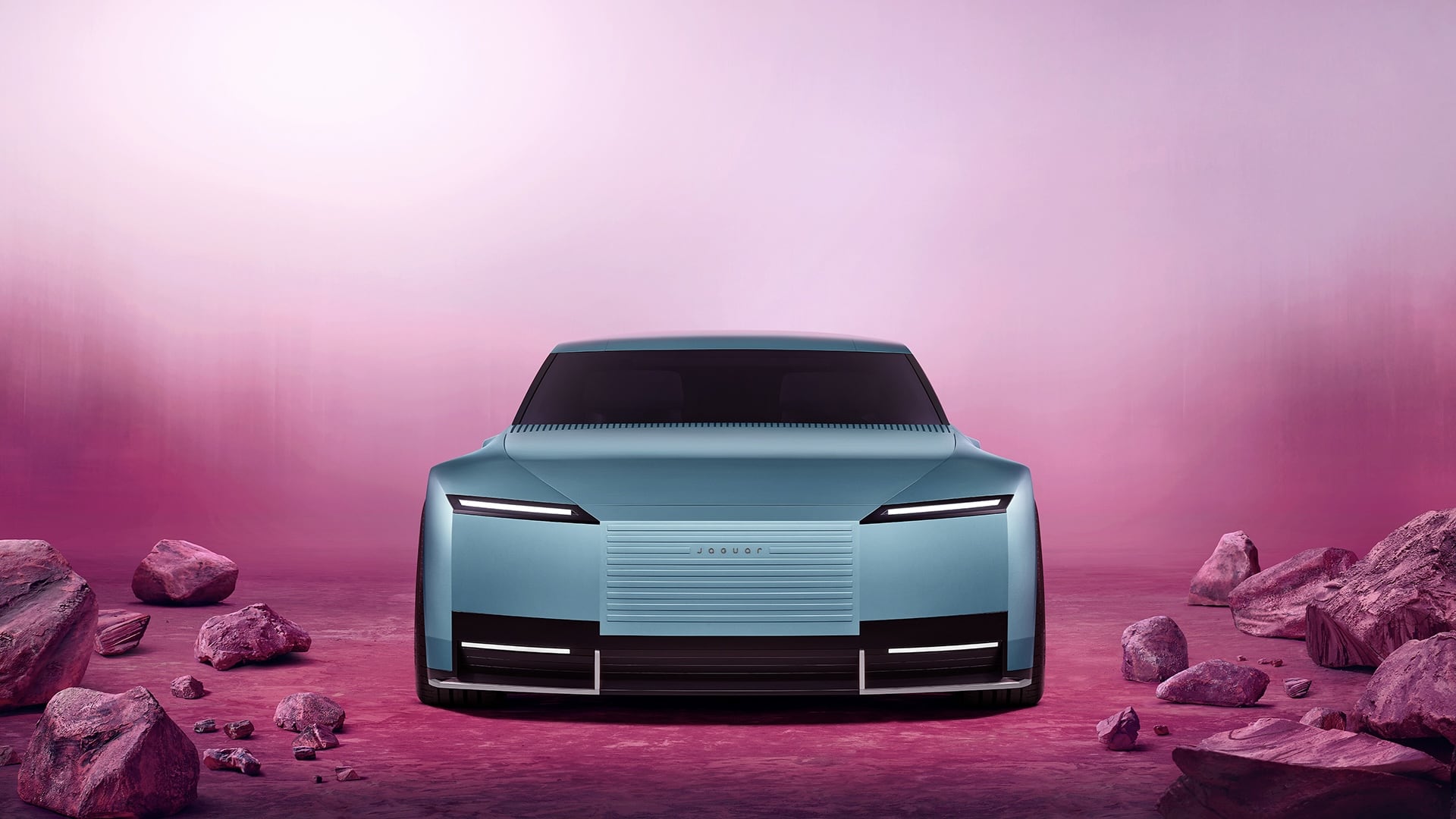
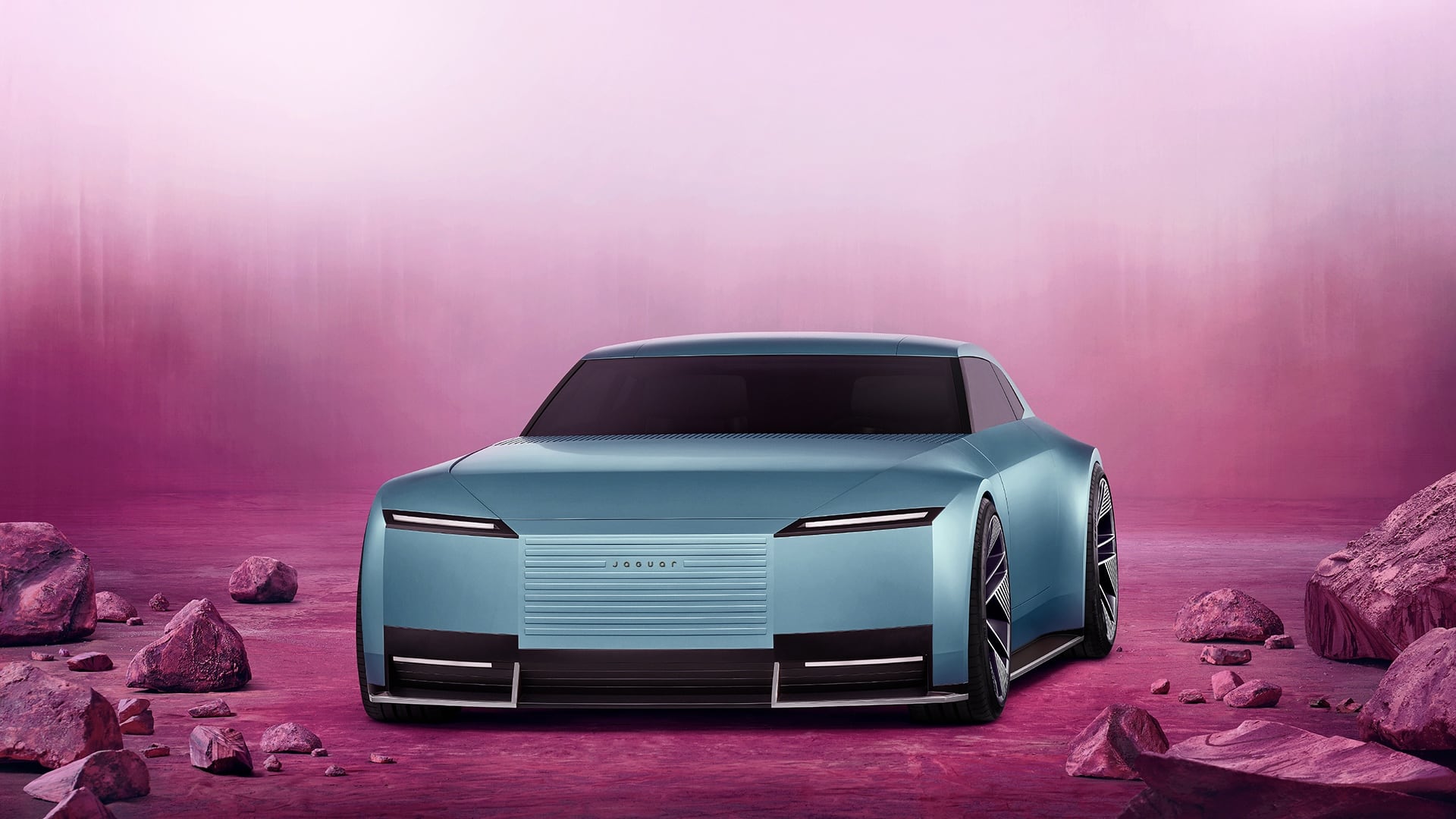
Jaguar Type 00 is more than an electric concept car. Unveiled in December 2024, it represents a radical reimagining of the British luxury marque, challenging established ideas of automotive design while redefining what a modern Jaguar should look and feel like.
With its elongated bonnet, dramatic fastback silhouette, 23-inch alloy wheels and sculptural surfaces, Type 00 deliberately departs from the familiar conventions of contemporary electric vehicles. Inside, brass, natural stone and tactile textiles create an environment closer to an architectural installation than a conventional car interior.
At the heart of this transformation is Jaguar’s original philosophy, “Copy Nothing,” championed by founder Sir William Lyons. Rather than relying on nostalgia, Jaguar is seeking to recapture the originality and emotional appeal that made historic models such as the E-Type automotive icons.
The concept’s influence became even more tangible on 7 October 2026, when Jaguar unveiled the Type 01, a production four-door electric GT that carries its design philosophy into a new generation of road cars.
Here is a closer look at Jaguar Type 00, from its design and interior to the creative vision shaping the brand’s electric future.
- Jaguar Type 00: A World Premiere at Miami Art Week
- Exuberant Modernism: Jaguar’s New Design Philosophy
- Dramatic Proportions and a Sculptural Exterior
- Miami Pink, London Blue and the Art of Colour
- An Architectural Interior Crafted from Brass, Stone and Textiles
- Prism Case: A Personalised Experience for the Senses
- From Miami to Tokyo: Jaguar’s Connection with Art and Culture
- Jaguar Type 01: From Concept to Production
- Jaguar Type 00: A Statement of Intent for the Electric Age
Jaguar Type 00: A World Premiere at Miami Art Week
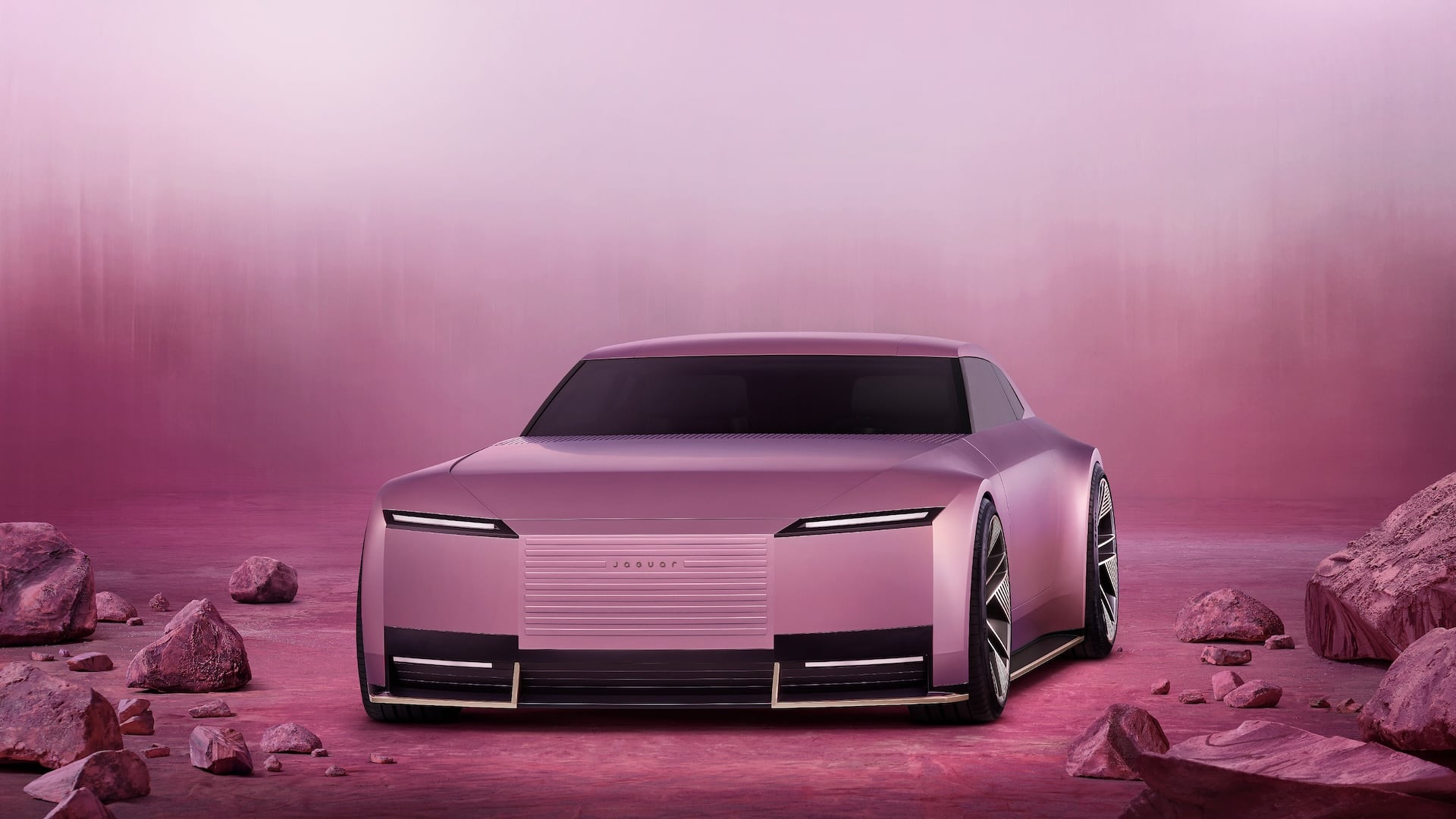
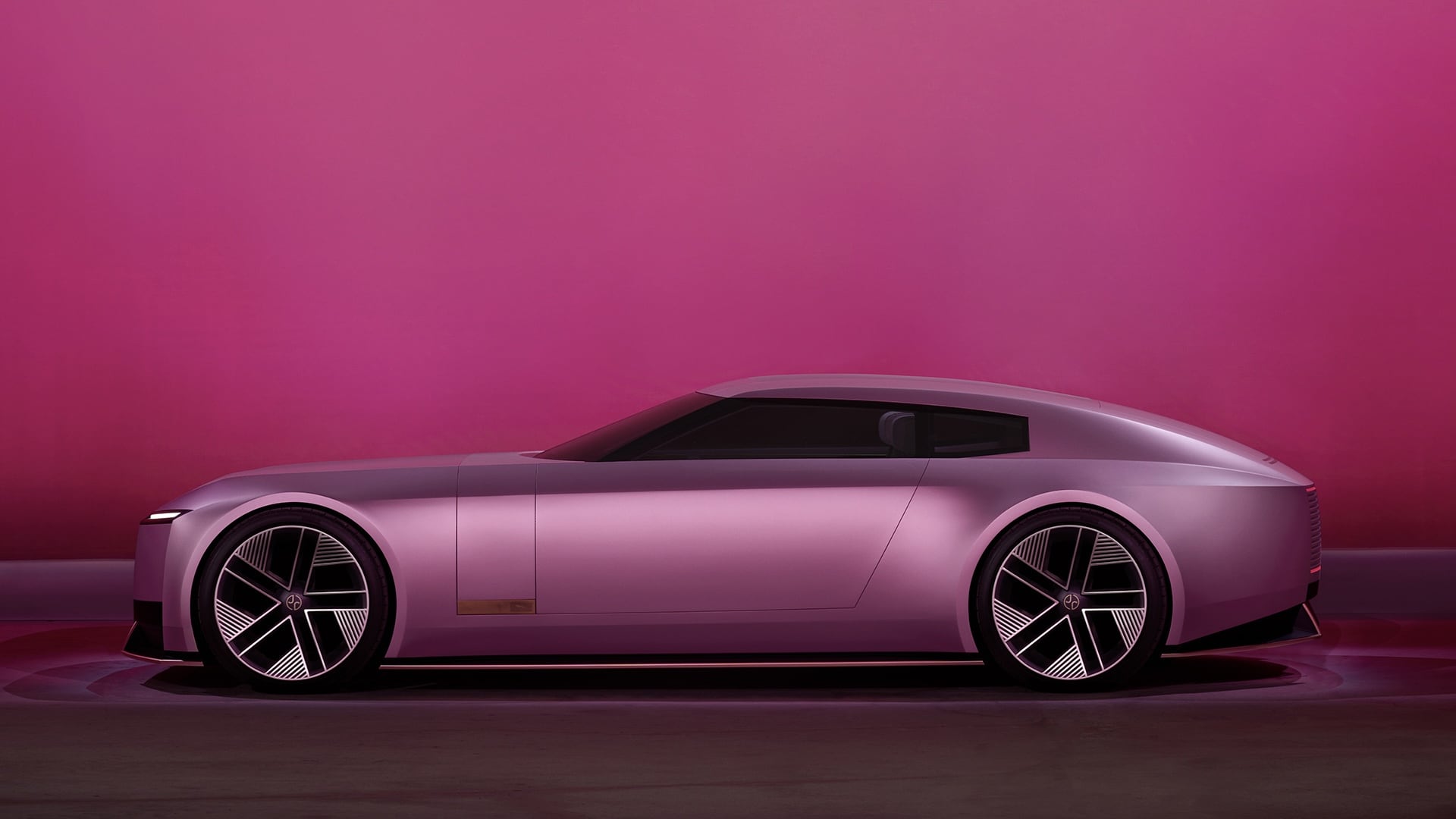
Jaguar unveiled Type 00 at Miami Art Week in December 2024, choosing one of the international art world’s most prominent cultural gatherings rather than a traditional motor show.
The setting was deliberate. Jaguar’s transformation extends beyond electrification and vehicle engineering, encompassing its visual identity, design philosophy and relationship with customers. By introducing Type 00 in an environment associated with contemporary art and creative expression, the brand positioned its next chapter as a broader cultural statement.
The name itself carries meaning. The prefix “Type” connects the concept to Jaguar’s historic naming tradition, including the legendary E-Type. The first zero refers to zero tailpipe emissions, while the second represents the starting point of a new model lineage.
Type 00 was conceived as the physical expression of Jaguar’s renewed “Copy Nothing” philosophy. Its purpose is not to preview a single production car in every detail, but to establish a distinct design language for the vehicles that follow.
The concept also marked a defining moment in Jaguar’s transition towards an all-electric luxury brand, with a new generation of vehicles intended to occupy a more exclusive position in the market.
Exuberant Modernism: Jaguar’s New Design Philosophy
The creative thinking behind Type 00 is described by Jaguar as Exuberant Modernism. The philosophy is built around three principles: Exuberant, Modernist and Compelling.
Exuberant represents fearless, uninhibited creativity. It is expressed through dramatic proportions, distinctive colours and a willingness to challenge convention.
Modernist describes a forward-looking approach that draws inspiration from the world around it while respecting, rather than simply reproducing, the past.
Compelling is about creating a holistic experience that engages the senses and establishes a meaningful emotional connection with the customer.
Together, these principles suggest a different way of interpreting Jaguar’s heritage. Rather than reproducing familiar design cues from previous decades, the marque aims to preserve the pioneering spirit that made its most celebrated cars distinctive in the first place.
The E-Type, for example, remains an important reference not simply because of its recognisable shape, but because it represented an ambitious vision of what a sports car could be in its era.
Type 00 applies a similar attitude to the electric age. Its appearance is deliberately unconventional, and its proportions prioritise visual drama over the restrained, aerodynamic minimalism that has come to define many contemporary EVs.
The result is a concept that treats originality as a central component of luxury, rather than an optional stylistic flourish.
Dramatic Proportions and a Sculptural Exterior
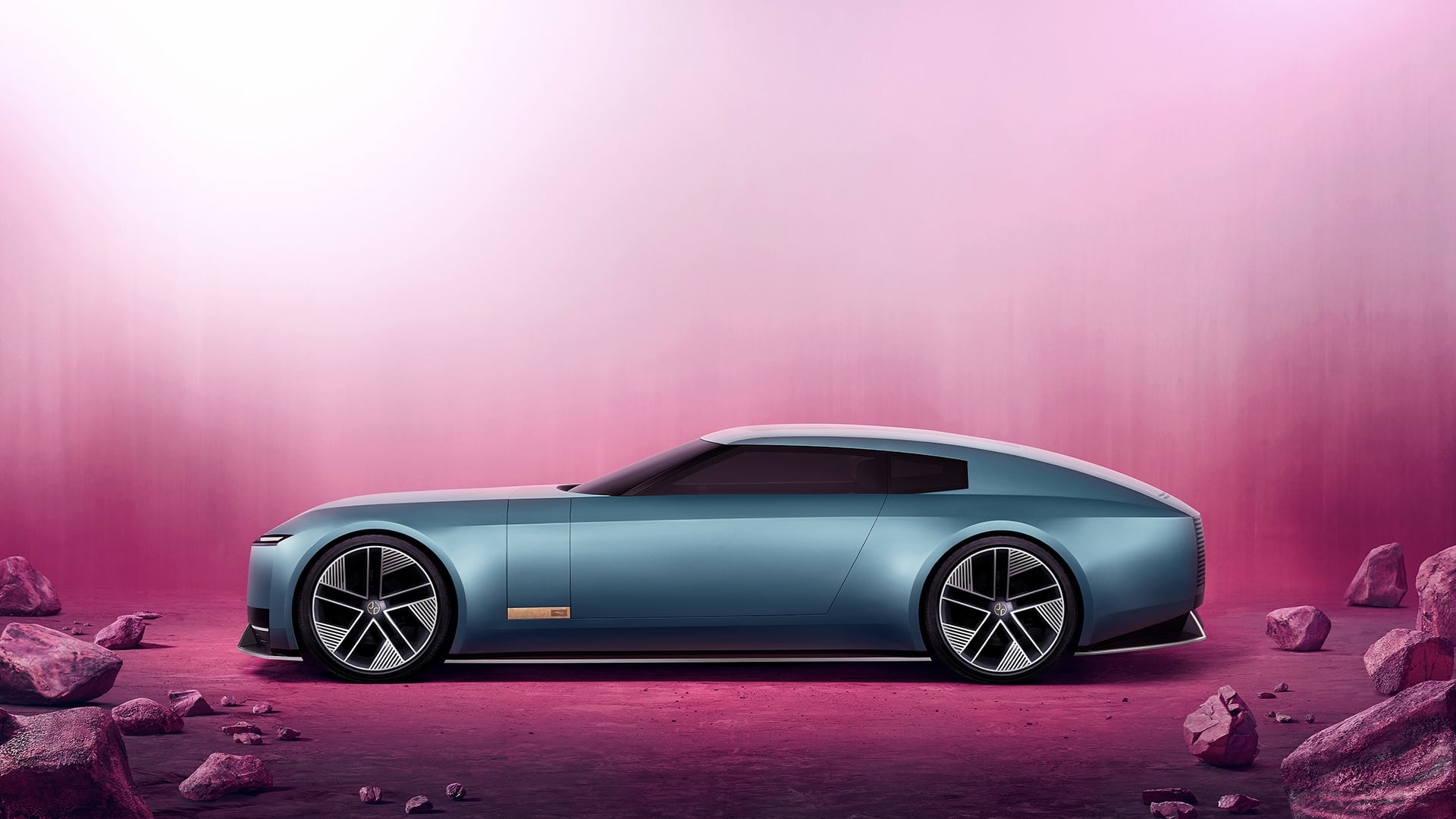
The defining characteristic of Jaguar Type 00 is its silhouette.
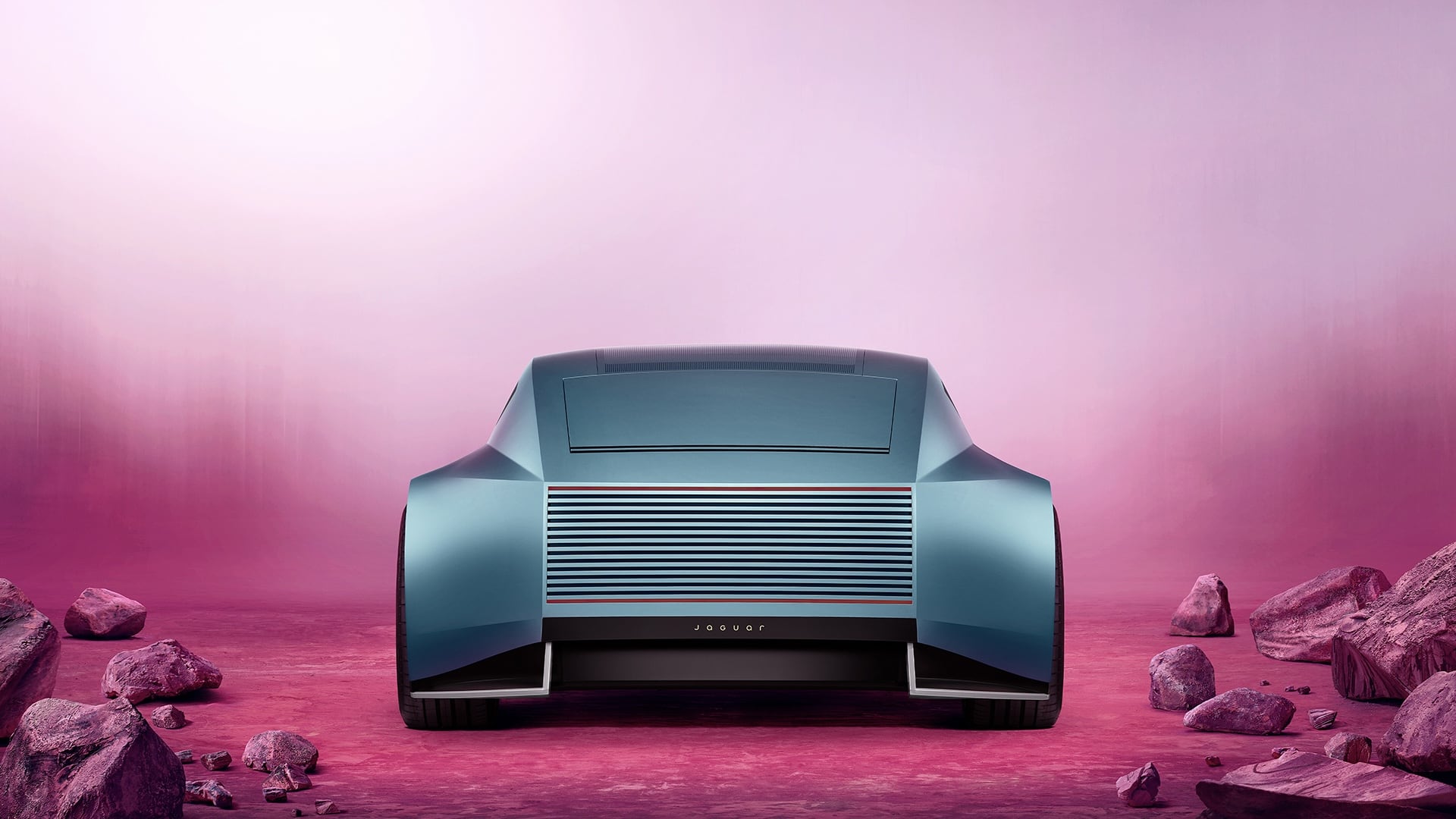
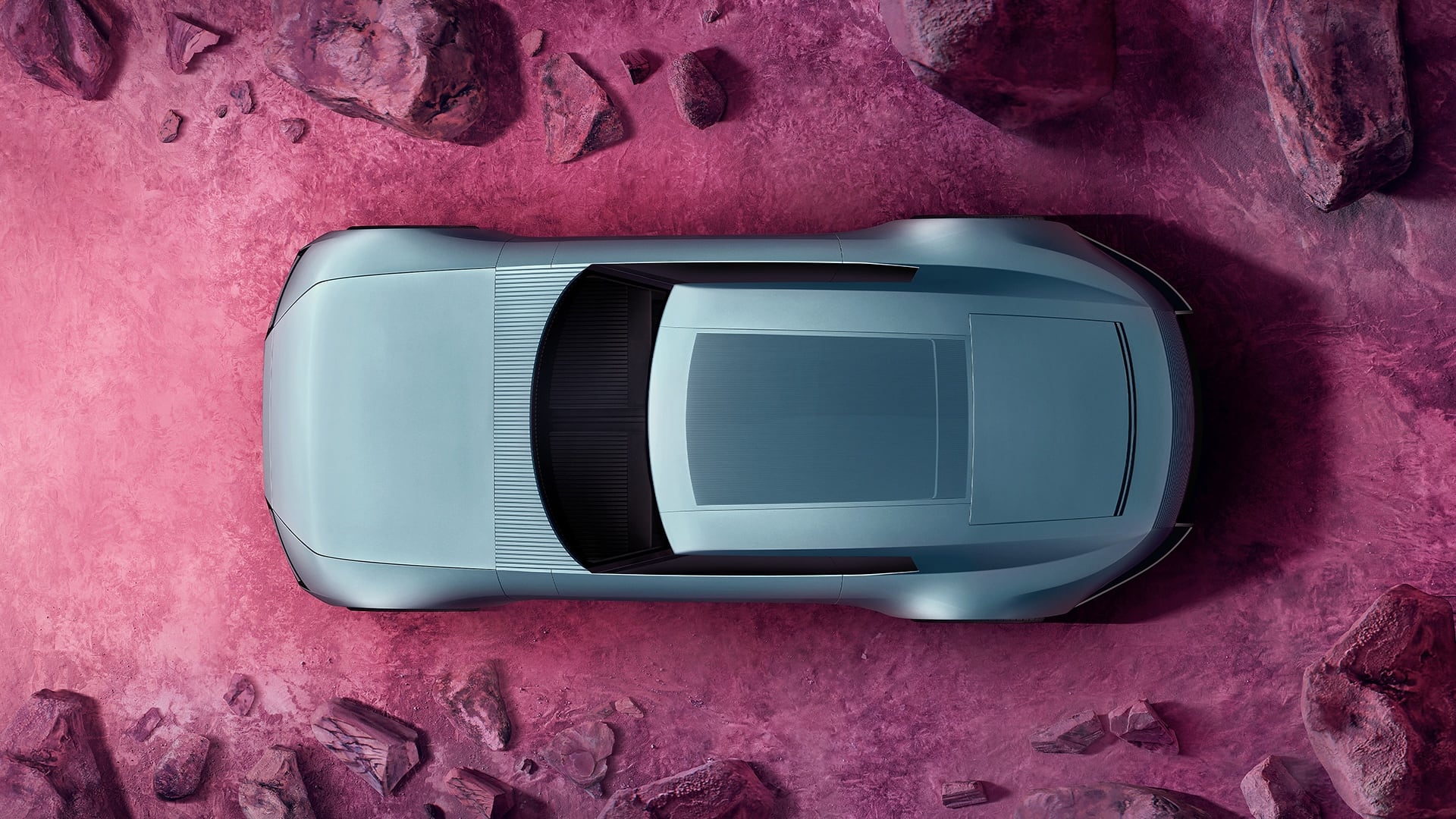
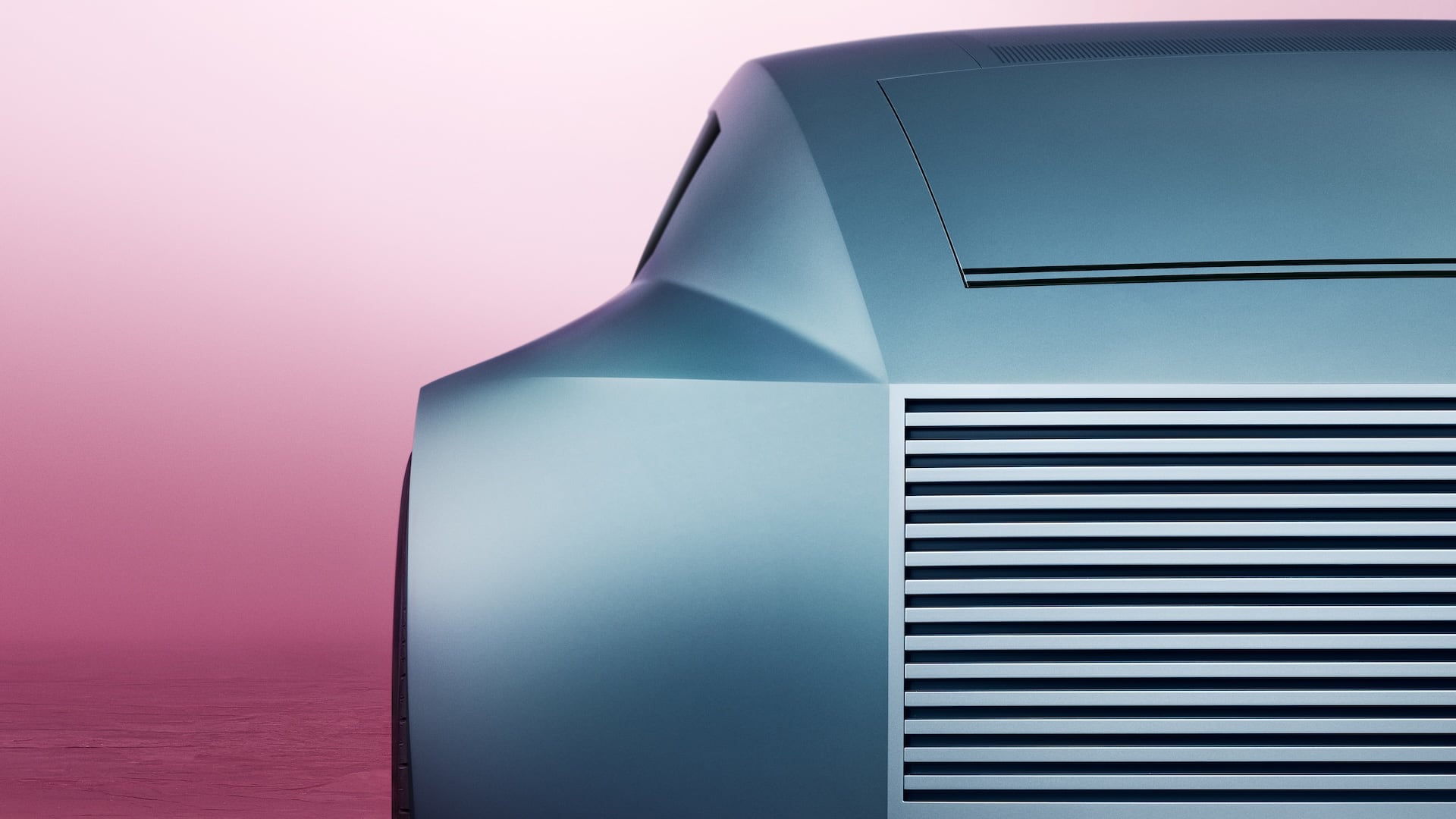
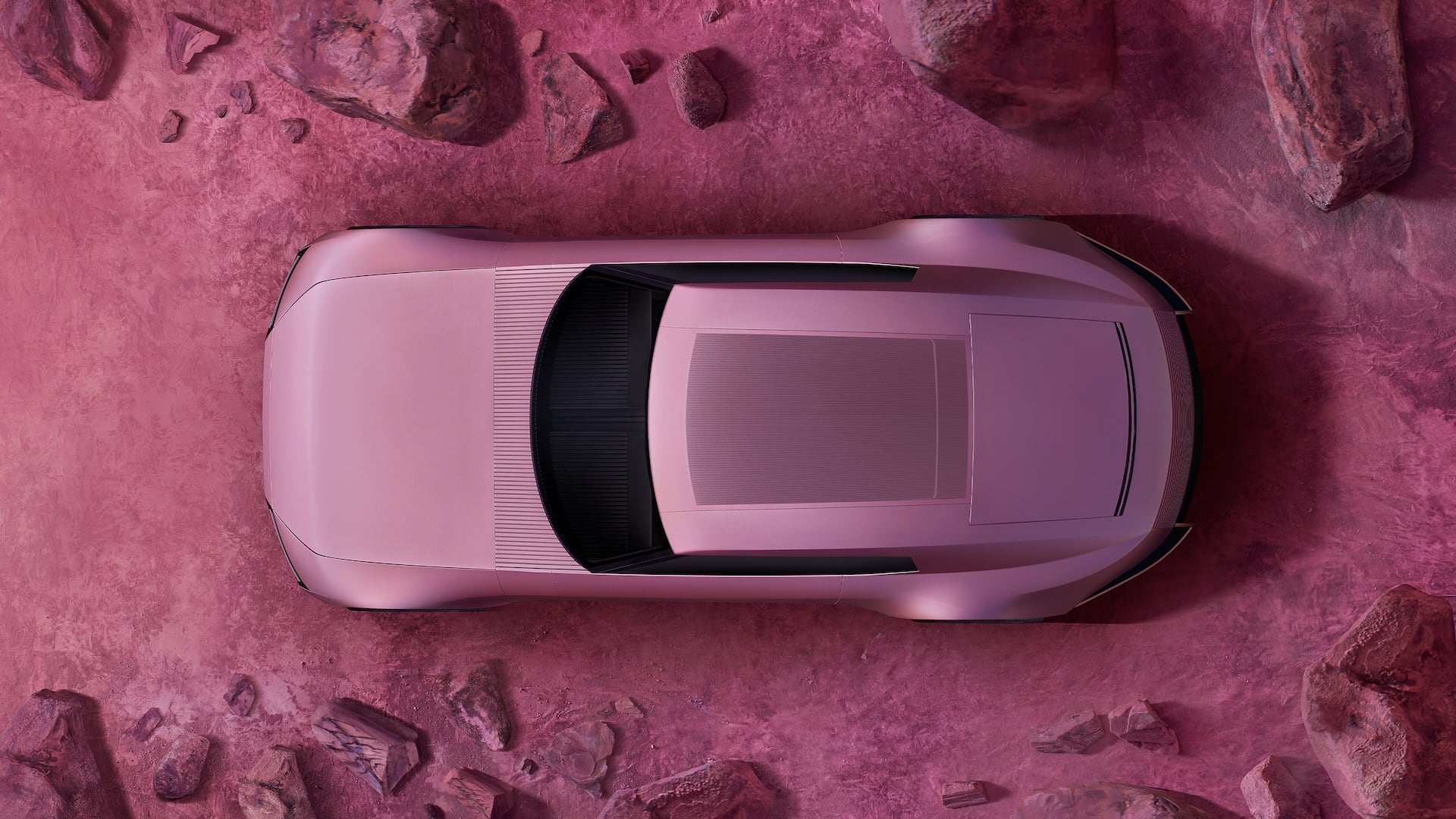
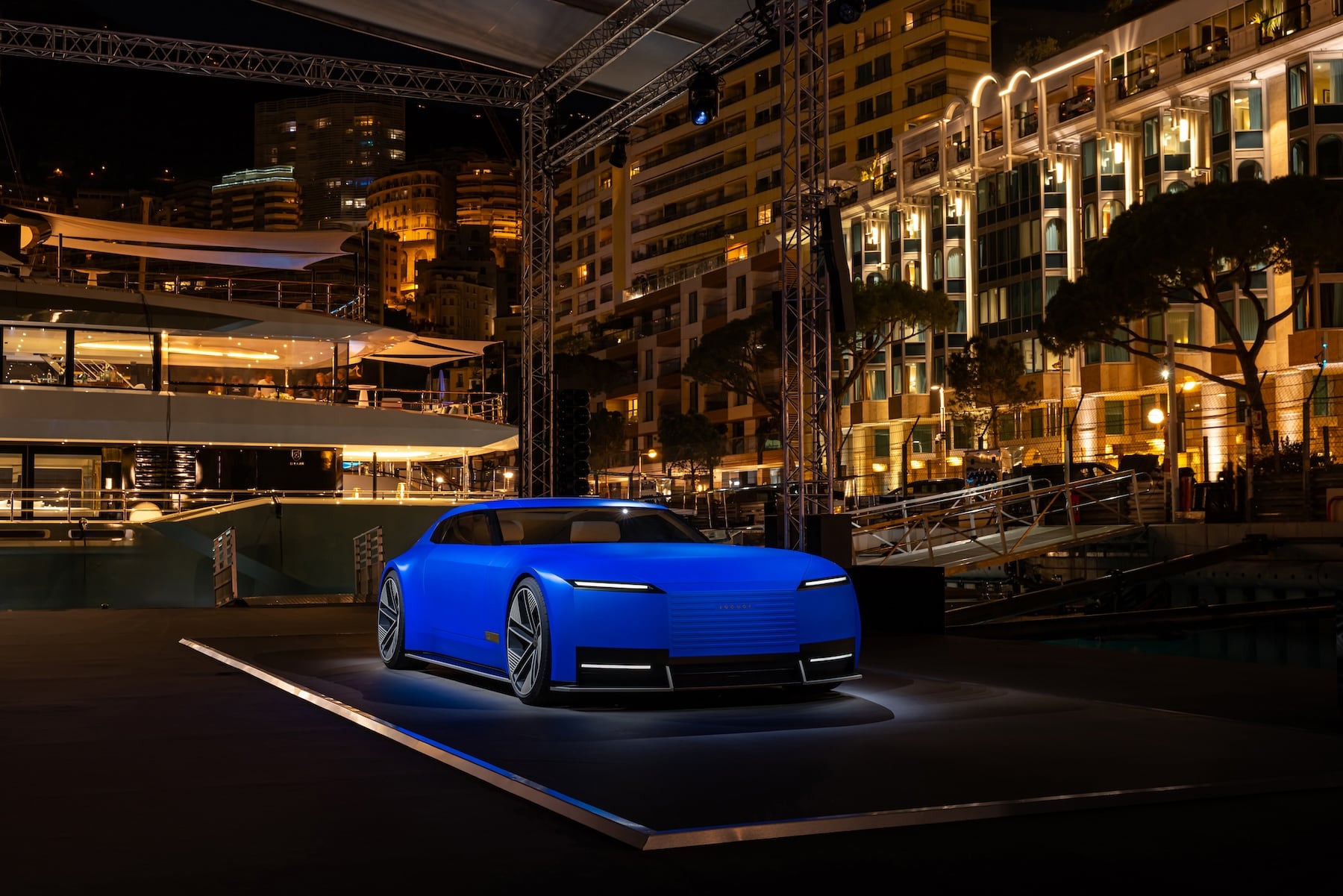
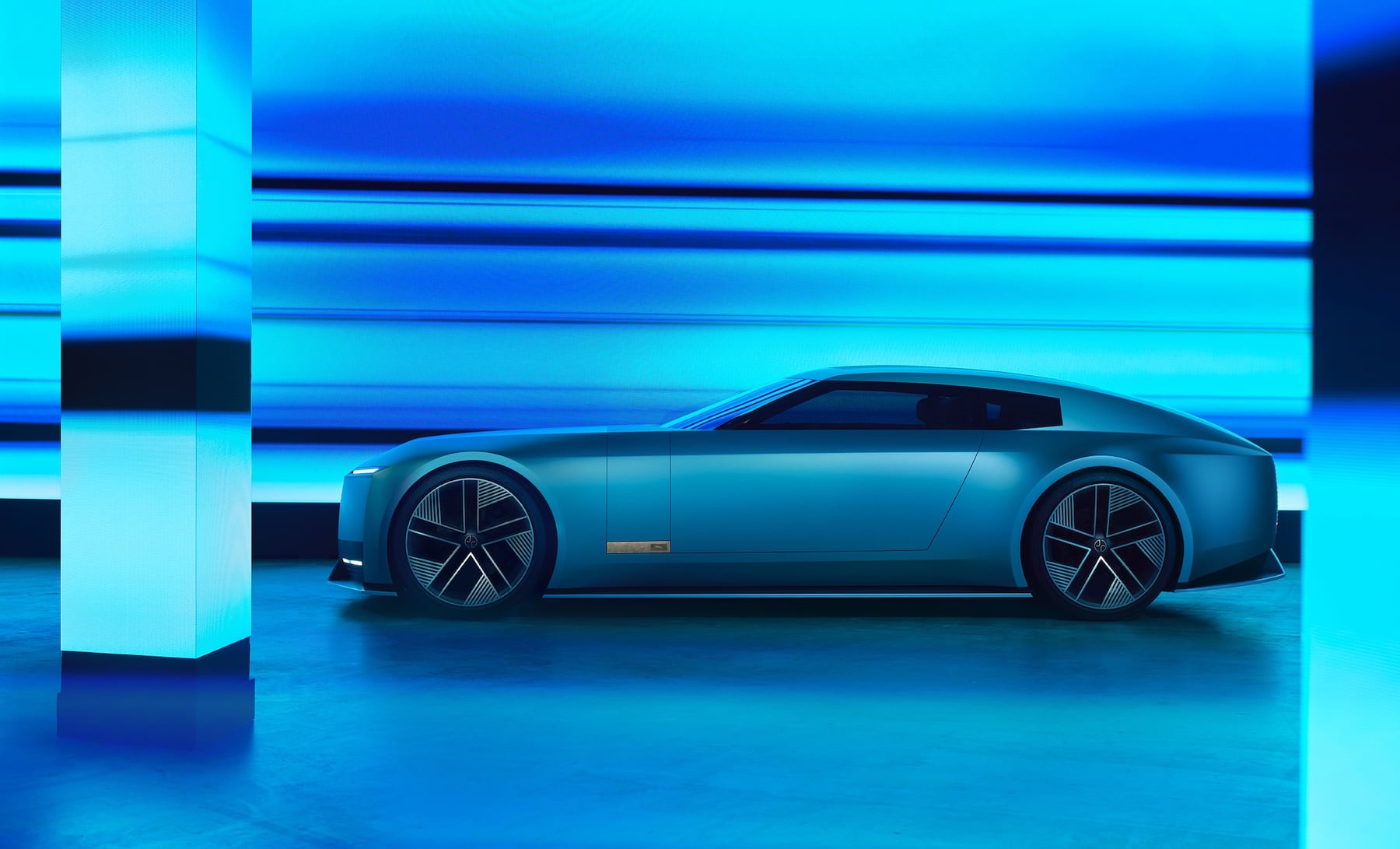
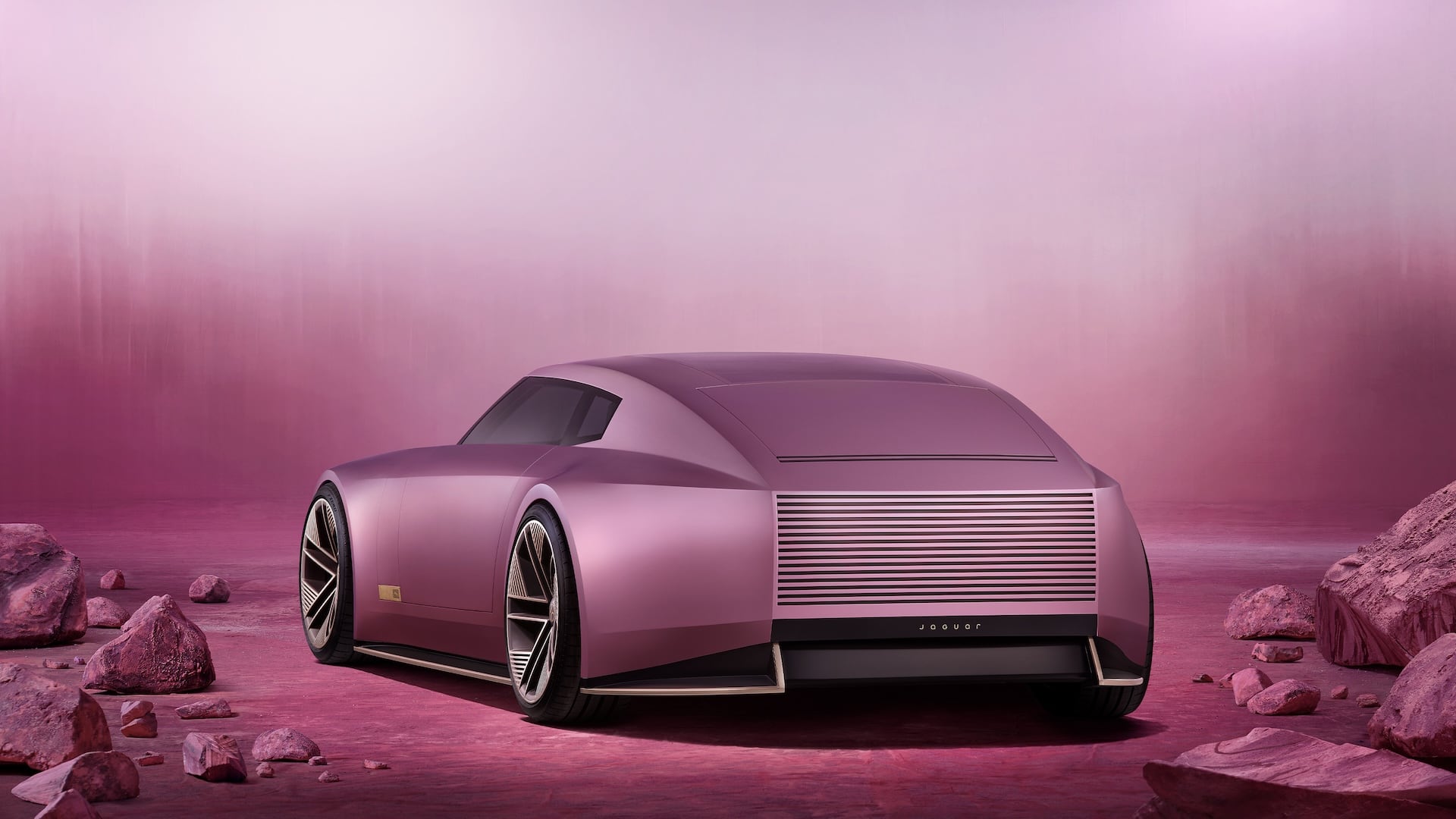
A long bonnet leads into a low, sweeping roofline, while the fastback profile transitions into a distinctive boat-tail rear. The combination creates a sense of movement even when the car is stationary.
This is an unusual approach for an electric vehicle, where packaging efficiency and aerodynamic considerations often encourage compact front overhangs and more cab-forward proportions. Type 00 instead uses its dedicated Jaguar Electrical Architecture (JEA) to pursue a more dramatic design.
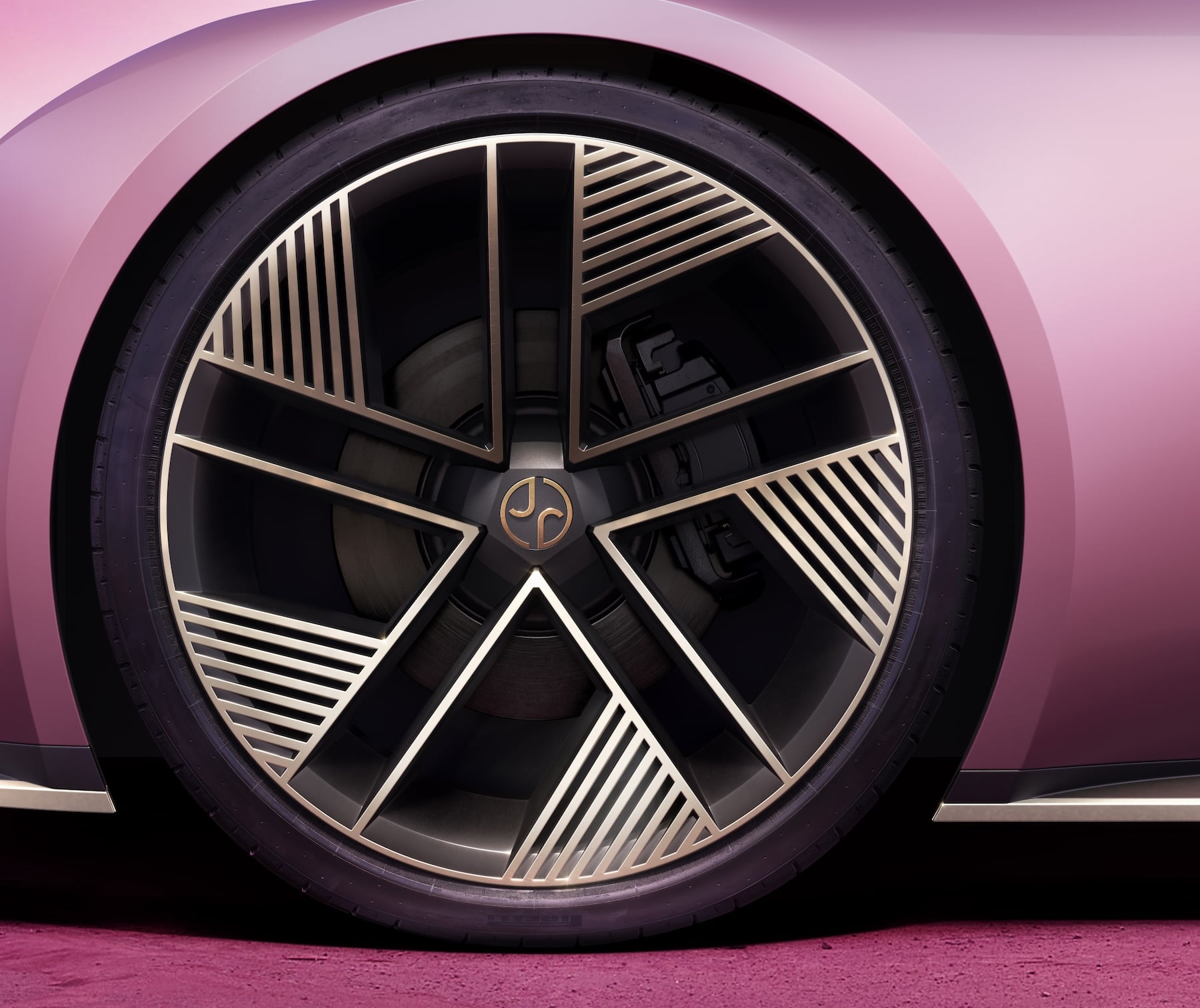
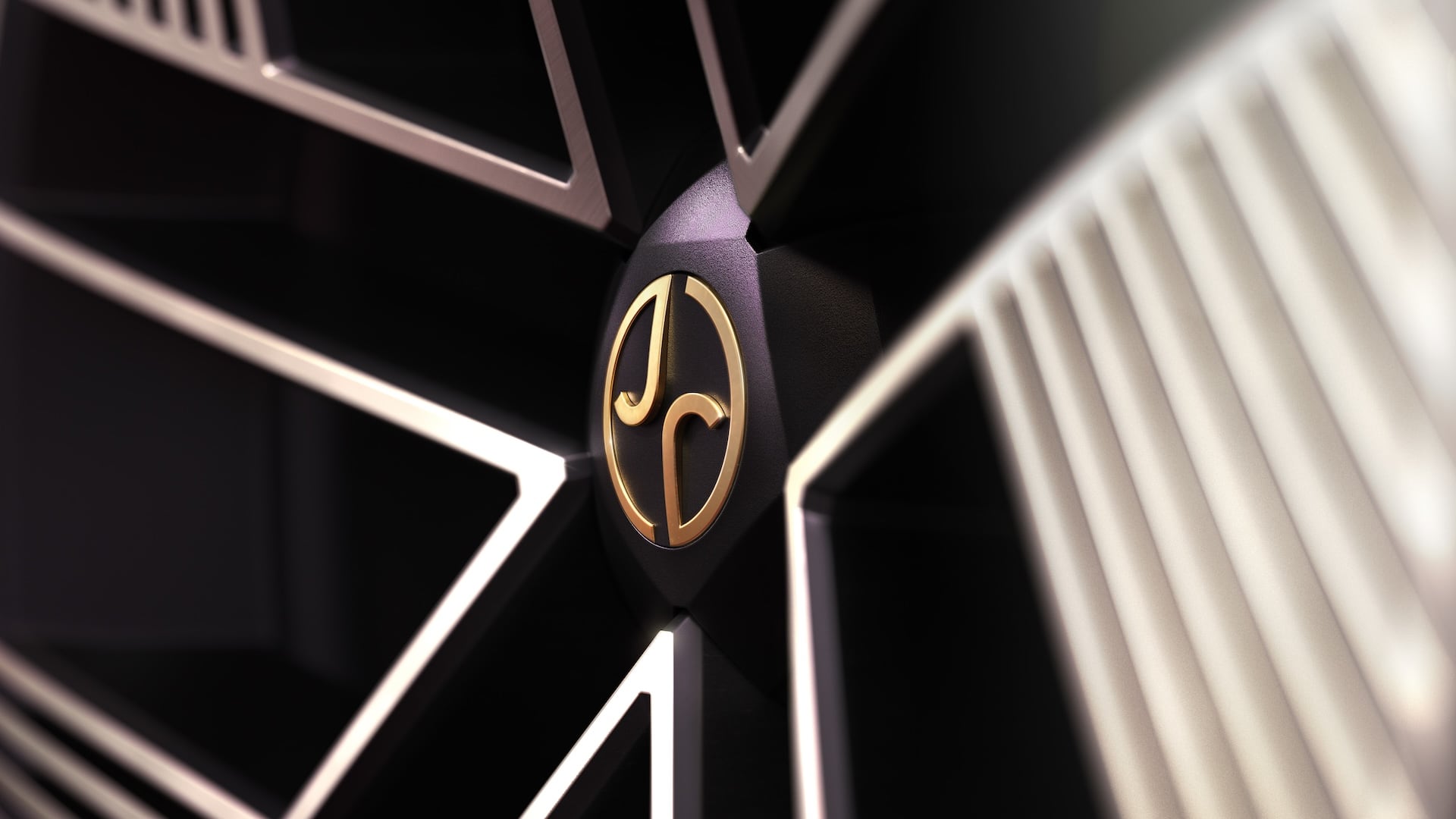
Its stance is further emphasised by 23-inch alloy wheels. According to Jaguar, the wheels are milled from a single billet of aluminium, transforming an otherwise functional component into a statement of craftsmanship. The new Jaguar monogram sits at the centre of each wheel.
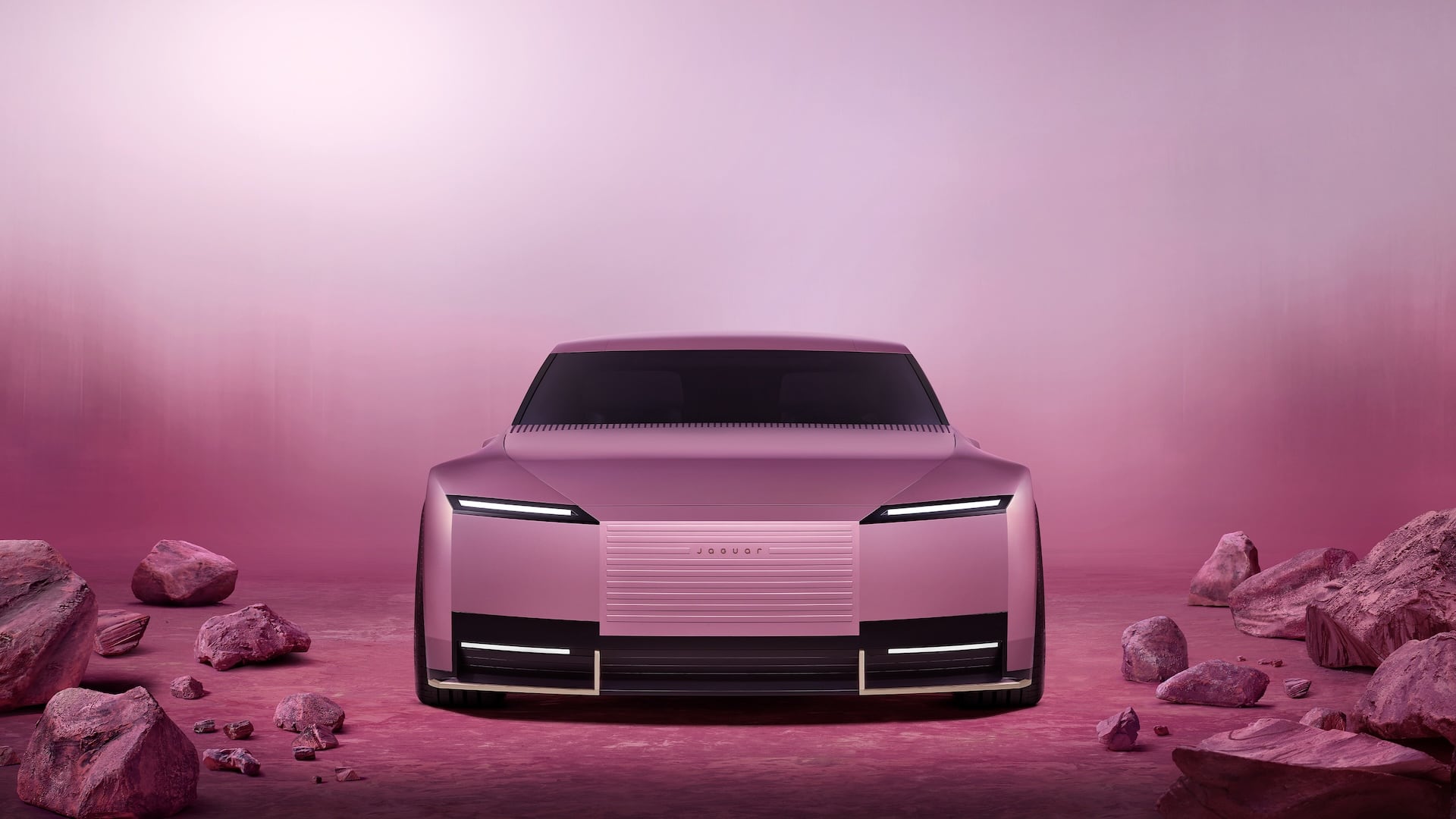
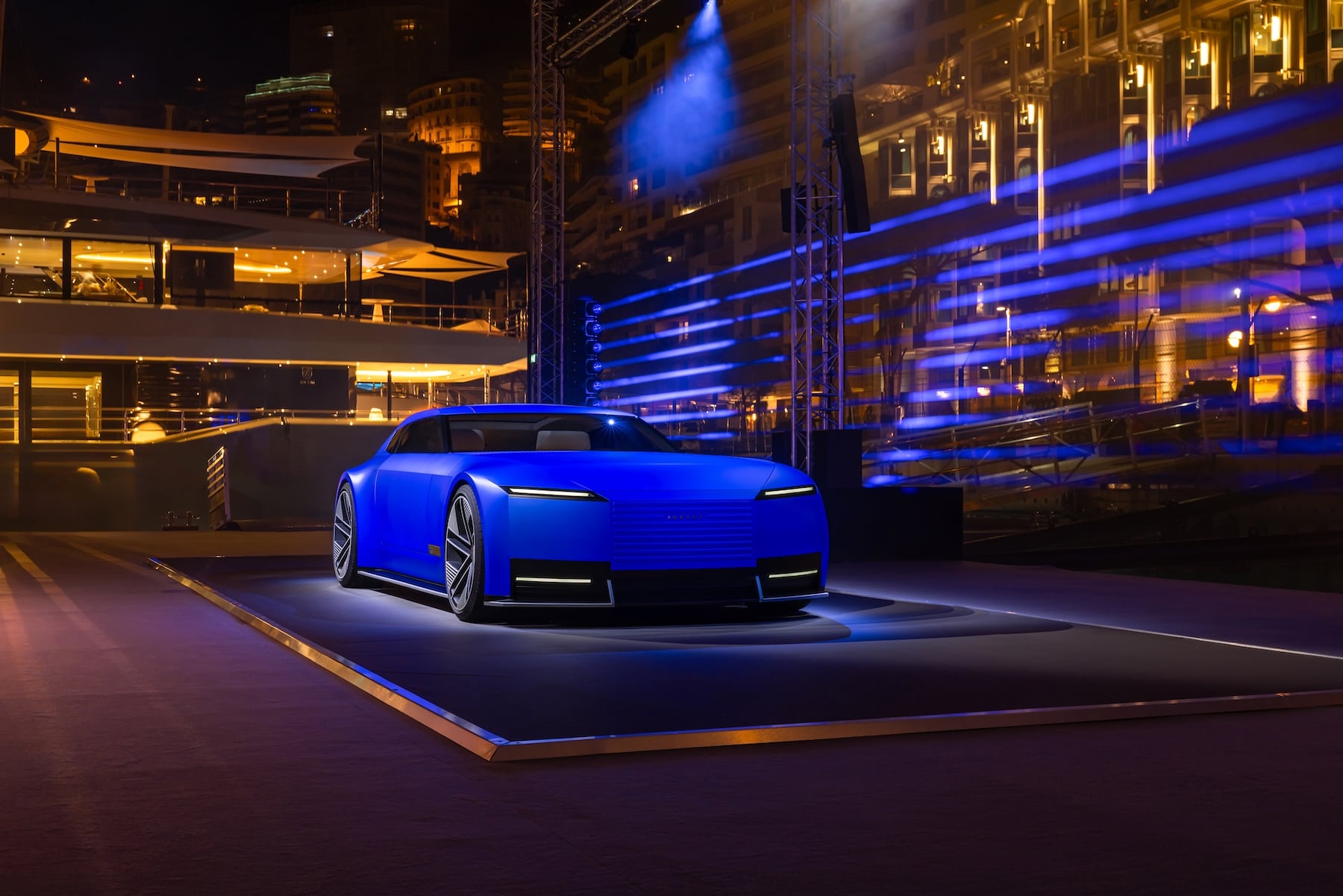
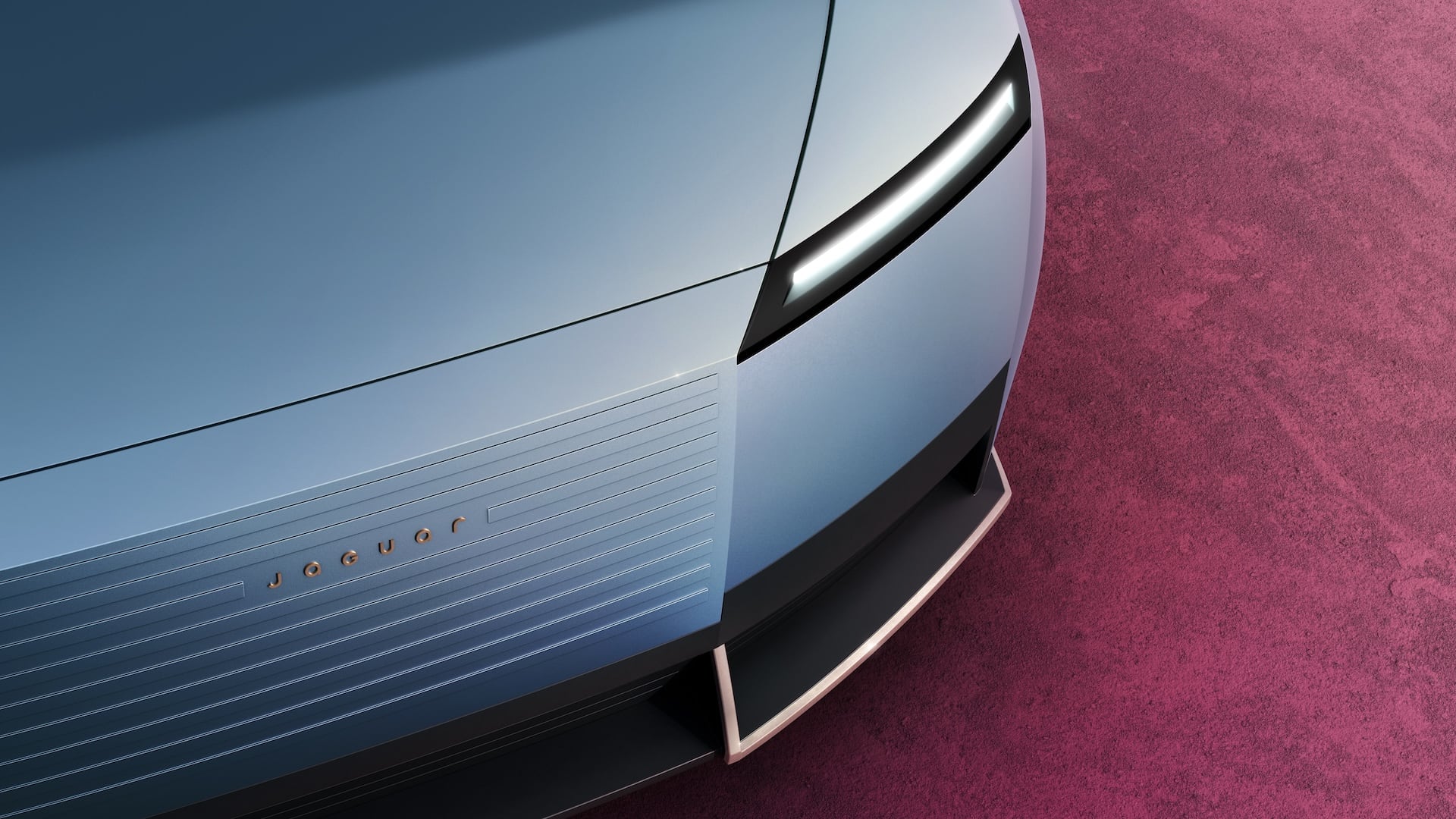
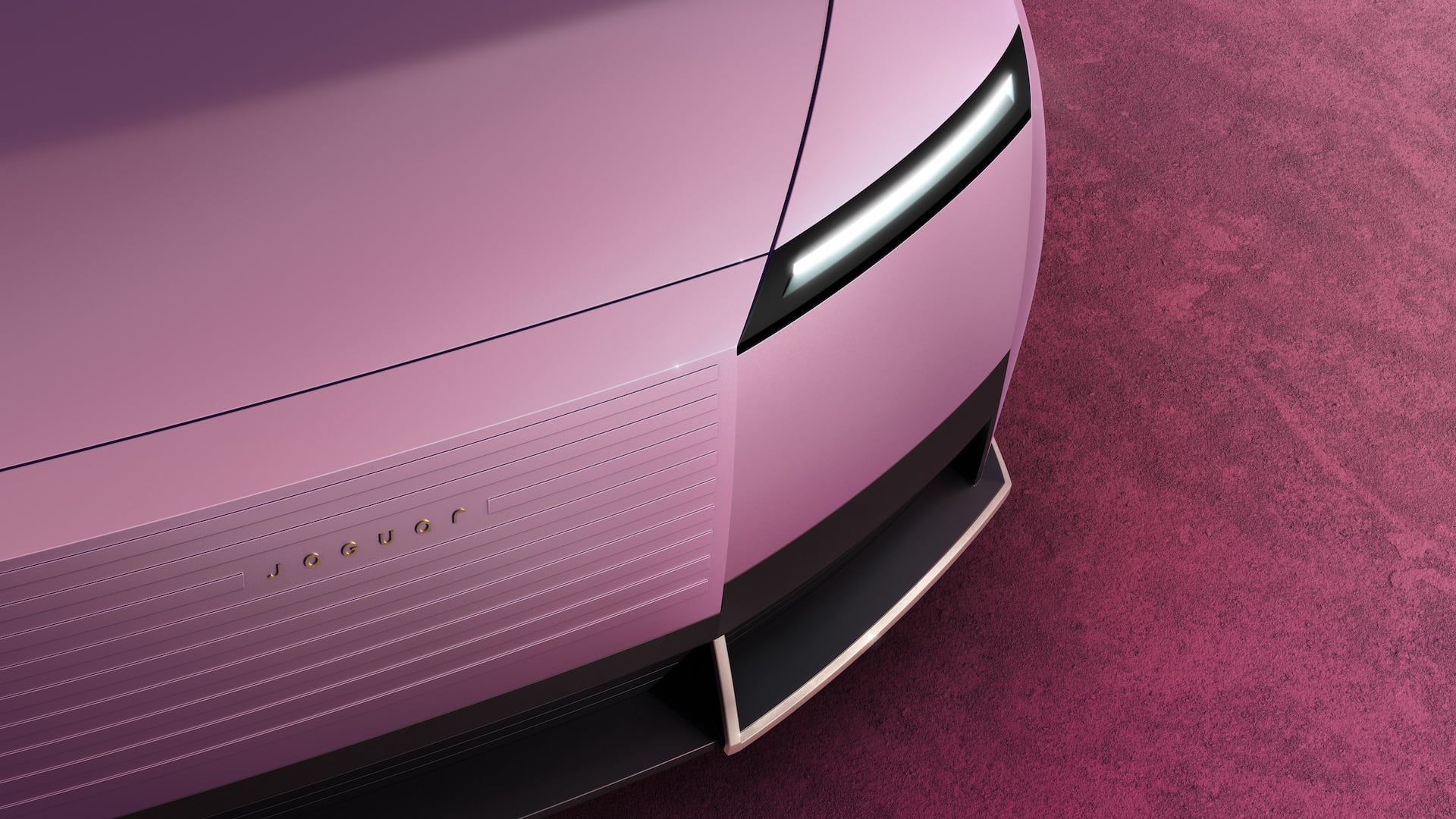
At the front, broad, upright surfaces and precisely positioned lighting elements give the car a confident, wide-set appearance. The bodywork is deliberately clean, with flush surfaces that minimise visual clutter.
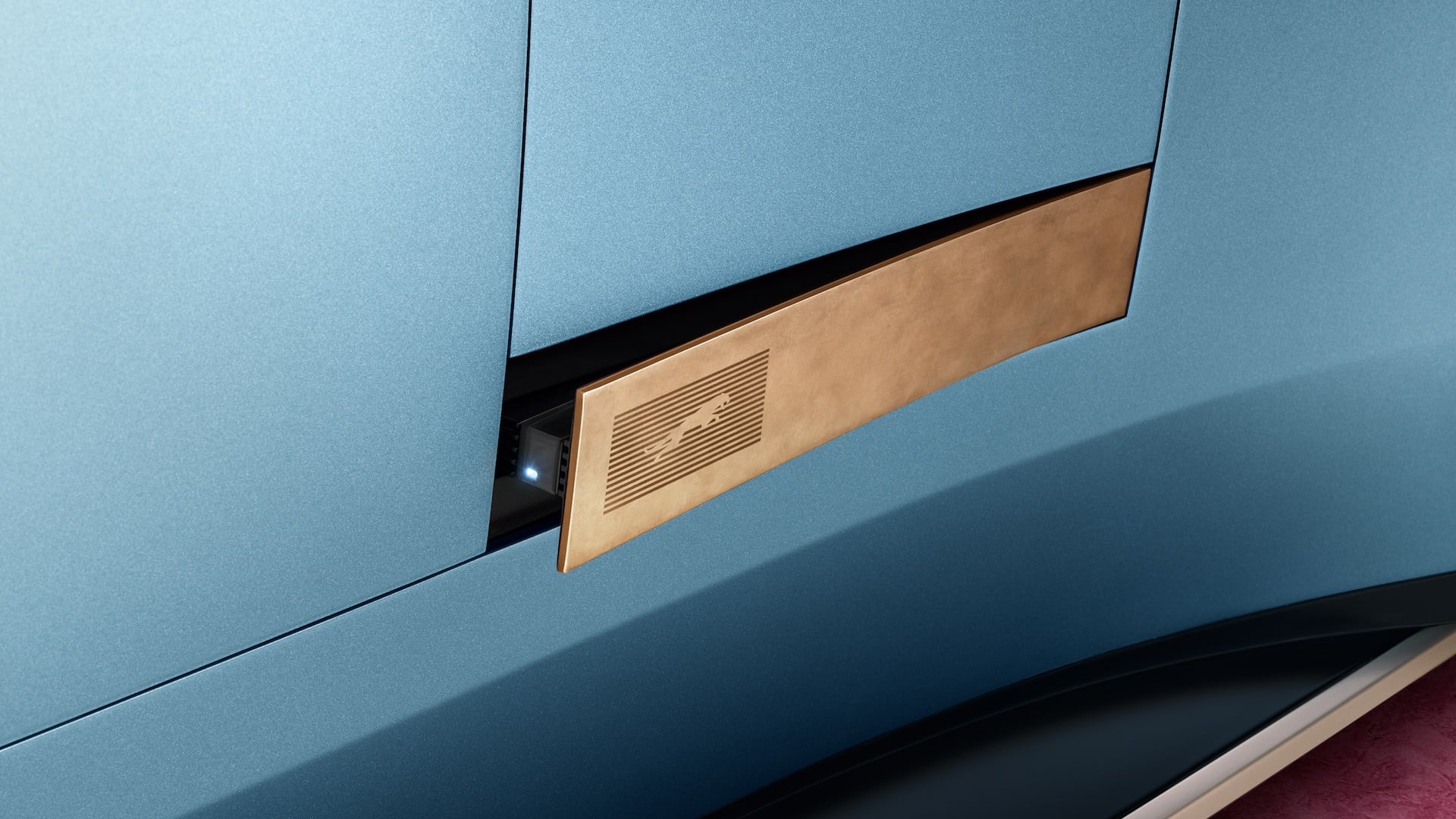
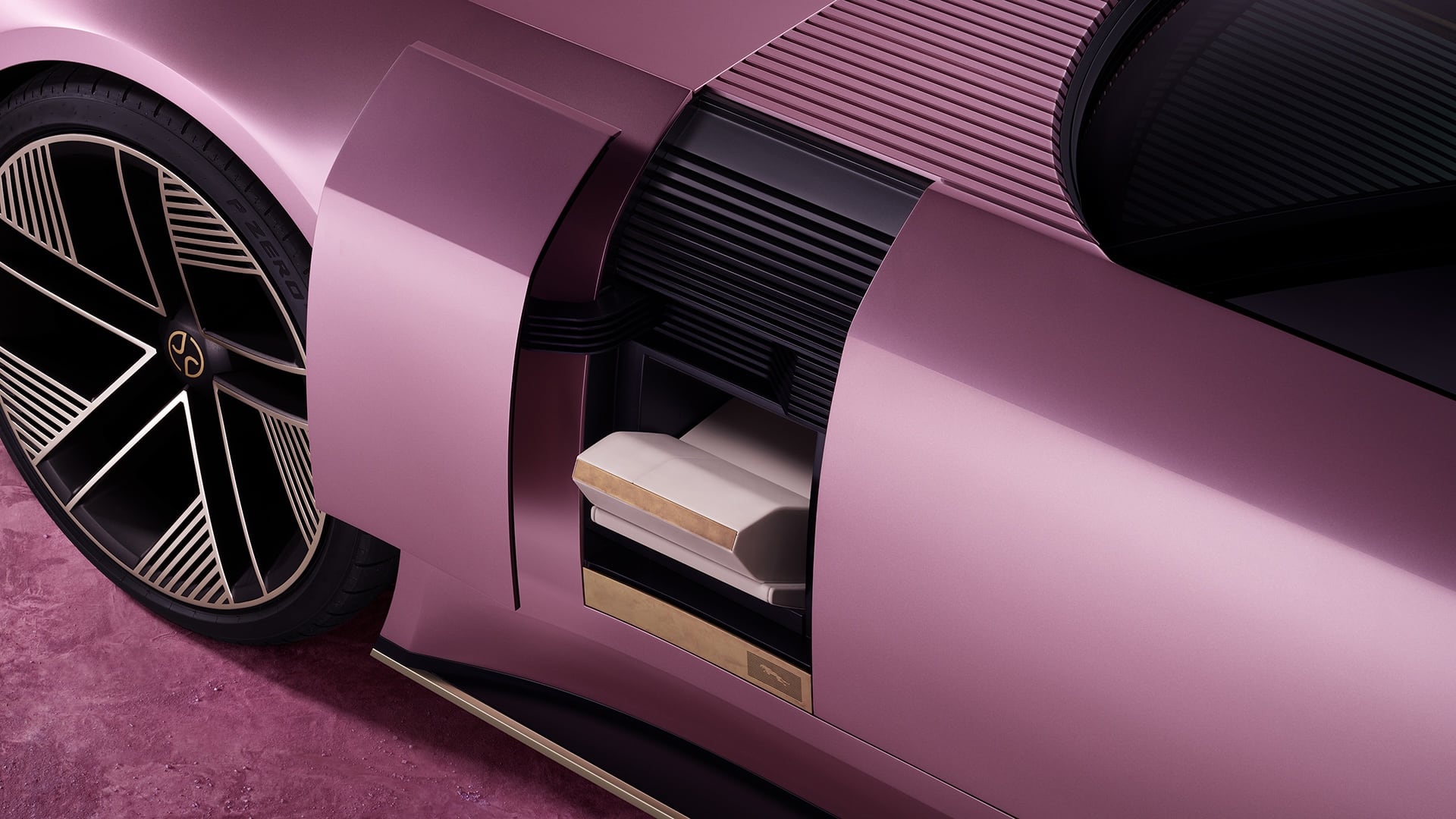
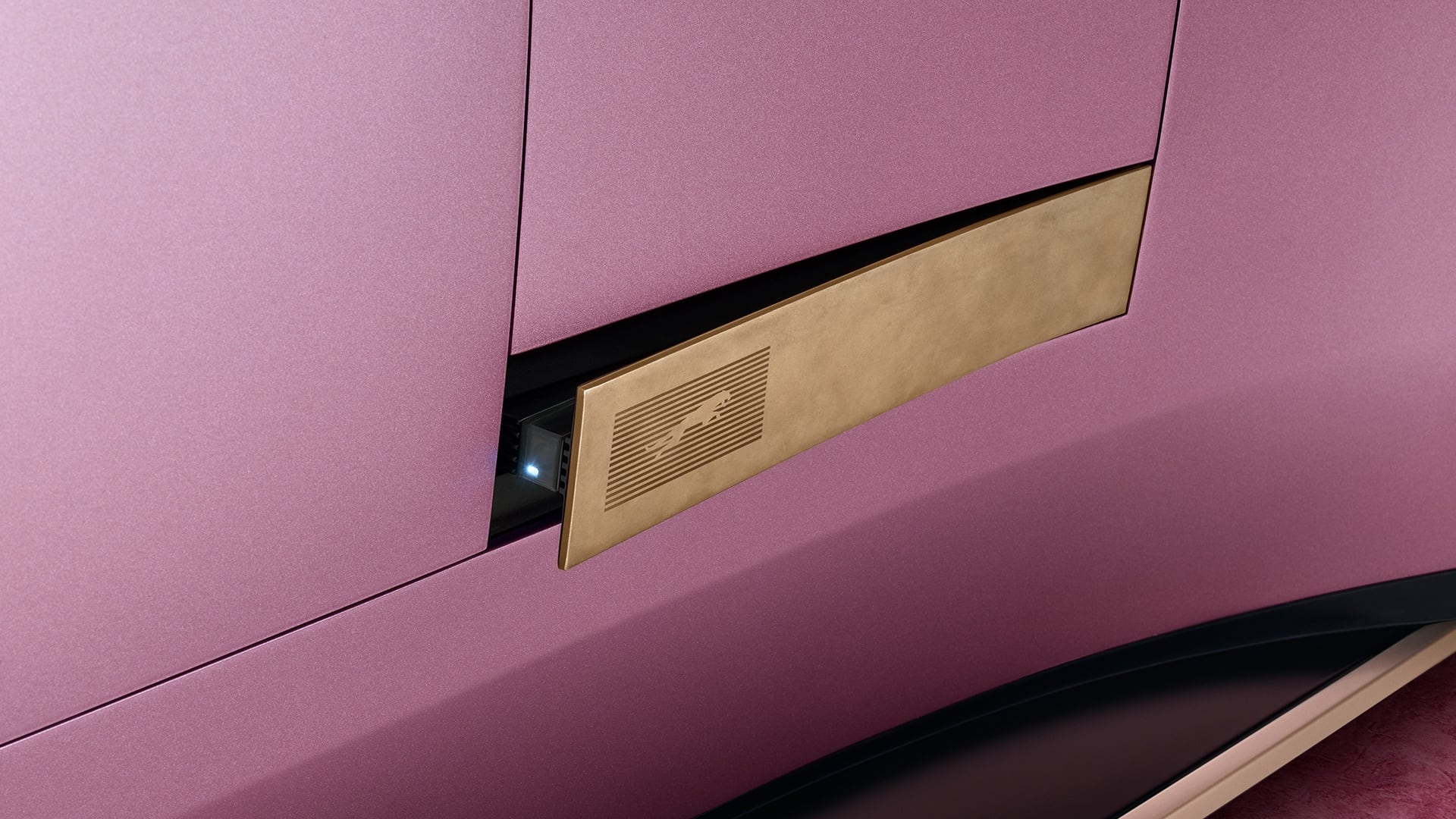
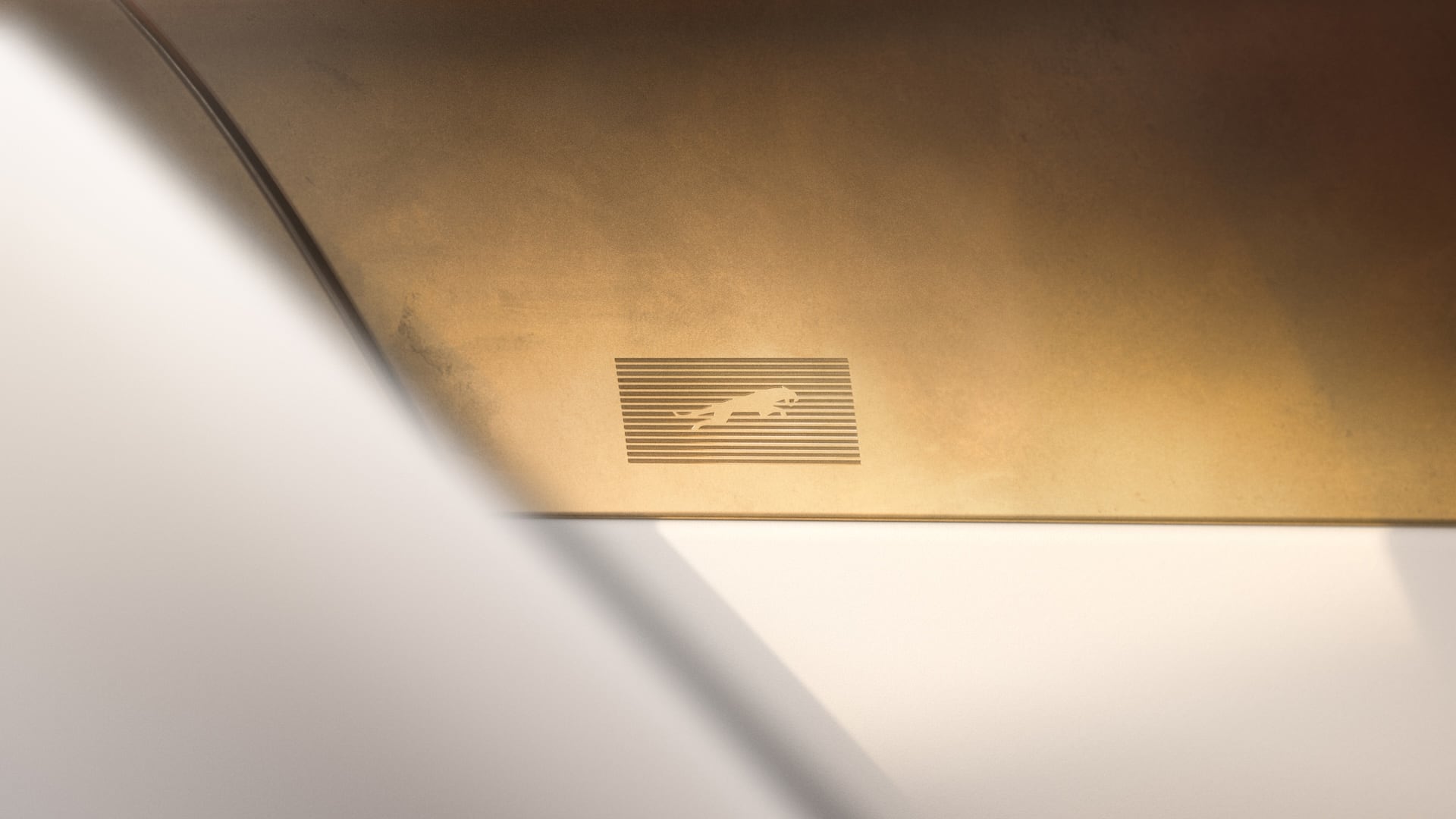
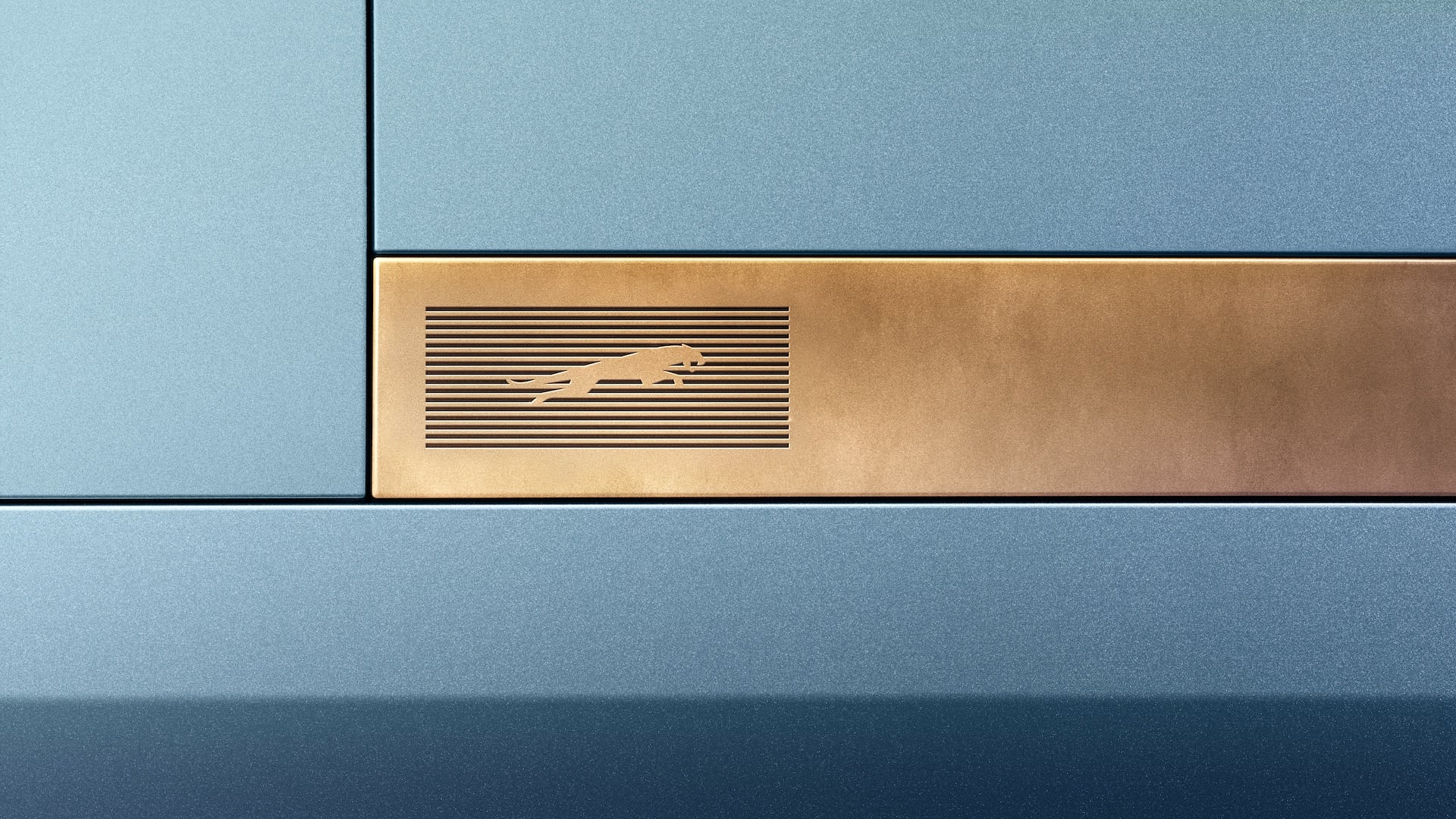
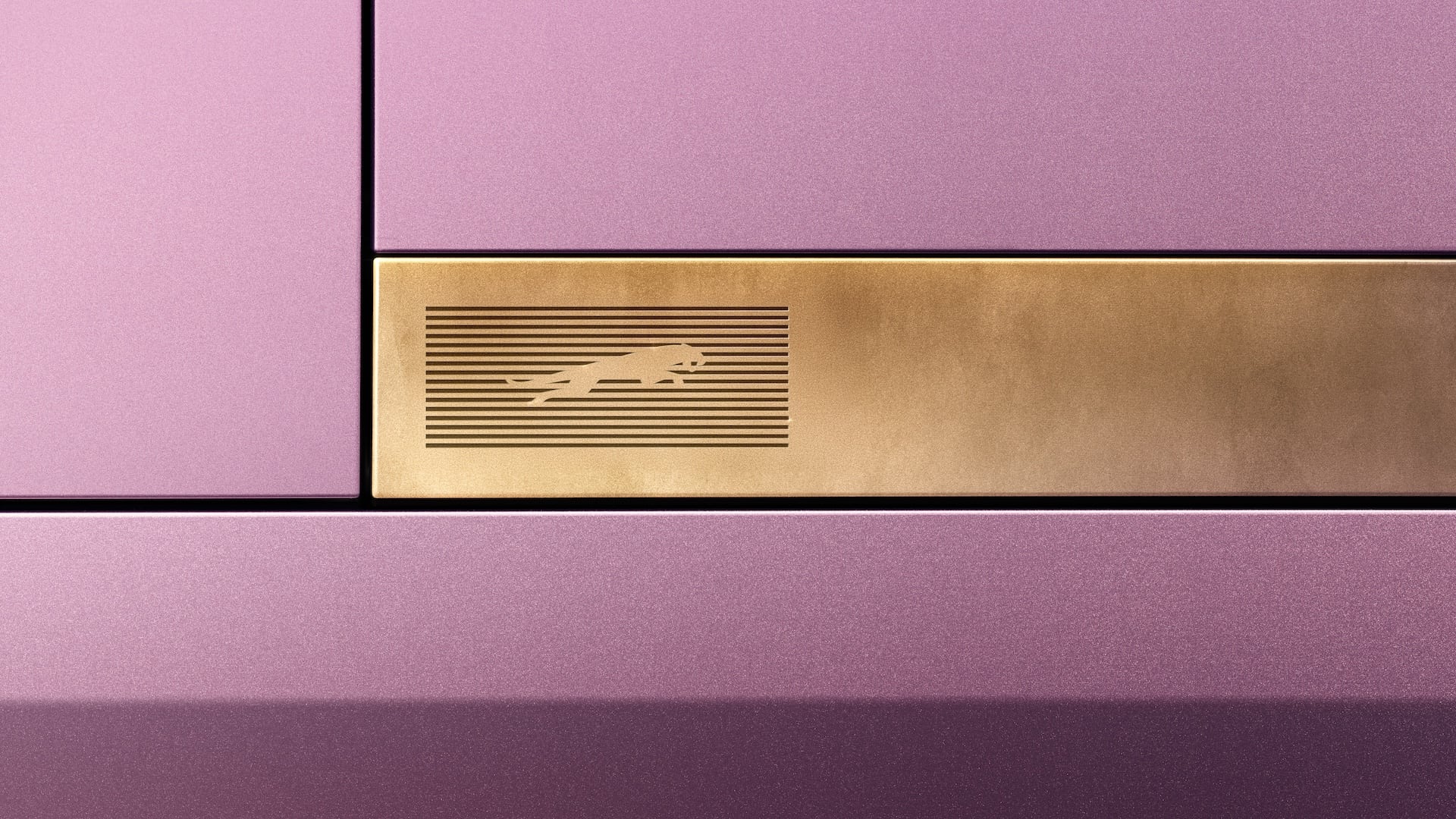
Several functional elements remain concealed until required. Rear-facing cameras deploy from brass-finished side fittings, while the charging ports and front air intakes are integrated into the bodywork.
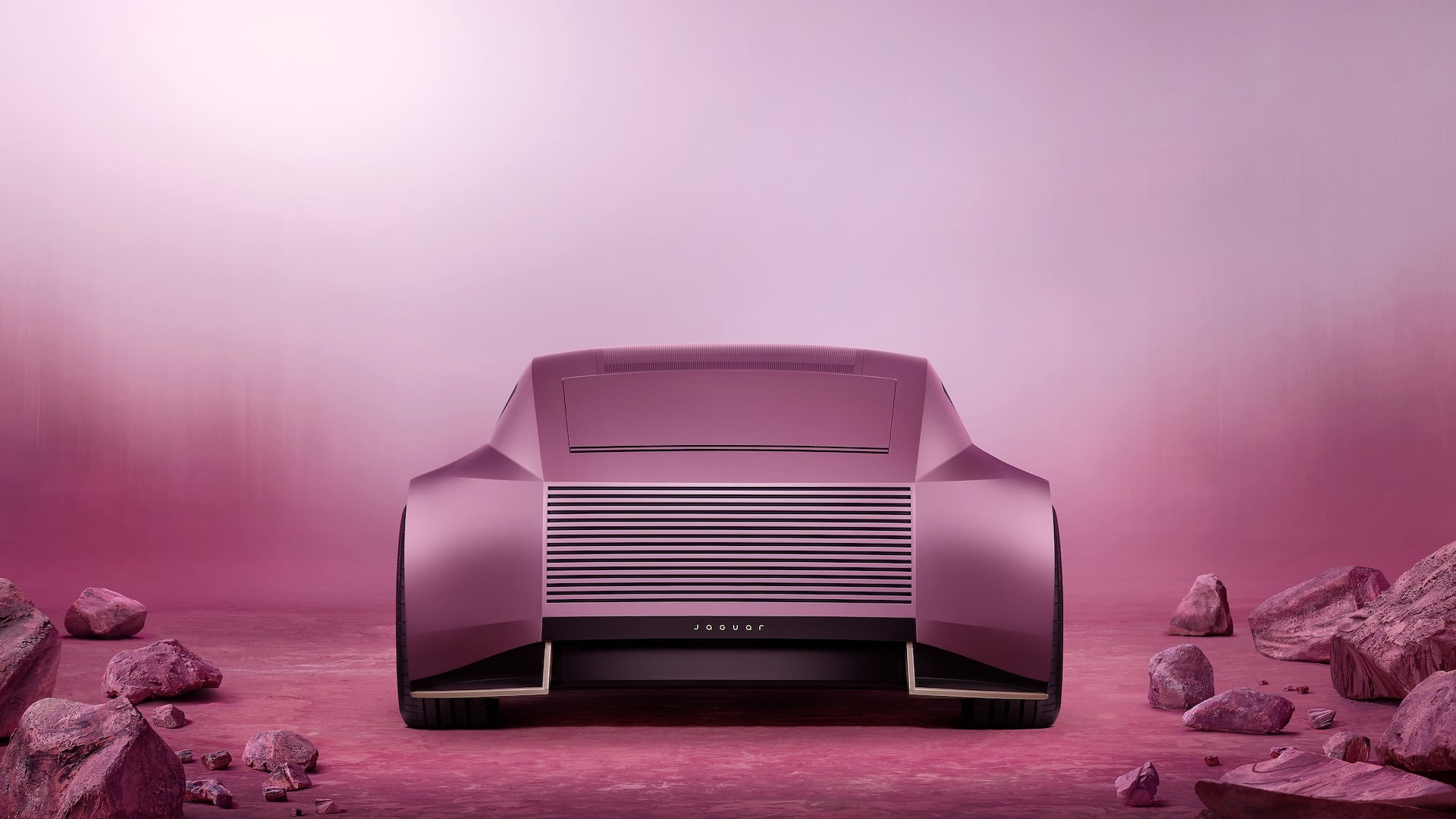
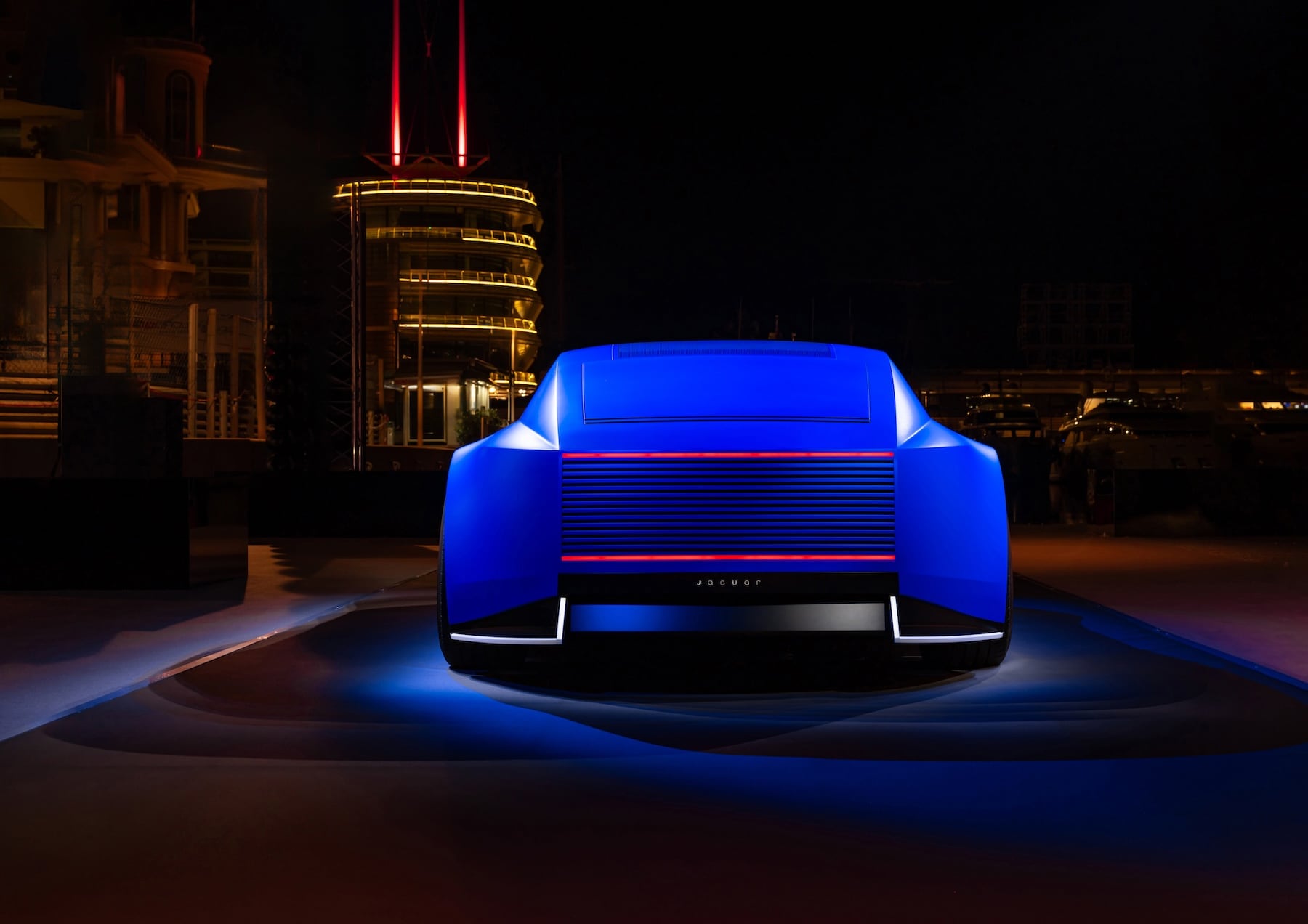
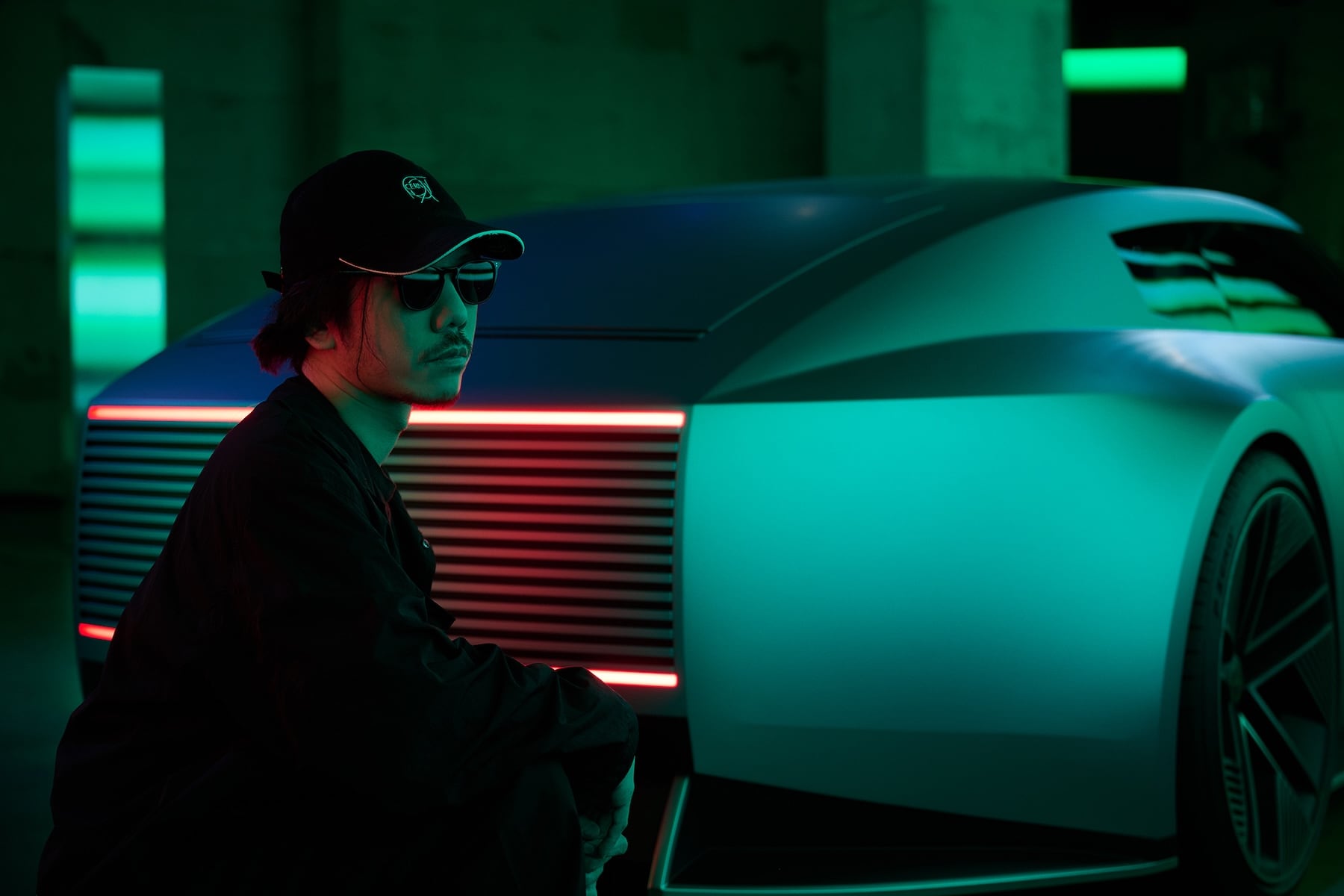
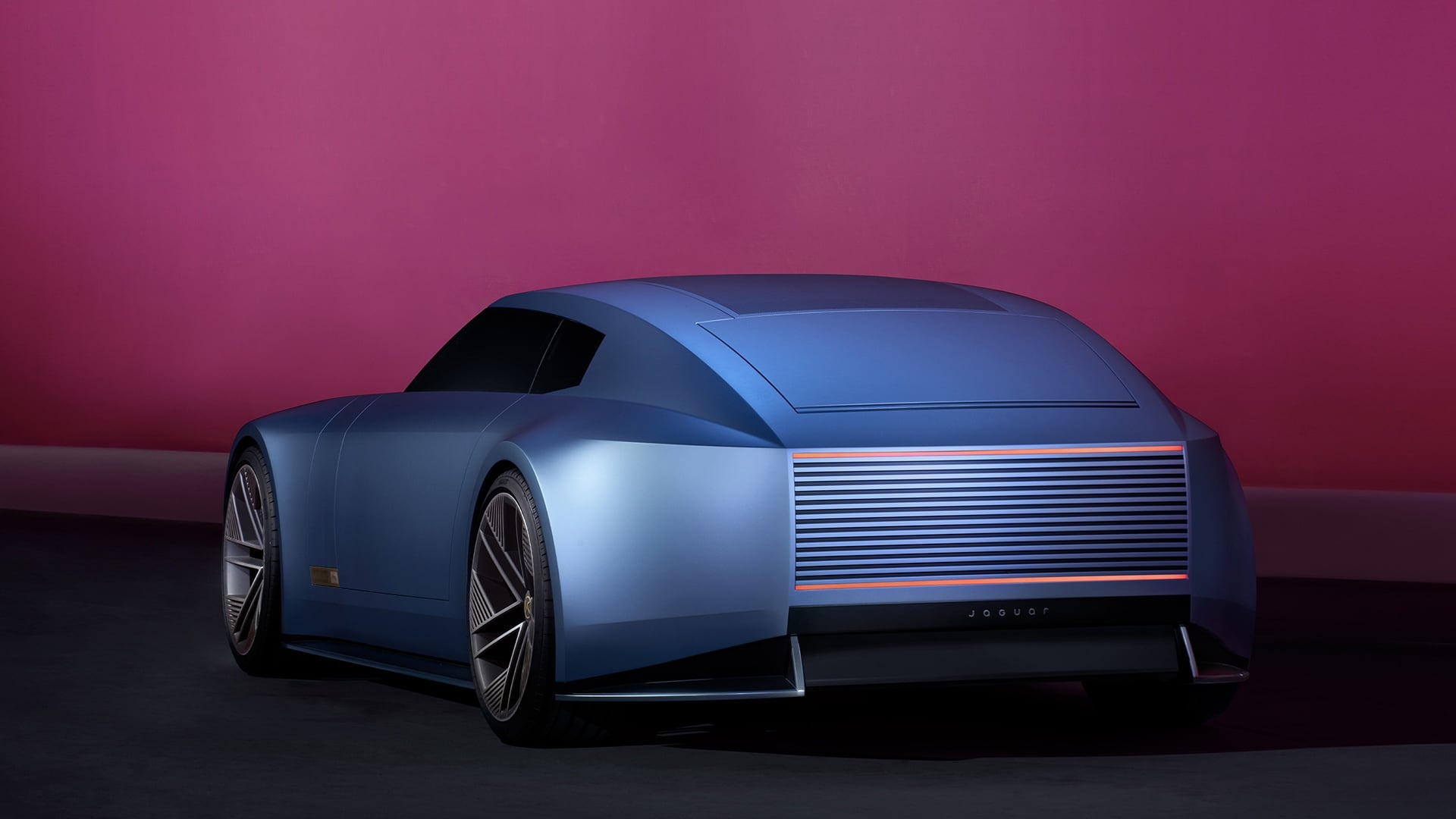
The rear continues this sculptural approach. A glassless tailgate and a panoramic roof with body-harmonised glazing create the impression of a single, cohesive form. Across the rear, horizontal graphics known as Strikethrough conceal the full-width taillights and emphasise the vehicle’s visual width.
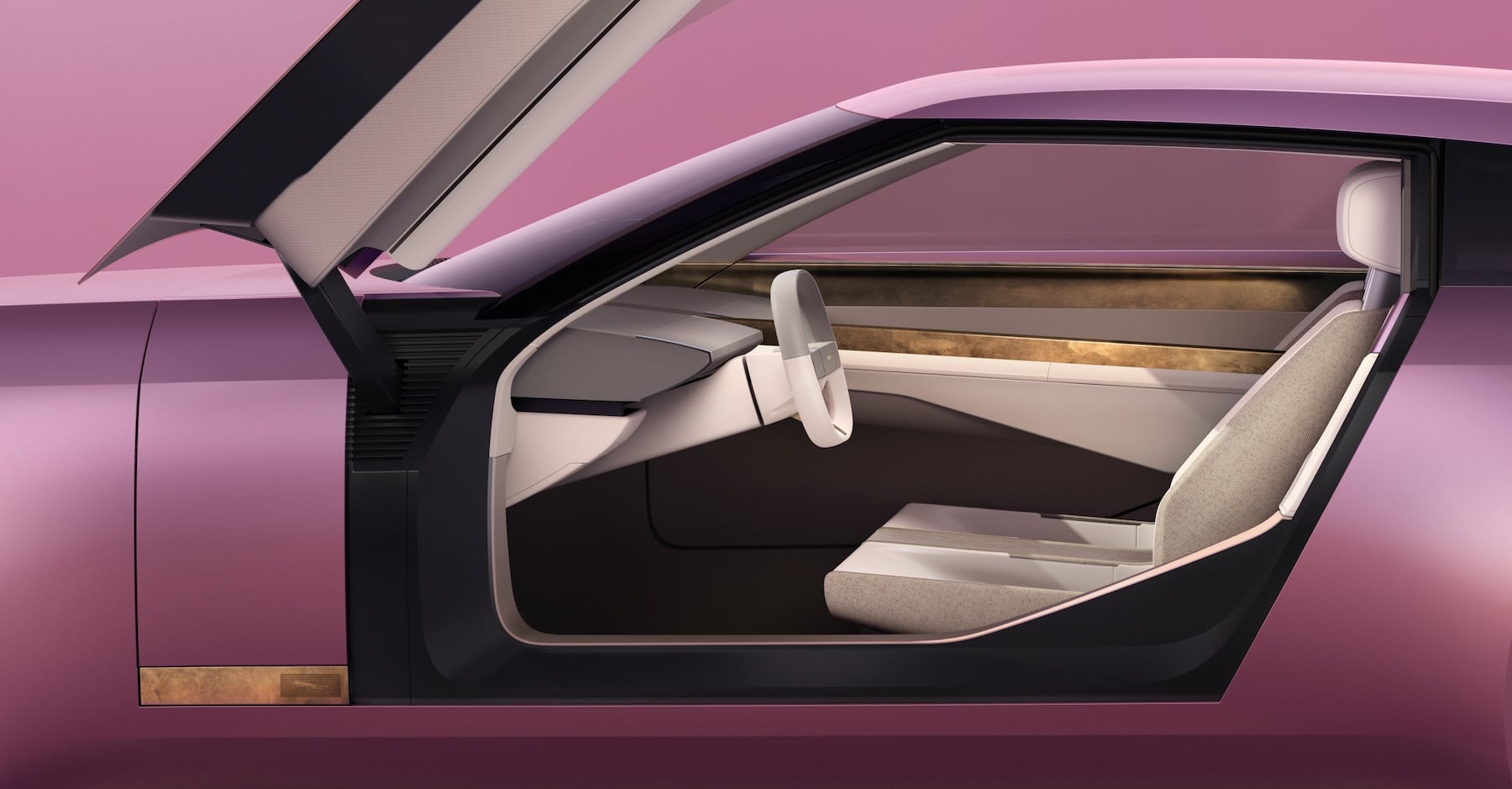
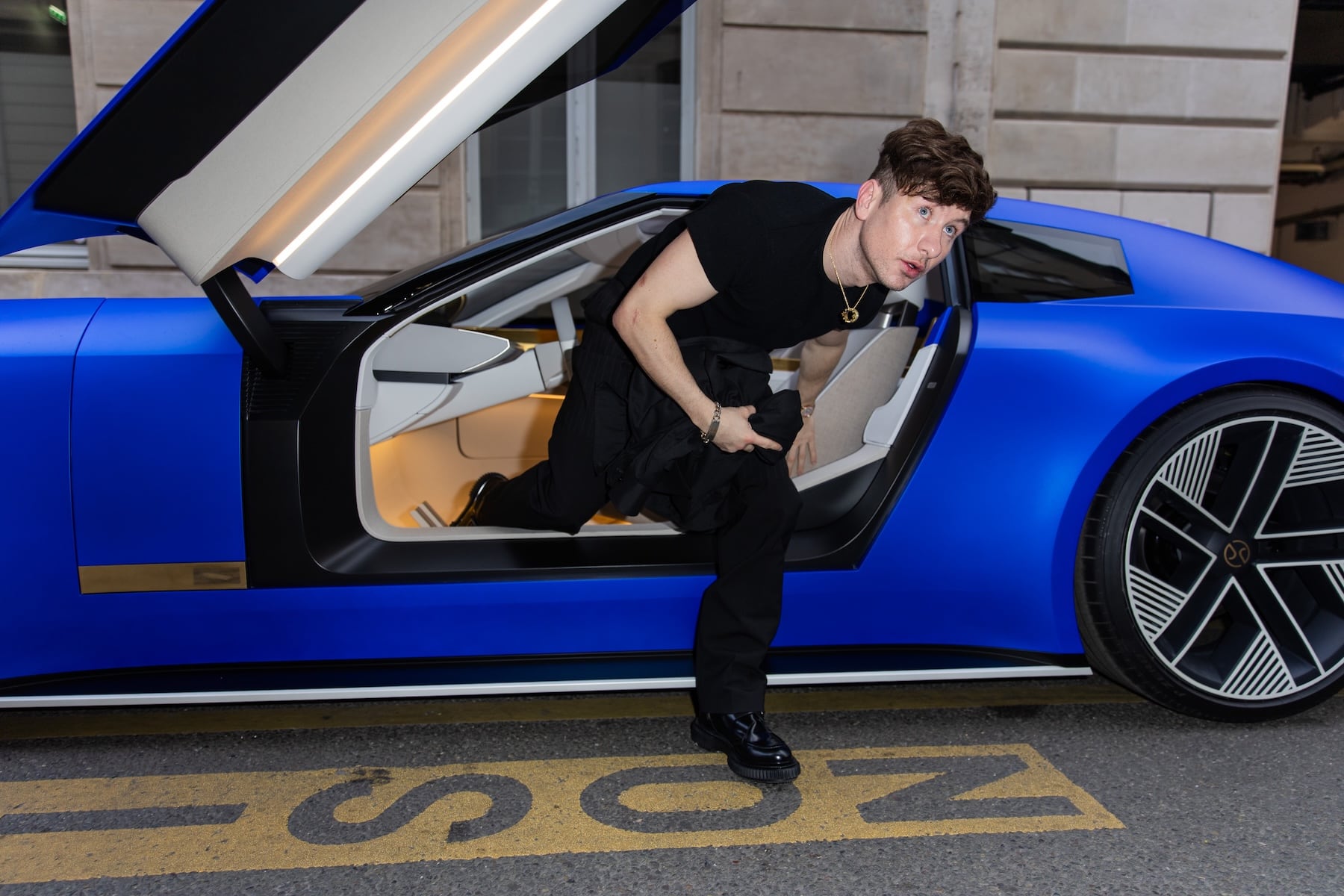
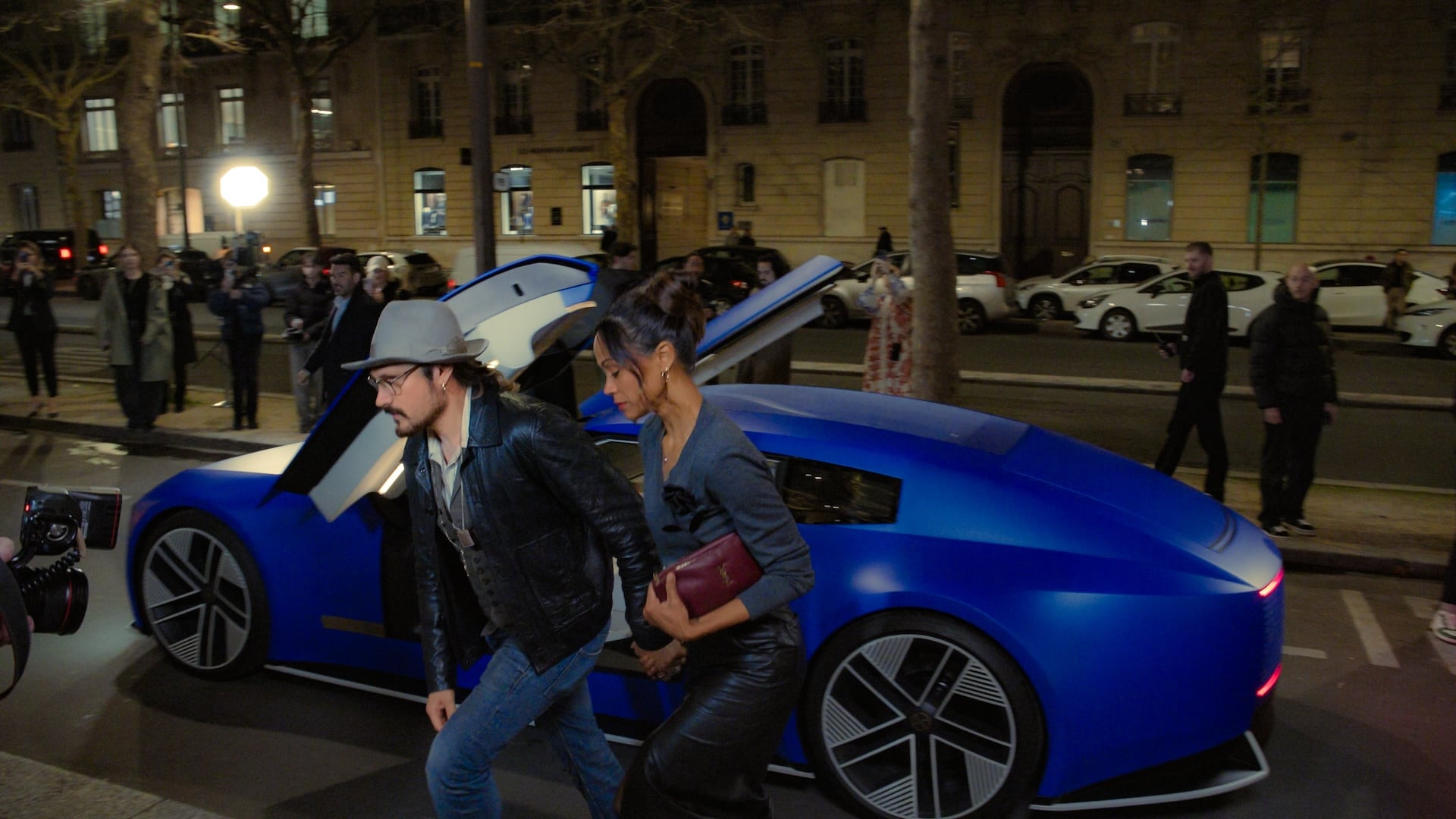
The design is completed by butterfly-opening doors and a pantograph-style rear hatch. These theatrical elements reinforce the car’s status as a design concept, rather than a conventional production-oriented study.
Type 00 is not intended to disappear into the visual landscape of modern EVs. Its exterior is a statement of scale, proportion and individuality.
Miami Pink, London Blue and the Art of Colour
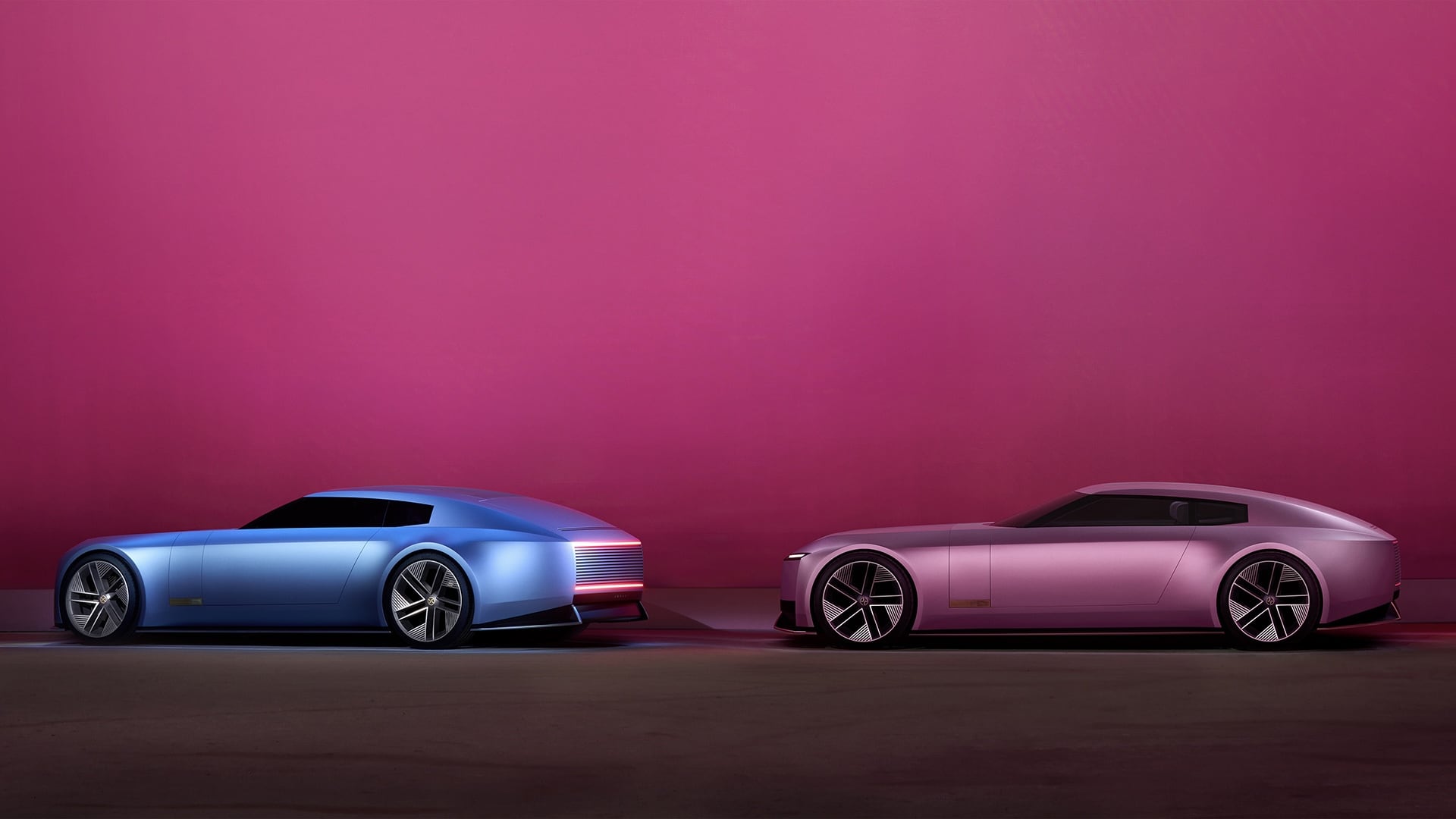
Colour plays an essential role in the identity of Jaguar Type 00.
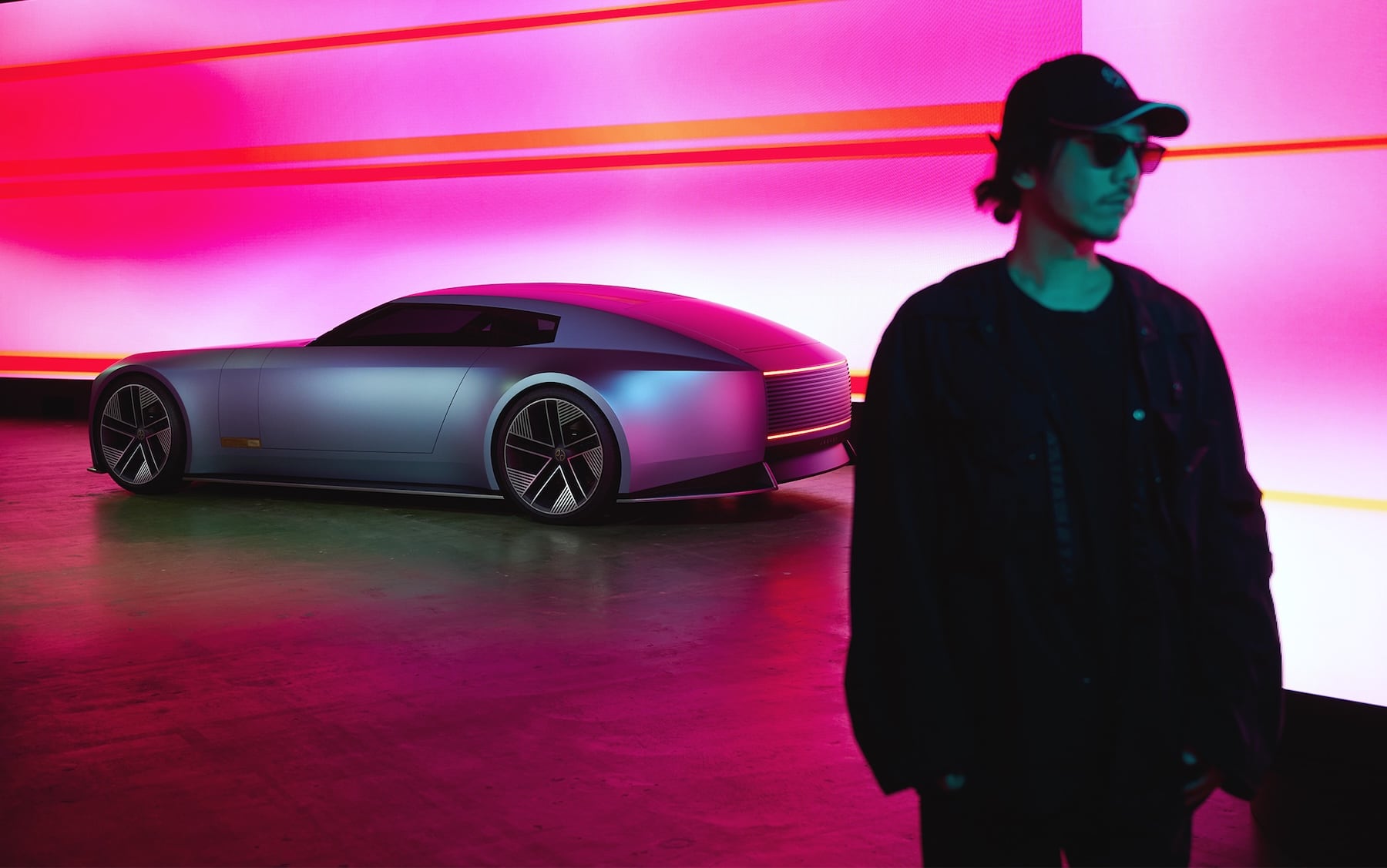
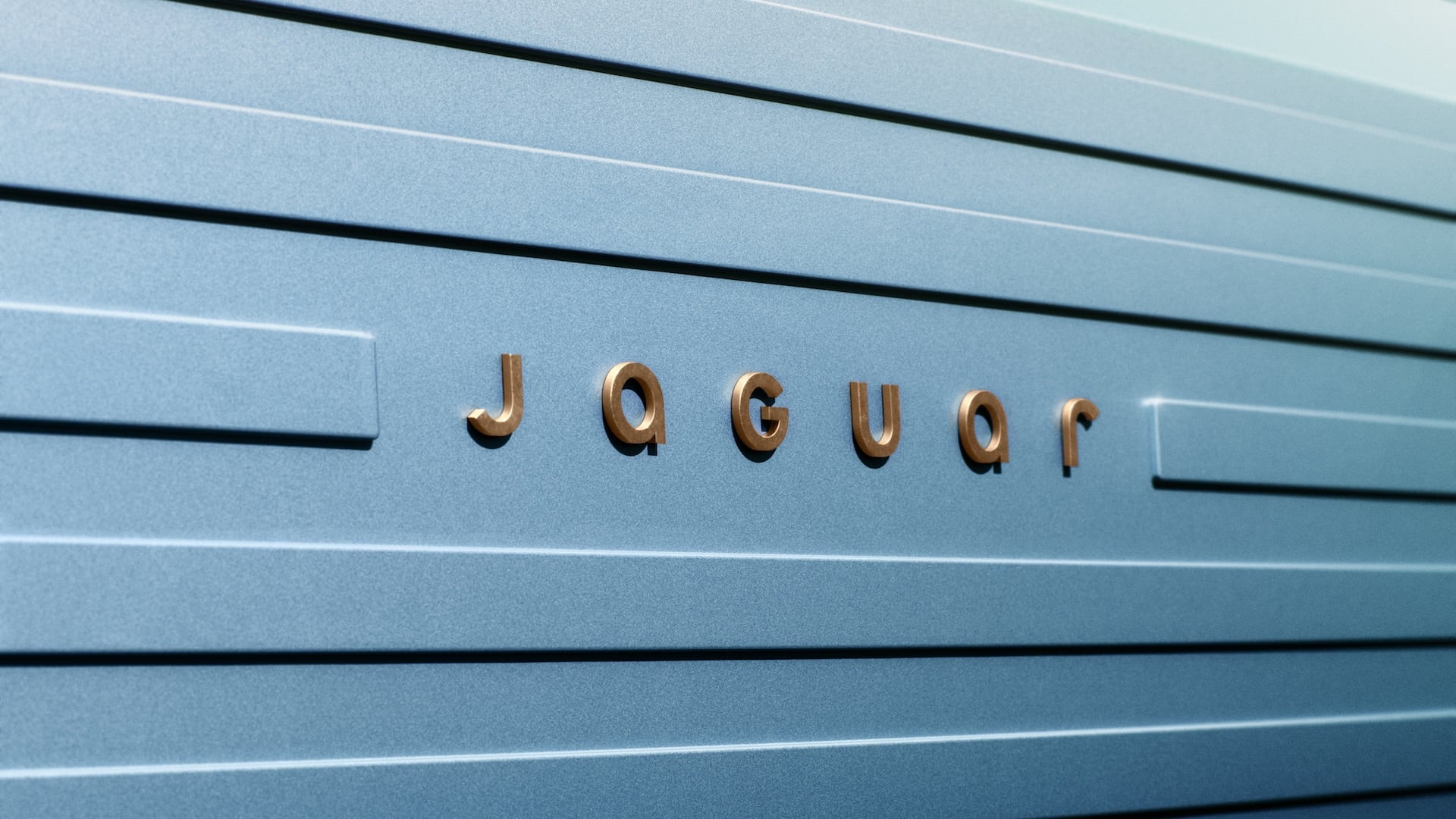
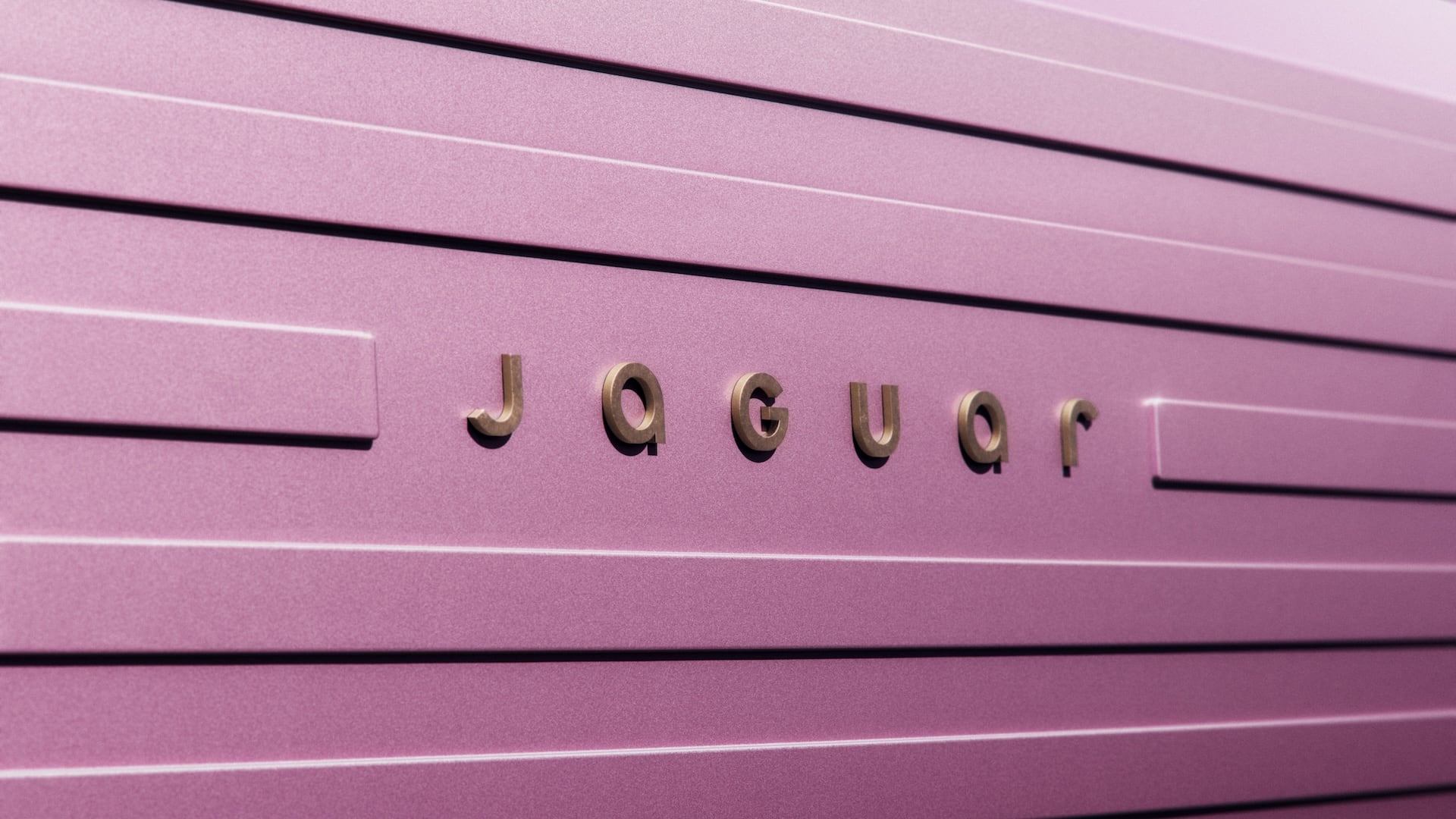
At its world premiere, the concept appeared in two contrasting finishes: Miami Pink and London Blue. Neither was chosen simply to provide an unusual paint option. Each reflects a different aspect of Jaguar’s creative vision.
Miami Pink, officially known as Satin Rhodon Rose, draws inspiration from the pastel tones of Miami’s Art Deco architecture. Its subtle rose hue also references the colour that brass develops as it ages, connecting the exterior finish to the materials used inside the car.
London Blue, based on Inception Silver Blue, pays tribute to Jaguar’s British heritage. Its inspiration comes from Opalescent Silver Blue, a colour associated with Jaguar E-Types of the 1960s.
The contrast between the two finishes reflects the balance at the heart of Exuberant Modernism: a willingness to explore unexpected forms of expression while maintaining a connection to the marque’s history.
In 2025, Jaguar introduced another bespoke finish, French Ultramarine, for Type 00’s appearances in Paris and Monaco. Developed by the brand’s own creative and paint specialists, the satin-like finish uses a distinctive pigment with metallic content to accentuate the car’s complex surfaces.
The use of colour as an artistic statement is central to Jaguar’s new identity. Rather than treating paint as a final specification choice, the brand positions it as an integral part of the vehicle’s design narrative.
An Architectural Interior Crafted from Brass, Stone and Textiles
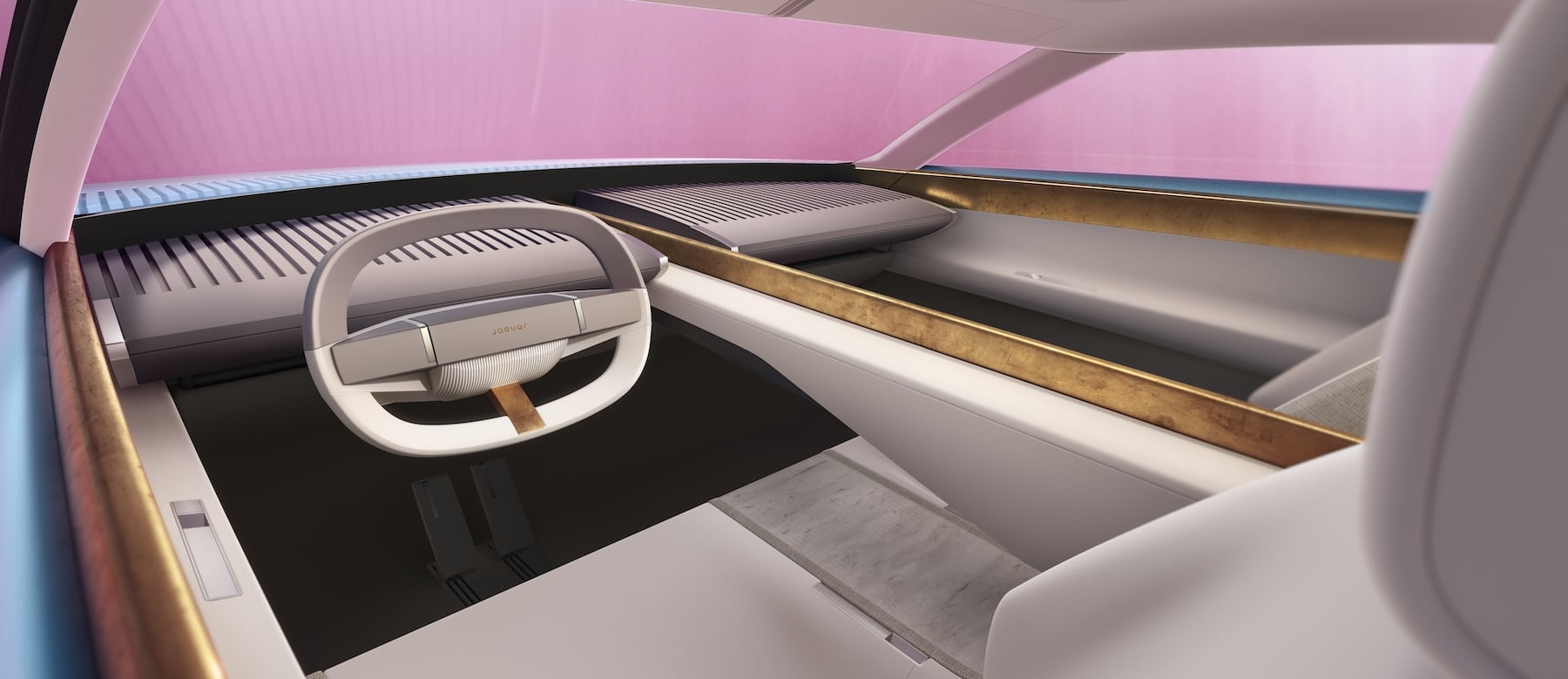
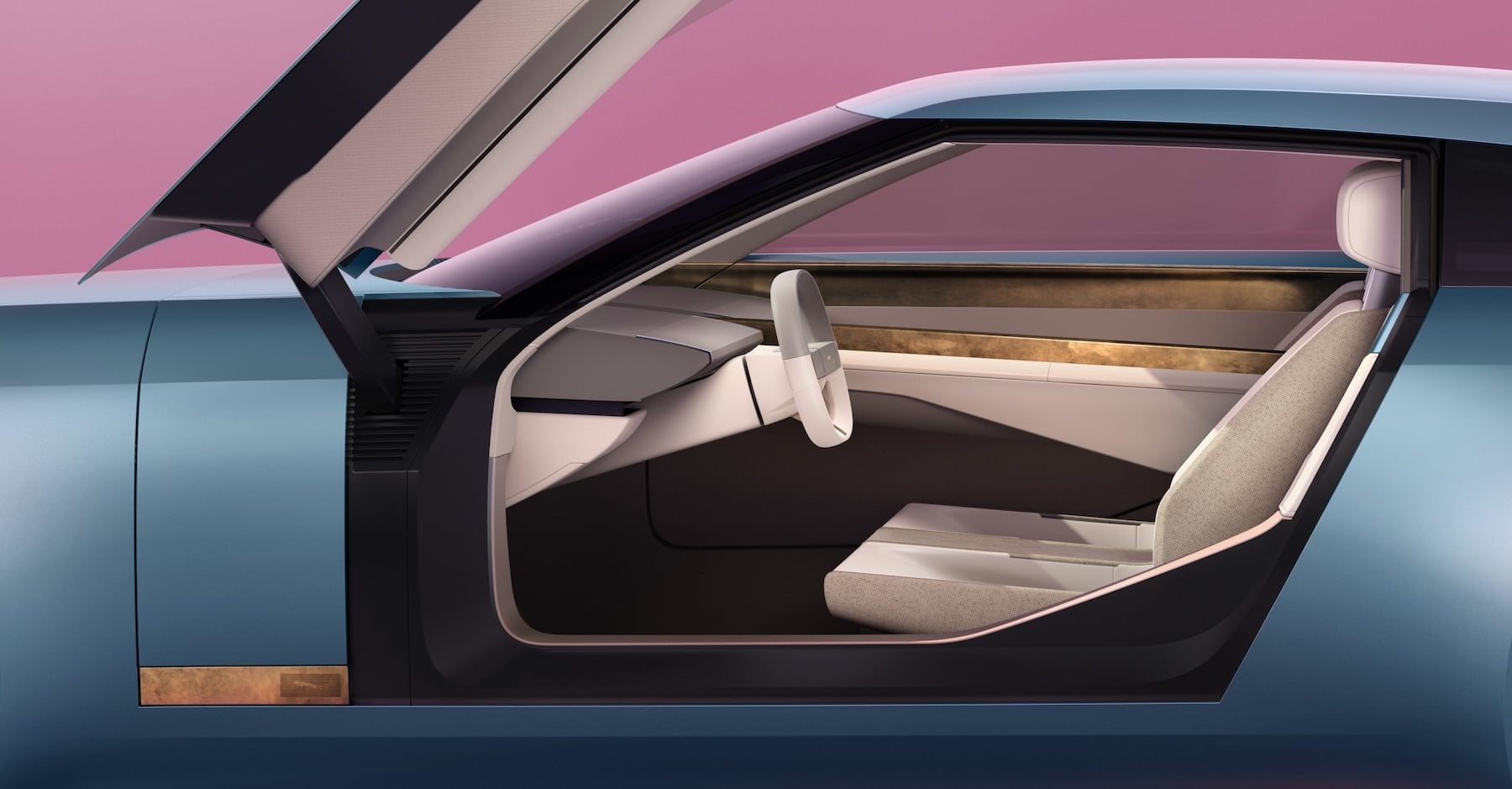
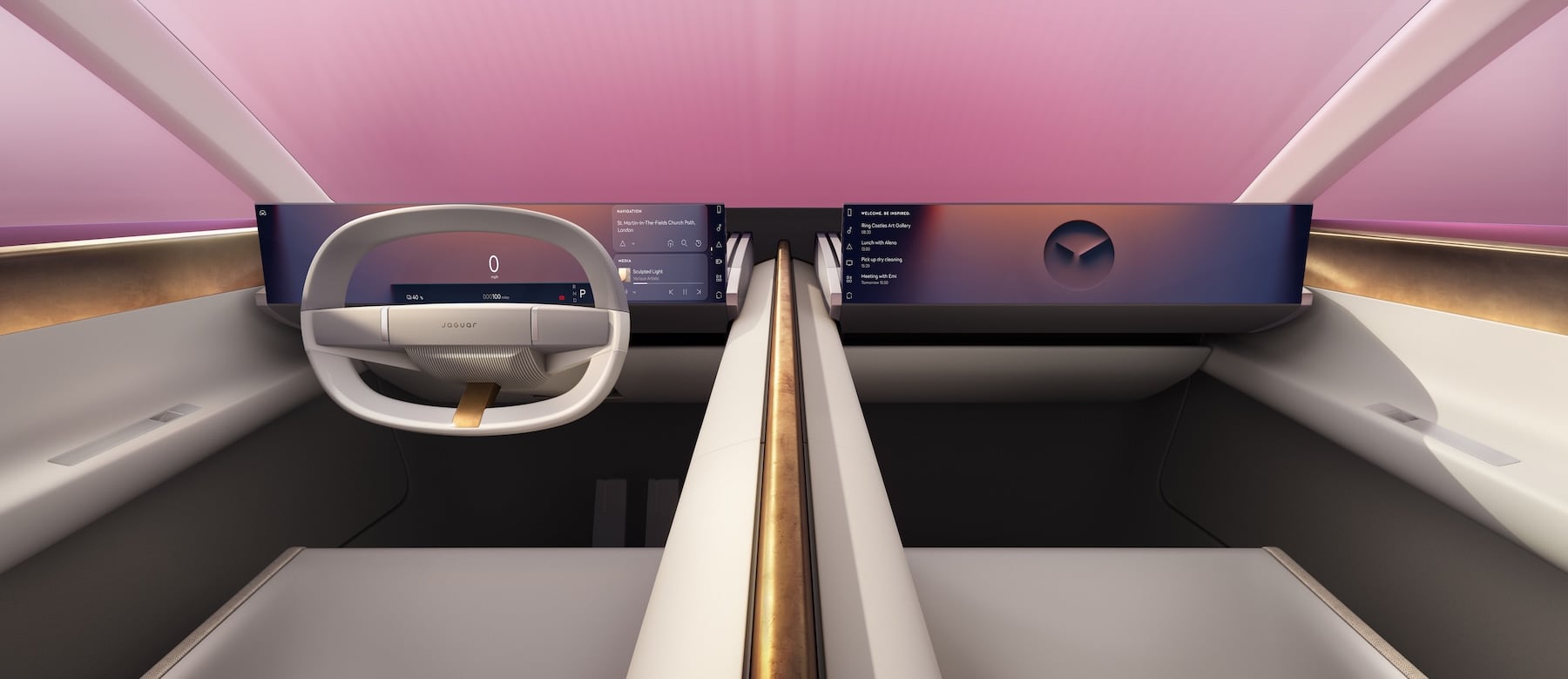
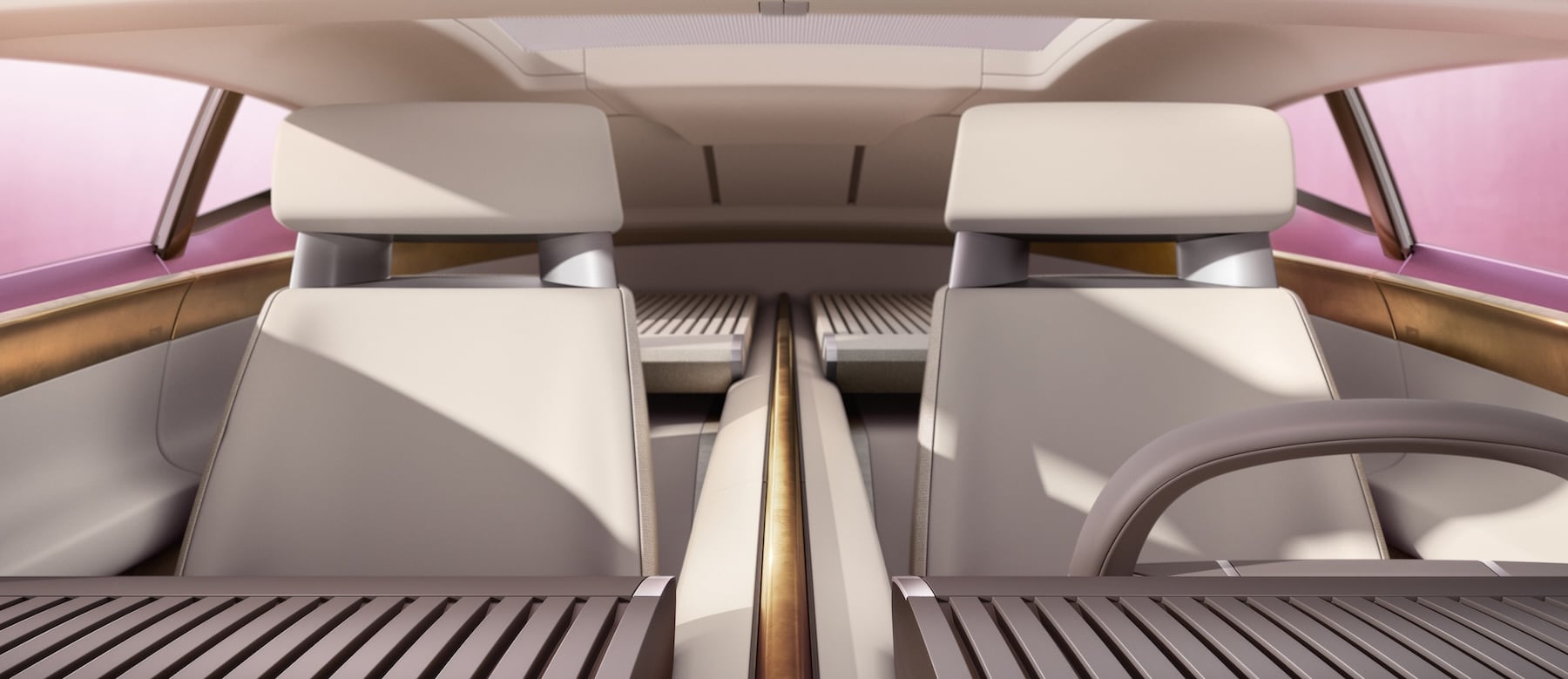
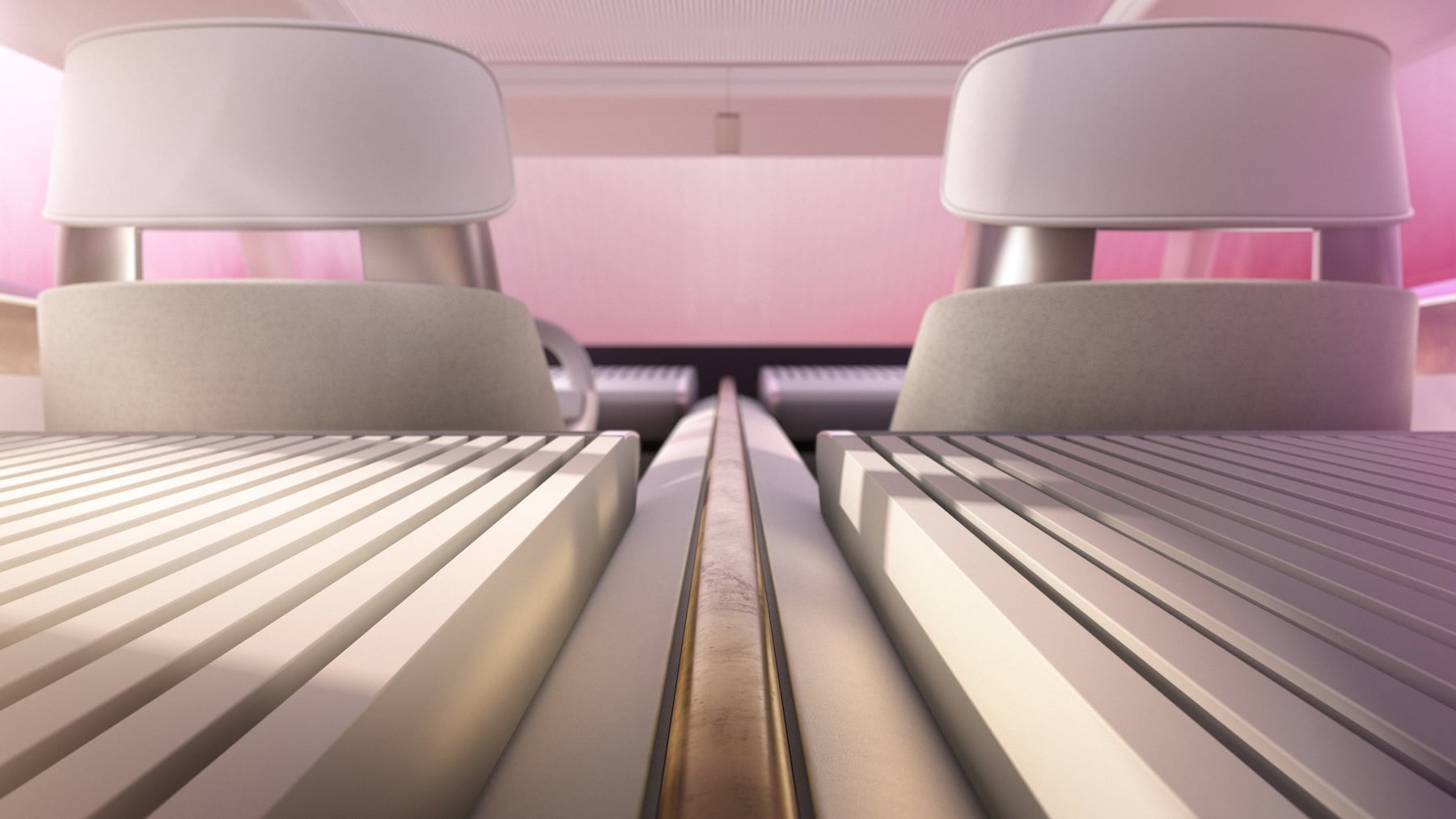
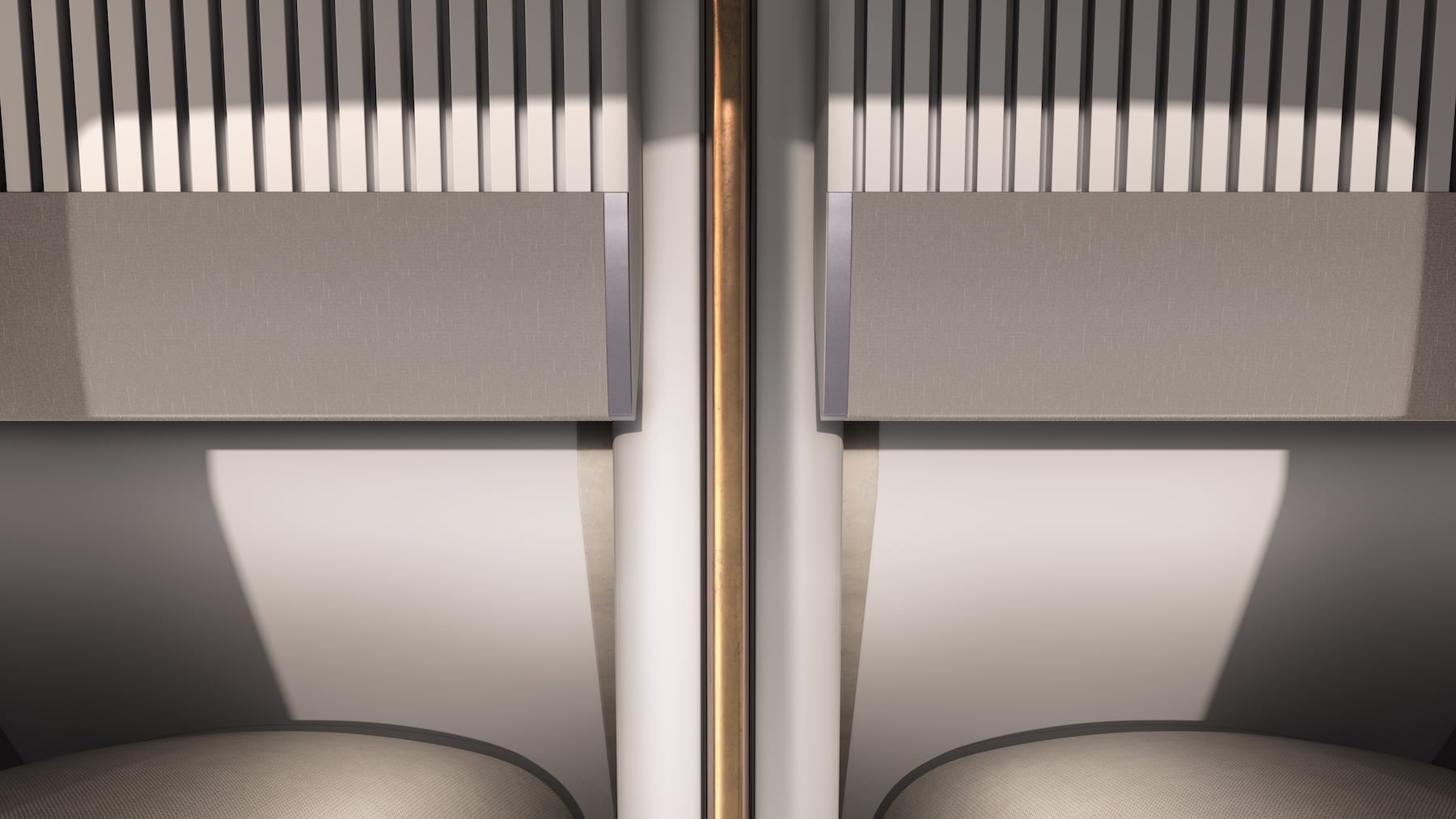
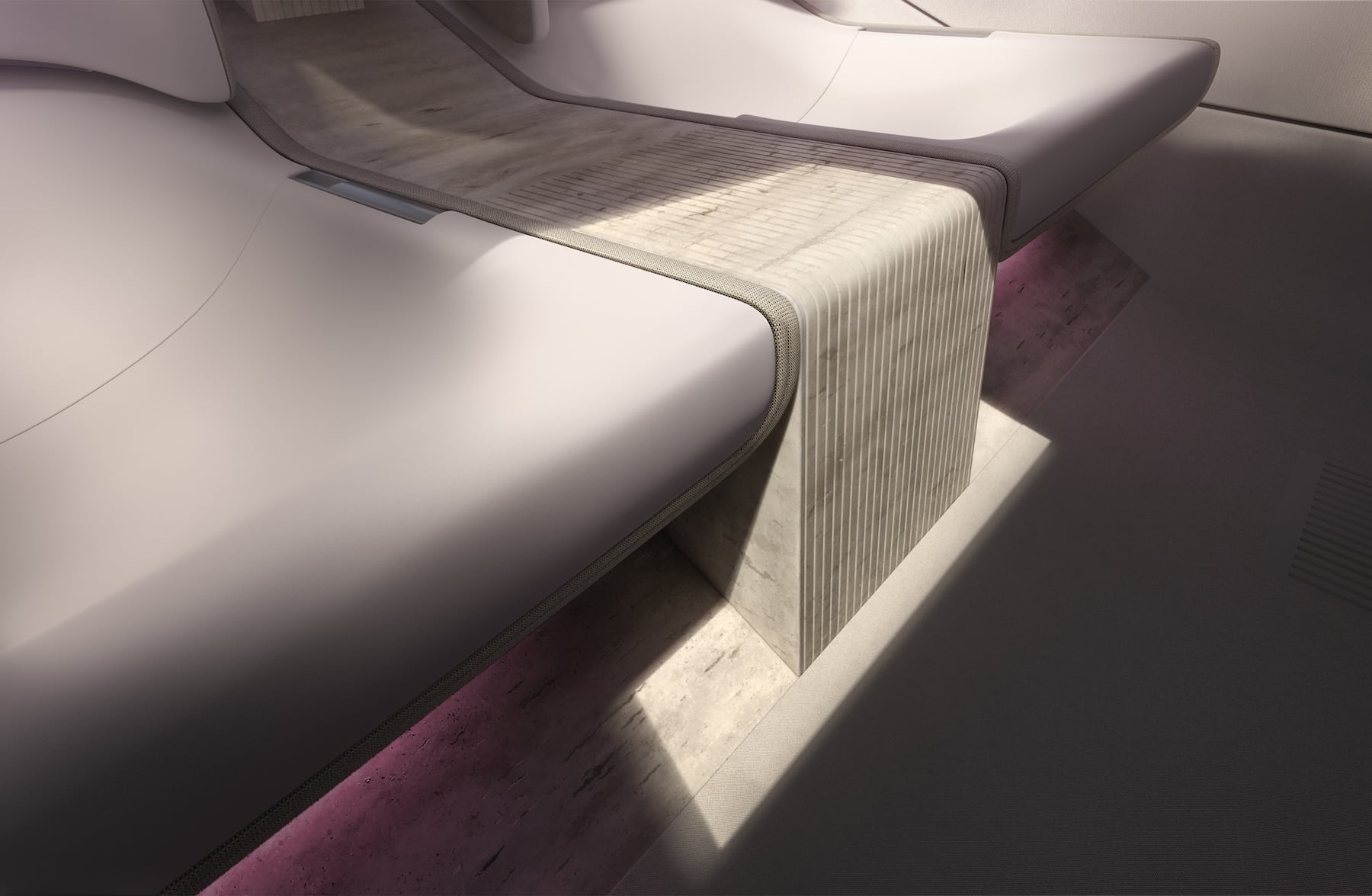
The interior of Jaguar Type 00 follows the same principles as its exterior, combining dramatic scale with carefully considered materiality.
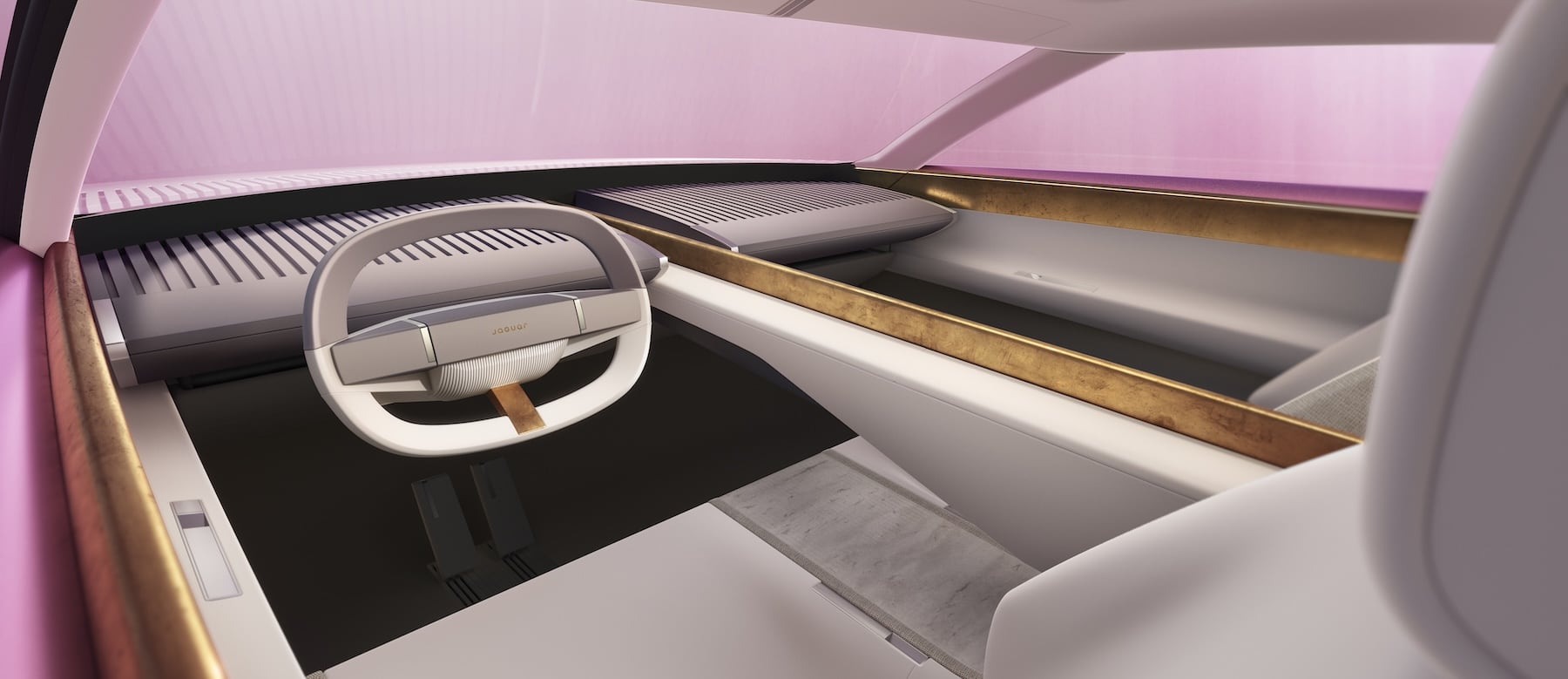
Instead of relying exclusively on glossy surfaces and large digital displays to communicate modern luxury, Jaguar has explored a more tactile palette. The principal materials are brass, travertine stone and woven textiles.
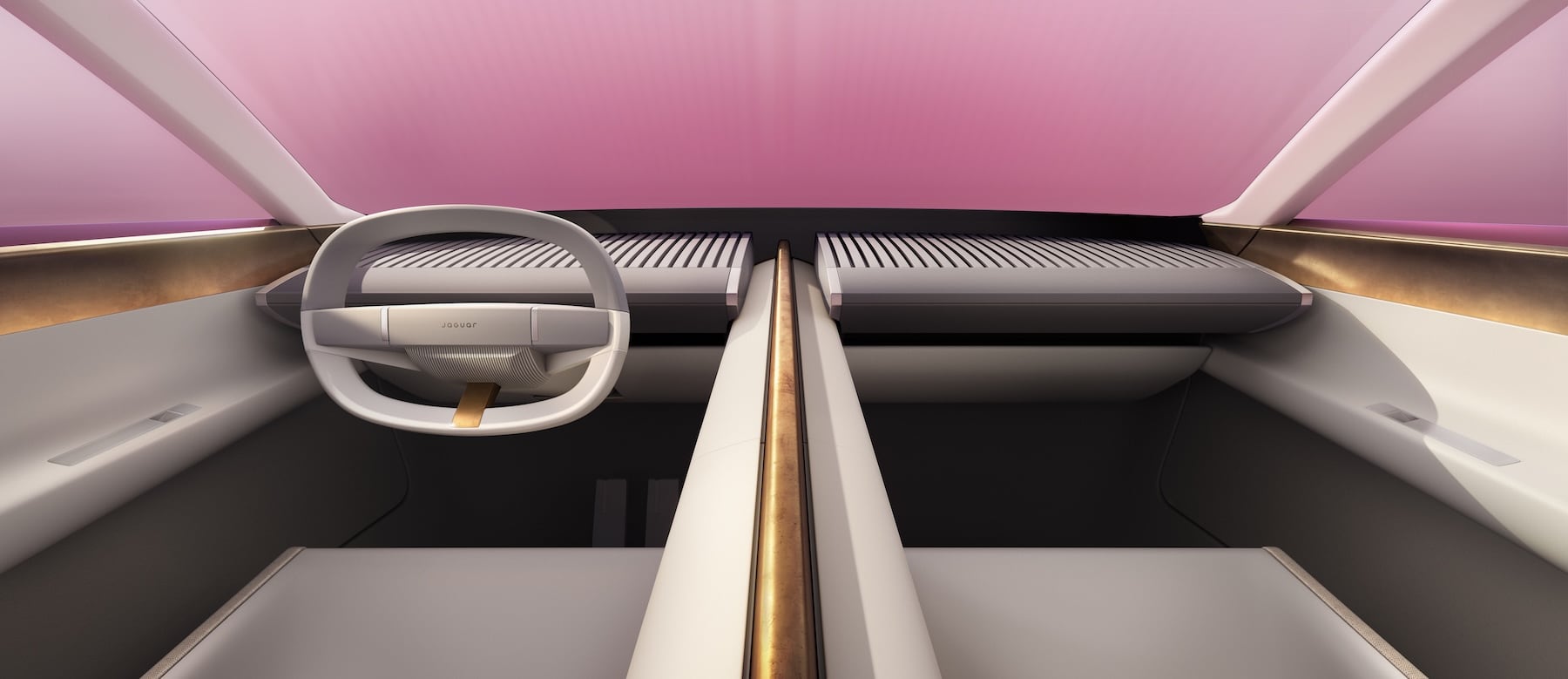
The most striking feature is a central brass spine, approximately 3.2 metres long, that runs through the cabin and separates a pair of floating instrument panels. Alongside it, two additional hand-finished brass elements extend through the interior, creating a strong architectural structure.
Travertine provides a contrasting natural texture, while the seats and other surfaces are wrapped in a wool-blend textile inspired by handwoven yarns. The combination introduces warmth and a sense of craftsmanship into an otherwise futuristic environment.
This material-led approach is a notable departure from the technology-first aesthetic of many contemporary electric vehicles. In Type 00, digital interfaces are designed to complement the cabin rather than dominate it.
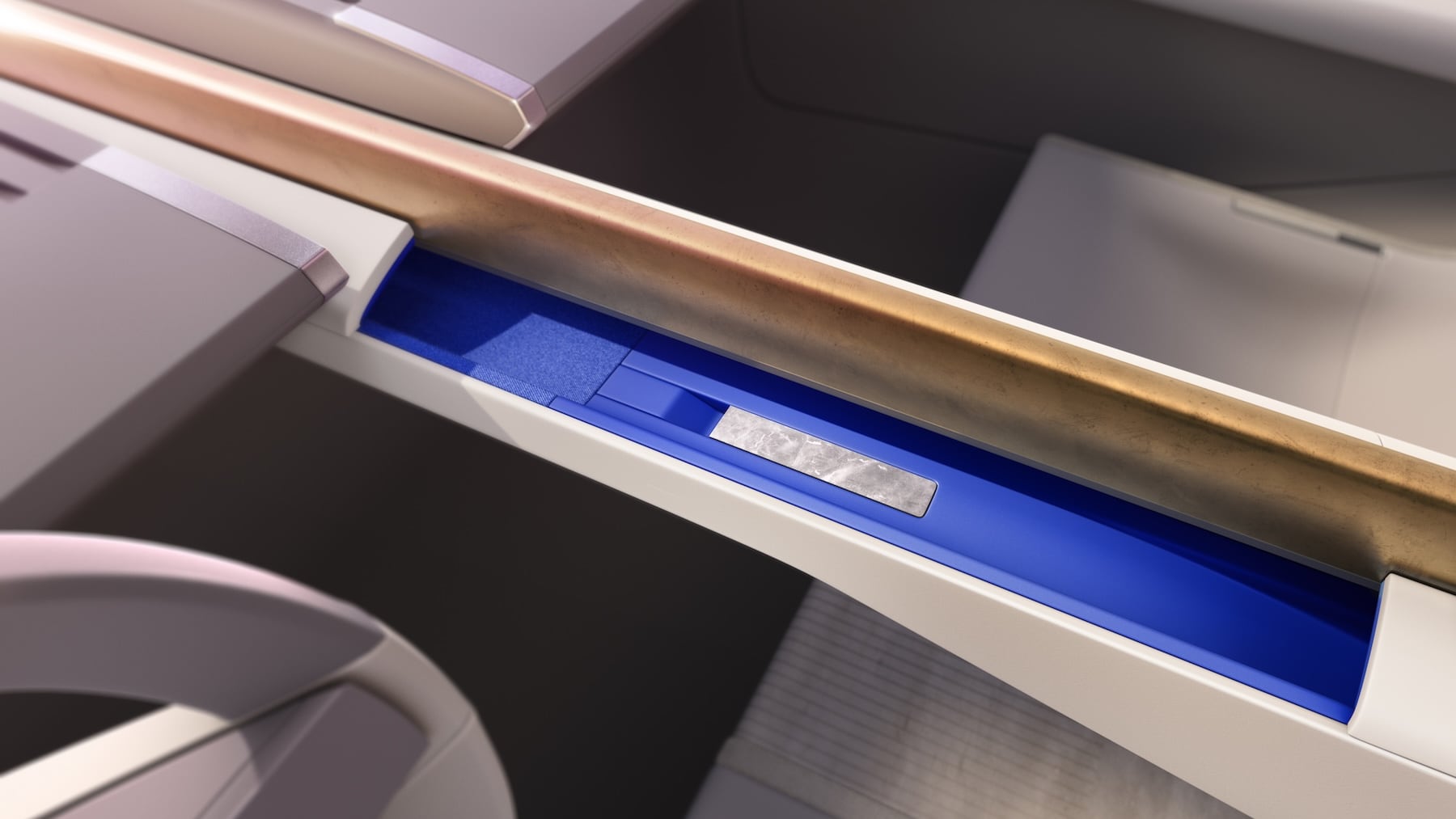
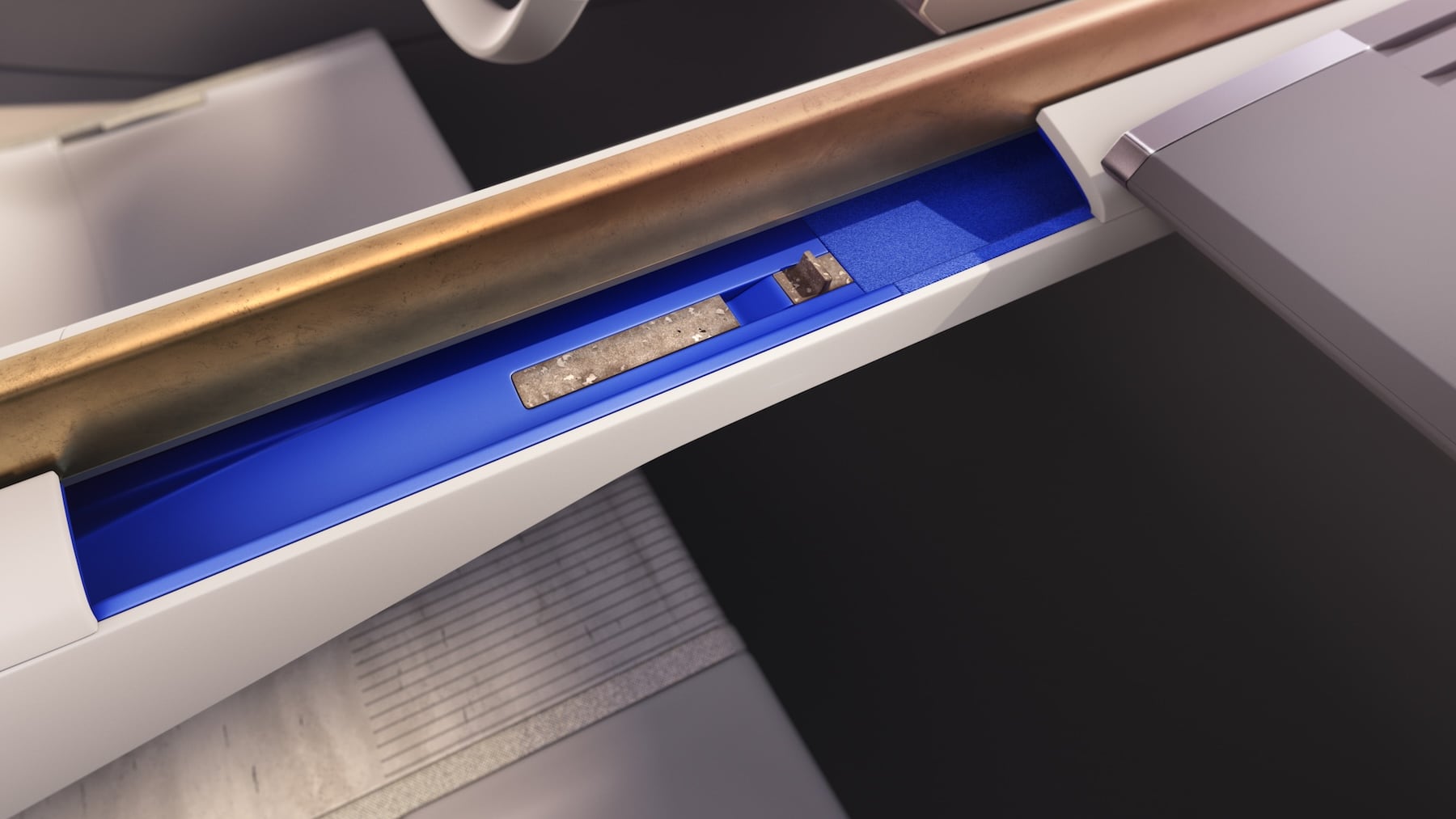
Screens emerge silently from the dashboard when needed, and electrically operated storage compartments reveal concealed sections of colour. When these features are not in use, the interior retains its clean, sculptural appearance.
A digital ClearSight rear-view display replaces the conventional mirror, while the broader layout is designed to preserve the visual clarity of the cabin.
The result is an interior that draws inspiration from architecture, furniture and contemporary industrial design as much as from the automotive world.
Prism Case: A Personalised Experience for the Senses
Perhaps the most experimental feature of Type 00 is its Prism Case, a concept that extends personalisation beyond conventional choices of trim, upholstery and colour.
The case contains three totems made from different natural materials: brass, travertine and alabaster. Placing one of them inside the centre console is intended to change the atmosphere of the cabin.
Depending on the selected material, elements such as ambient lighting, soundscapes, screen graphics and bespoke fragrances respond accordingly.
The idea is to allow occupants to shape the character of the interior around their preferences and mood. Personalisation becomes an interactive experience rather than a decision made once when ordering the car.
This concept also illustrates Jaguar’s broader approach to technology. Instead of presenting innovation as a collection of visible screens and electronic features, the brand seeks to integrate it into an environment designed to engage multiple senses.
The Prism Case remains part of the Type 00 design vision, and its appearance in the concept should not be taken as confirmation that the feature will enter production unchanged. Nevertheless, it offers an intriguing indication of how Jaguar imagines the next stage of luxury: more personal, more sensory and less dependent on conventional symbols of status.
From Miami to Tokyo: Jaguar’s Connection with Art and Culture
Jaguar’s presentation of Type 00 has consistently taken place in cultural settings that reinforce its new creative identity.
Following its world premiere at Miami Art Week in December 2024, the concept appeared on the streets of Paris during Fashion Week in March 2025. Its arrival at high-profile fashion venues generated considerable attention, demonstrating how a concept car can function as a cultural statement as well as an automotive showcase.
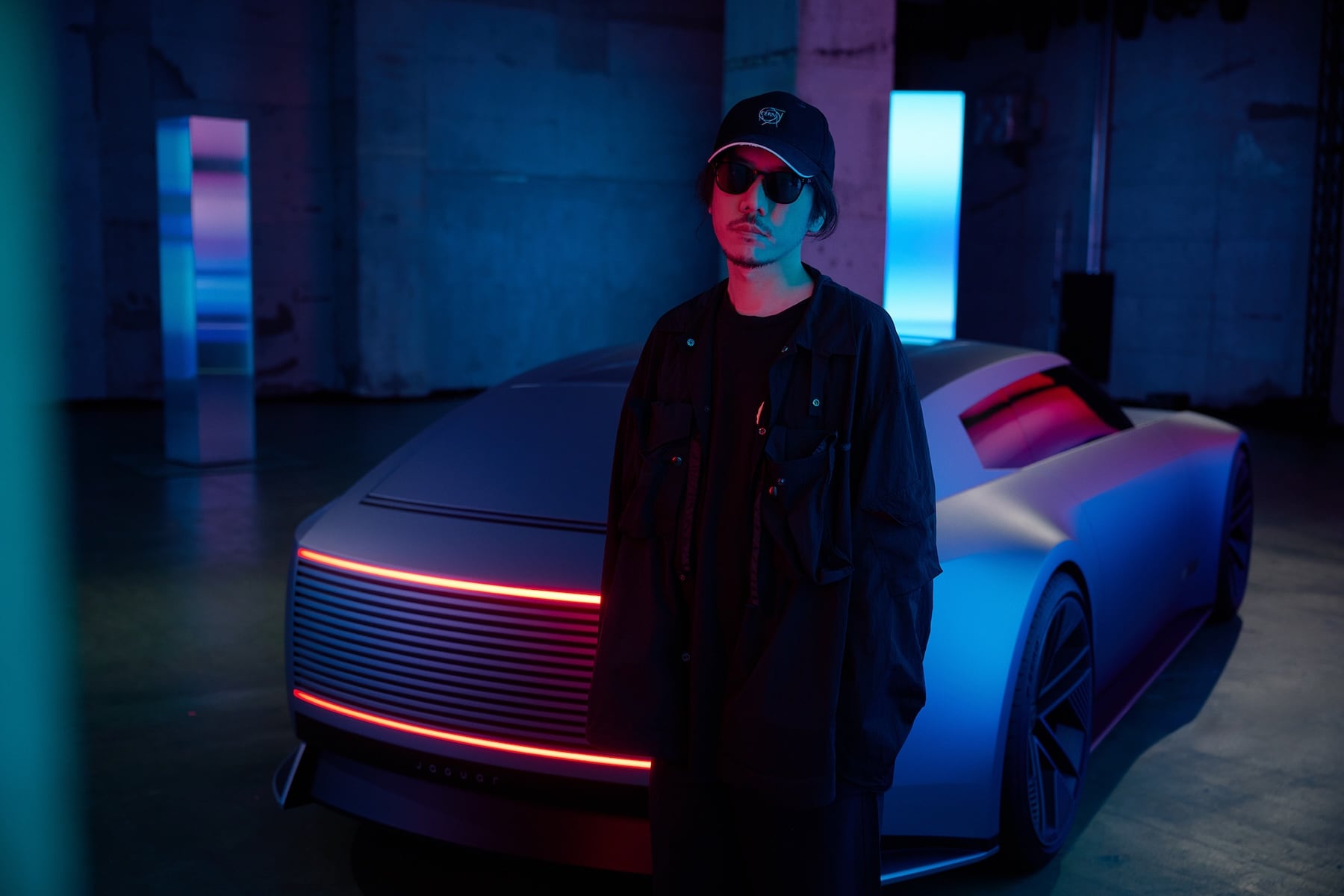
In May 2025, Type 00 made its Asian debut in Tokyo through Tokyo Future 00, an immersive installation developed in collaboration with Japanese artist and art director YOSHIROTTEN.
Presented at Warehouse Terrada, the installation combined light, colour, projection and sound to reinterpret Jaguar’s new visual identity. The Strikethrough motif was transformed into an evolving visual element, while the car itself became the centrepiece of the experience.
Japanese music producer Chaki Zulu also contributed a bespoke soundscape, creating a connection between the vehicle, the surrounding architecture and the audience.
These projects reflect Jaguar’s ambition to engage with communities interested in design, fashion, architecture and contemporary art. The strategy extends to the brand’s retail plans, which include a select network of exclusive brand stores designed to reflect their local cultural environments.
For Jaguar, the future of luxury is therefore not limited to what customers drive. It also encompasses the experiences, environments and creative communities with which the brand chooses to associate itself.
Jaguar Type 01: From Concept to Production
Type 00 was conceived as a design vision rather than a production-ready vehicle. Its significance, however, became clearer as Jaguar began revealing the next stage of its transformation.
On 7 October 2026, Jaguar unveiled the Type 01 in New York. The all-electric four-door GT is the first production model of the brand’s new era, carrying forward key elements of the concept’s design language.
The relationship between the two vehicles is immediately apparent. Type 01 retains the long bonnet, low roofline, dramatic proportions, 23-inch wheels and distinctive horizontal Strikethrough graphics that made Type 00 so recognisable. It also adopts a glassless tailgate, maintaining the sculptural quality that defined the original concept.
Beneath the surface, the production car uses Jaguar’s dedicated JEA architecture and a tri-motor electric powertrain. Jaguar quotes a maximum output of 1,030 PS and 1,365 Nm of torque, with a claimed 0–60 mph time of 3.1 seconds.
A usable 118 kWh battery and 850-volt architecture underpin a manufacturer-estimated range of up to 400 miles. Jaguar also states that up to 200 miles of range can be added in as little as 13 minutes when using a suitable 350 kW rapid charger. These figures are manufacturer claims and are subject to market-specific testing standards and charging conditions.
The production model also translates Type 00’s material-led approach into a more conventional cabin layout, with brass-effect detailing, a full-width panoramic soundbar, a 24-inch OLED driver display and a secondary seven-inch touchscreen.
Type 01 is designed, engineered and built in the United Kingdom. Jaguar has announced that orders will open in early 2027, with prices starting at £130,000 in the UK and a US starting MSRP of $130,500.
While Type 01 necessarily incorporates the requirements of a production vehicle, its close visual relationship with Type 00 demonstrates how seriously Jaguar has taken the concept’s original design direction.
Type 00 was never intended to be simply another electric car study. It established the visual and philosophical foundation on which the new Jaguar range is being built.
Jaguar Type 00: A Statement of Intent for the Electric Age
Jaguar Type 00 represents a particularly ambitious attempt to redefine a historic automotive brand for a new era.
Its significance lies not in a single styling feature or technology, but in the way its various elements work together. Dramatic proportions, unconventional colours, architectural materials and sensory personalisation all contribute to a coherent design vision.
The concept challenges the idea that an electric vehicle must follow a familiar formula to communicate modernity. Instead, it argues that the next generation of luxury cars should be defined by originality, craftsmanship and emotional impact.
There is an inherent risk in such a radical transformation. Jaguar’s new direction departs considerably from the visual language associated with many of its most celebrated historical models, and its commercial success will ultimately depend on how effectively the production vehicles translate this ambition into a compelling ownership experience.
Nevertheless, Type 00 offers a clear statement of intent. It seeks to honour the spirit of cars such as the E-Type not by reproducing their appearance, but by embracing the creative independence that made them memorable.
With the arrival of Type 01, that vision has moved beyond the conceptual stage. The next question is whether Jaguar can turn its distinctive design language into a new generation of vehicles that deliver the same sense of occasion on the road as they promise in the studio.
For a brand built on the principle of “Copy Nothing,” Type 00 is an appropriately uncompromising place to begin.