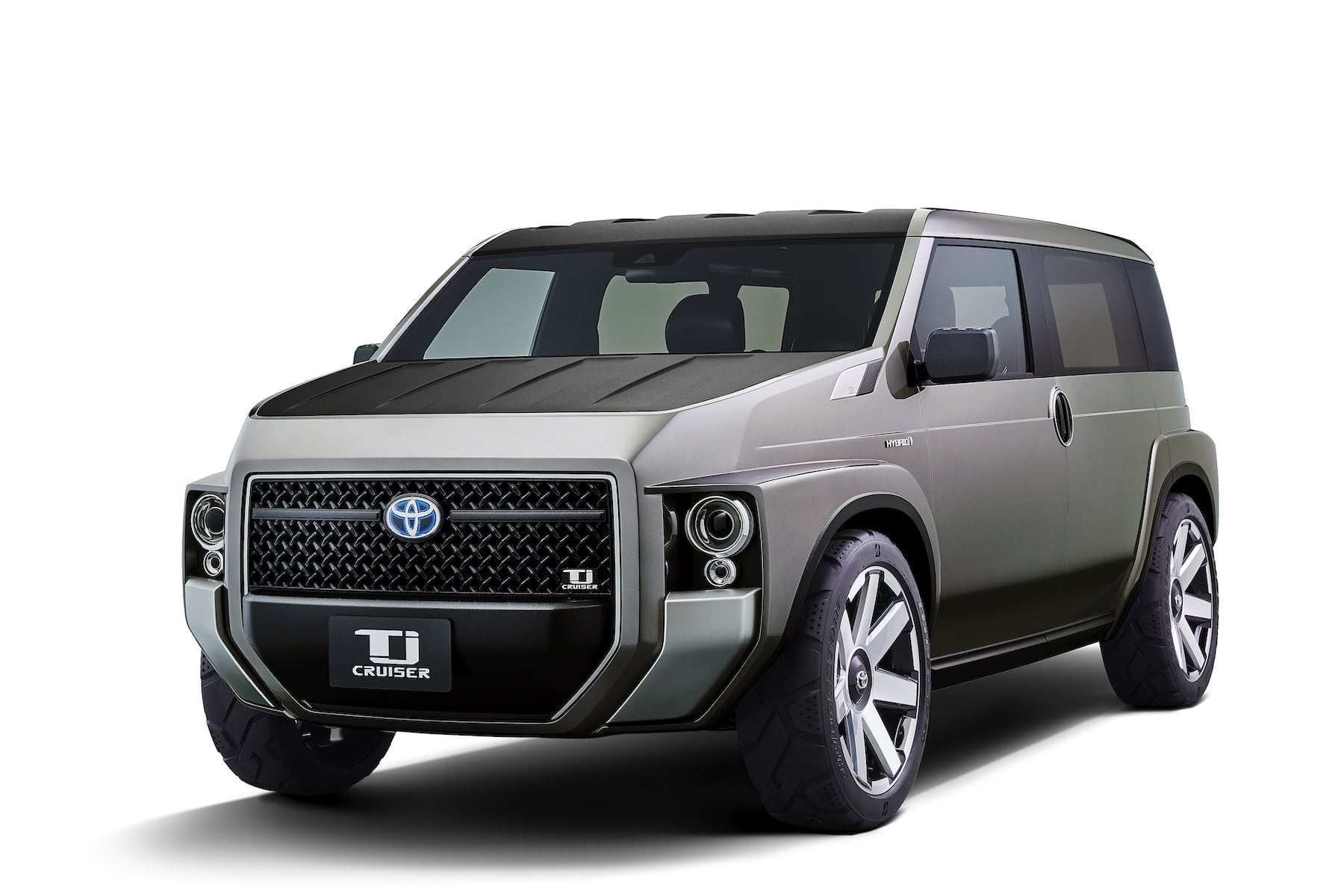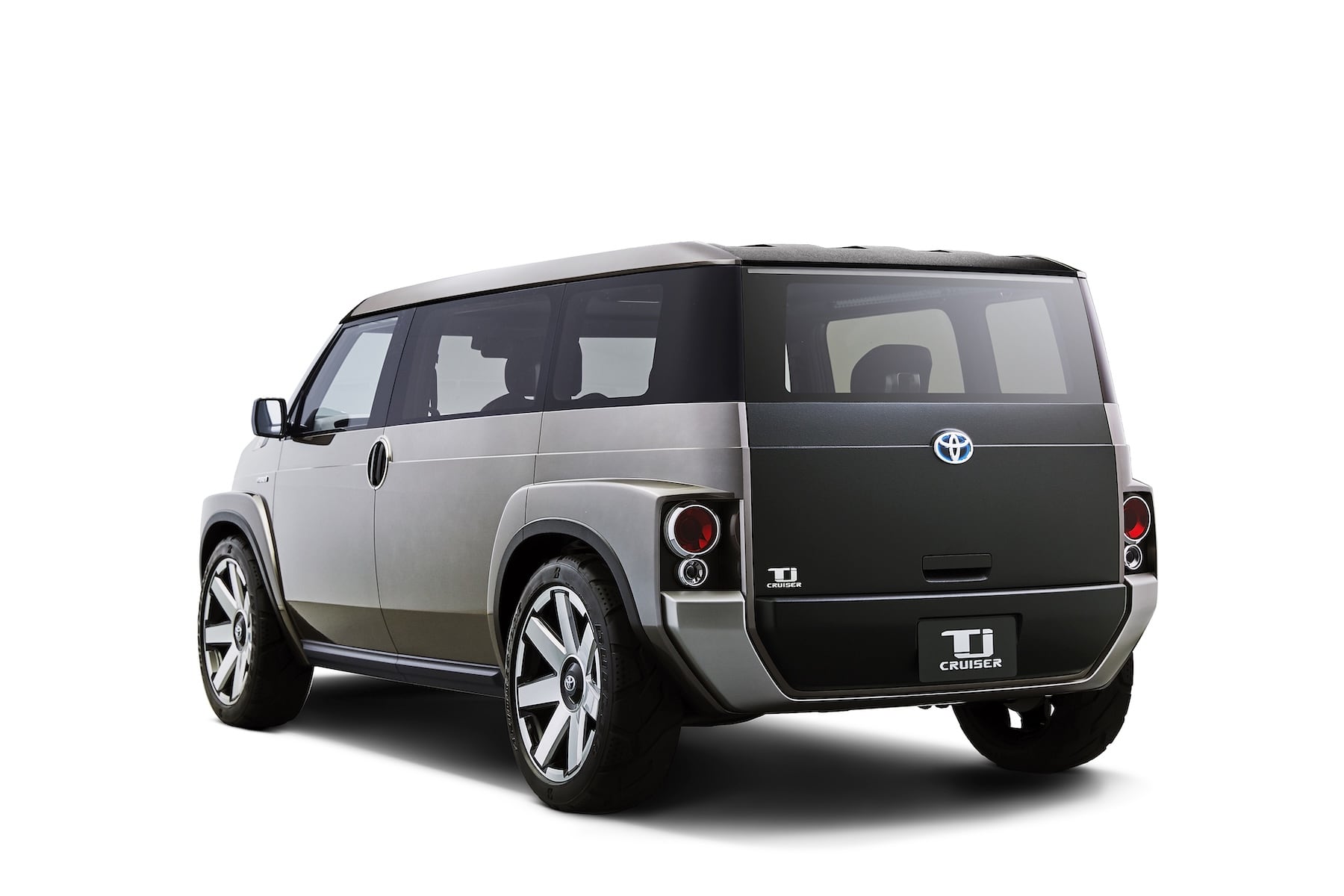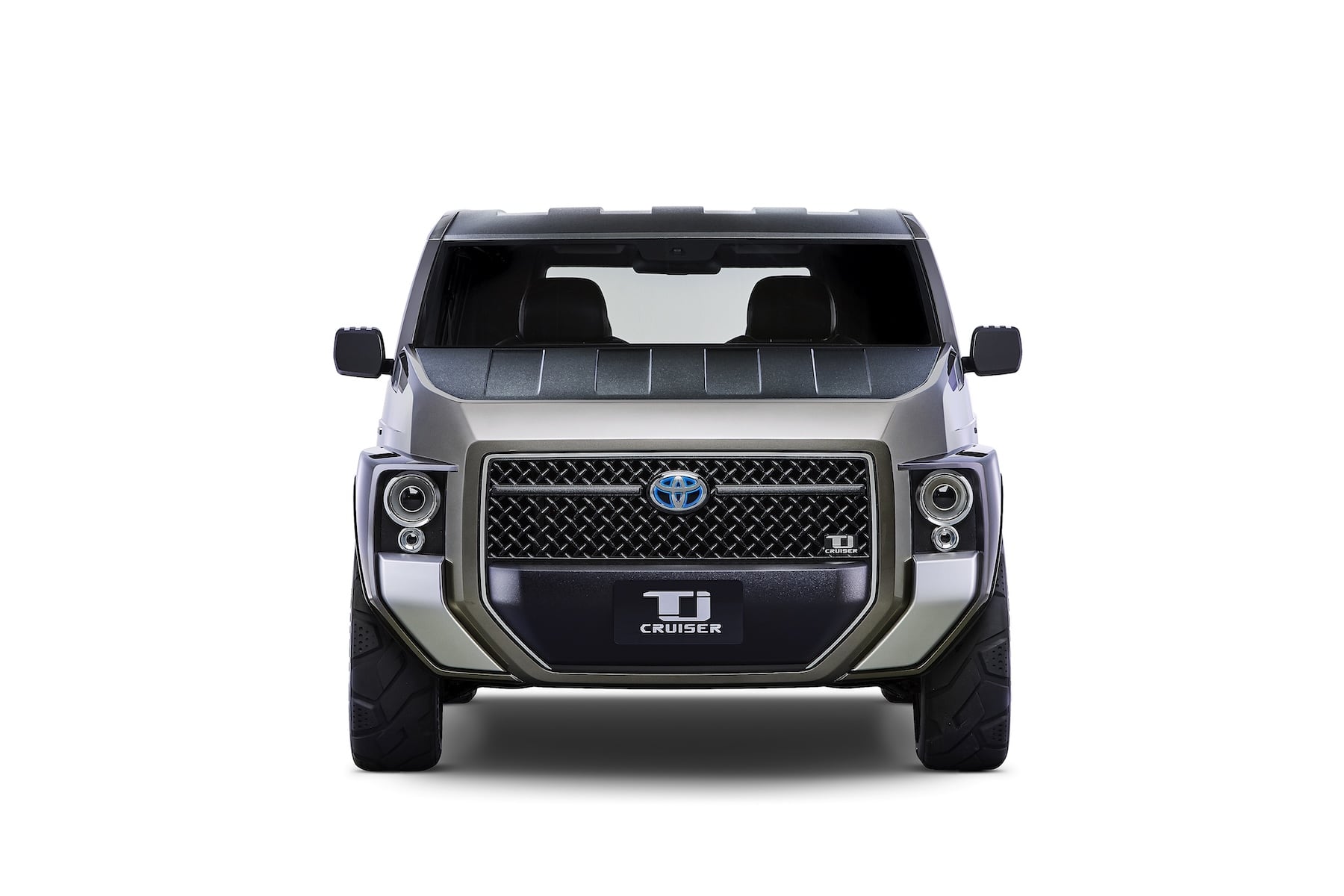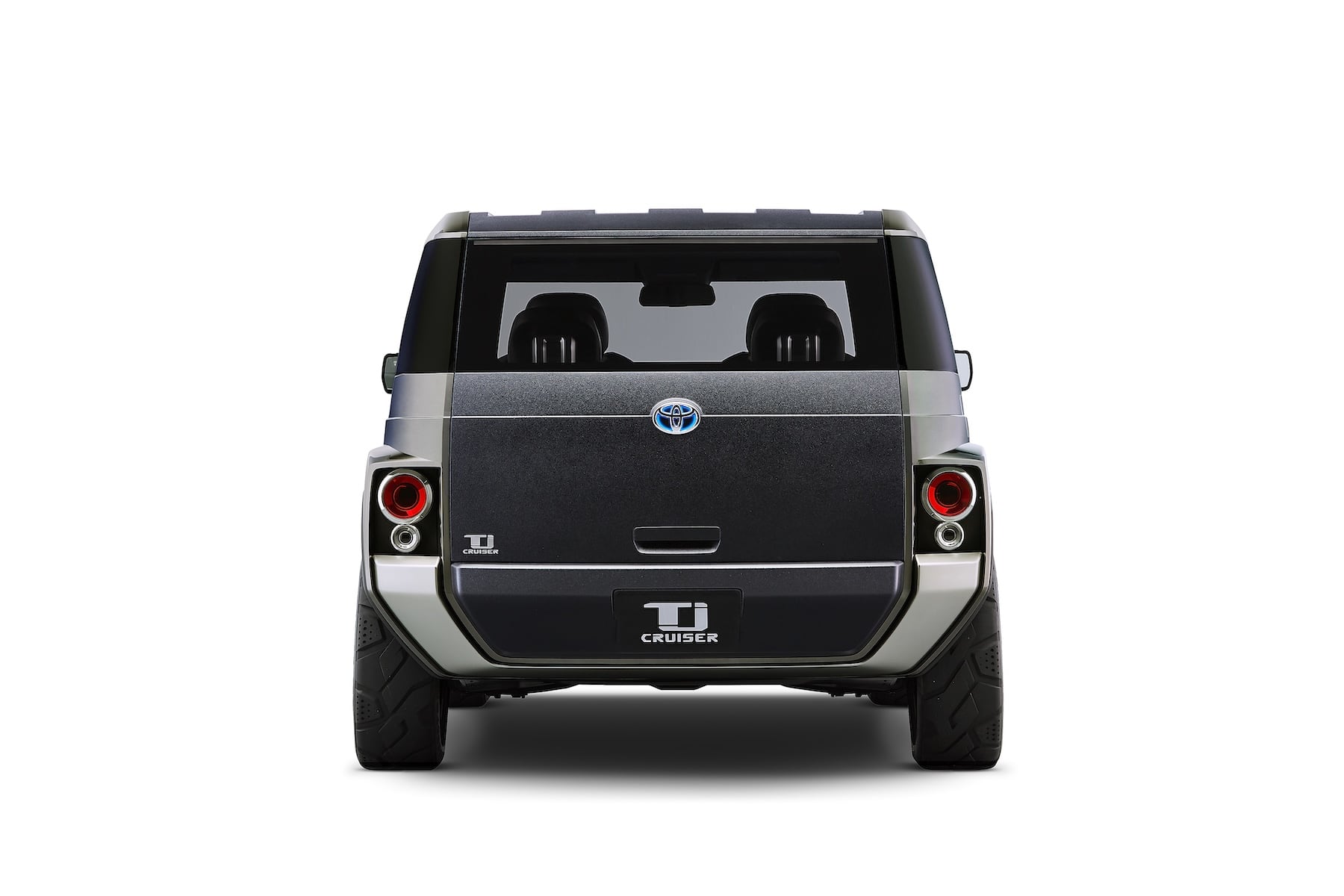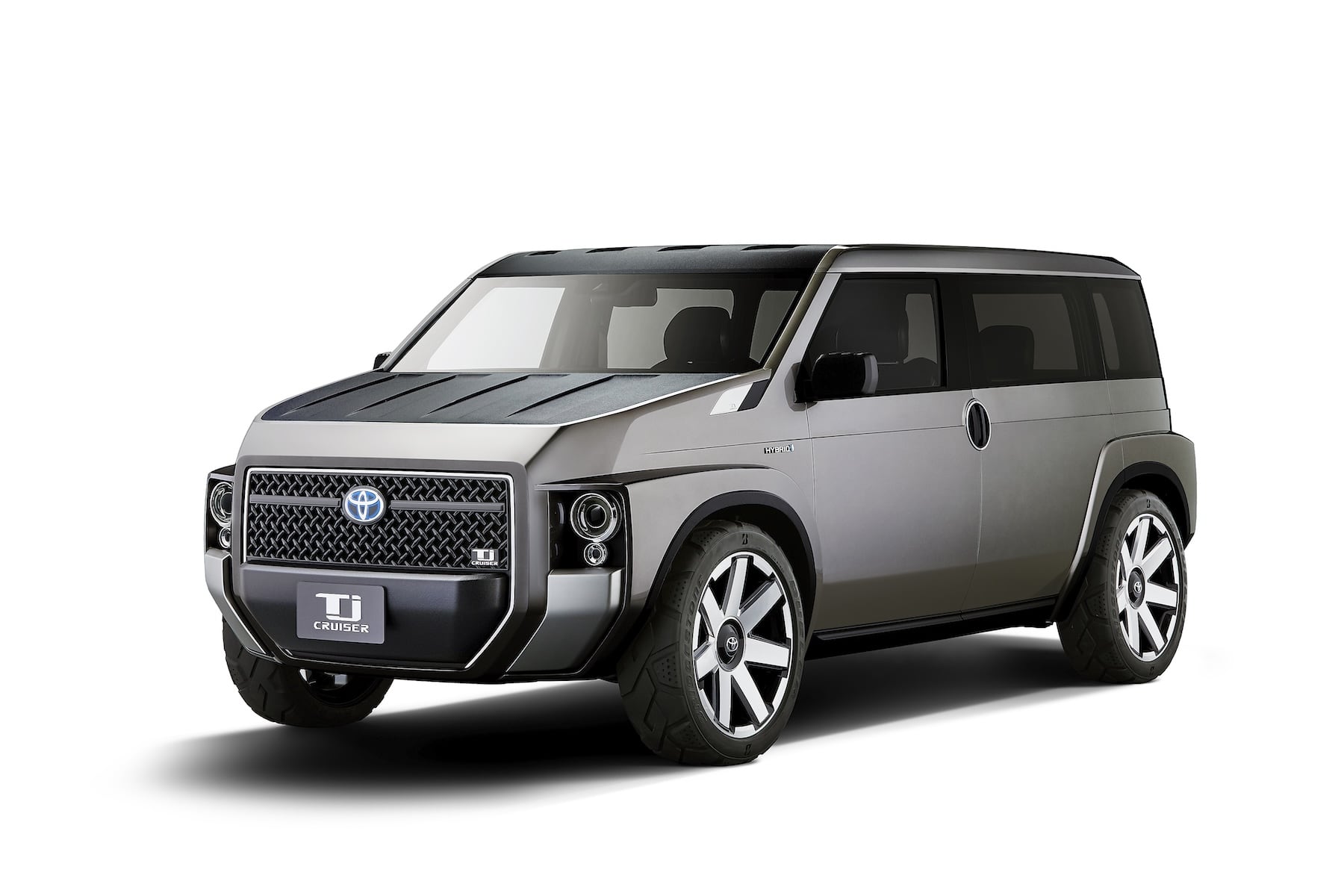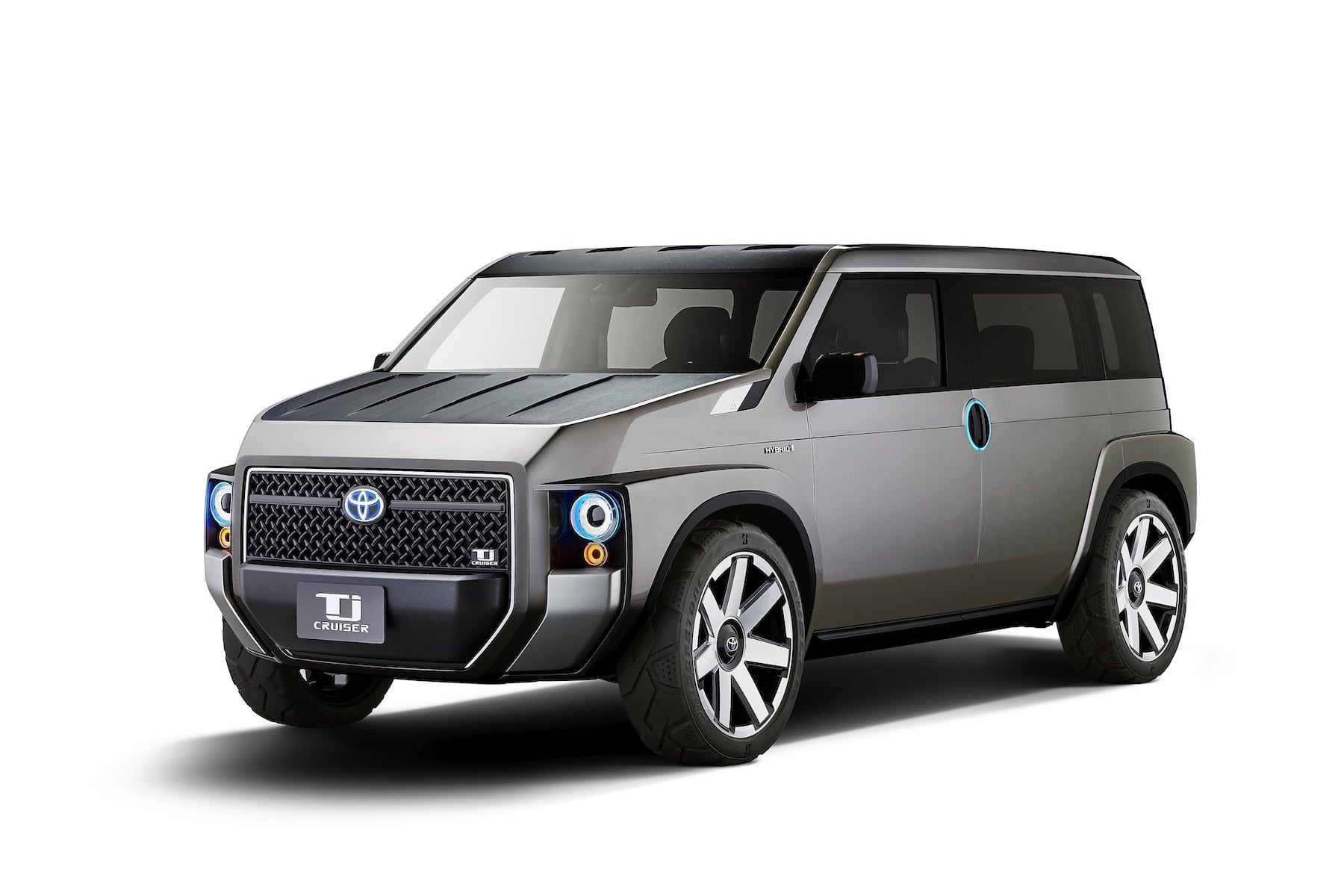
What if you could combine the rugged styling of an SUV with the practicality of a cargo van and the convenience of sliding doors? That was the idea behind the Toyota Tj CRUISER, an unconventional crossover concept unveiled at the 2017 Tokyo Motor Show.
Designed to blur the line between work and play, the Tj CRUISER paired a boxy, tool-inspired exterior with a highly versatile interior. Its large sliding doors, configurable seats and ability to accommodate items up to three metres long made it a compelling alternative to conventional SUVs and minivans.
Despite its distinctive design and practical packaging, the Tj CRUISER never made it into production. Nearly a decade after its debut, however, the concept remains an intriguing example of how an SUV could be designed around utility rather than outright size or luxury.
Here is a closer look at the Toyota Tj CRUISER, its sliding-door layout, interior versatility, proposed powertrain and the possible reasons why it never reached showrooms.
- What Is the Toyota Tj CRUISER?
- A Sliding-Door SUV Designed for Everyday Utility
- Rugged Styling Inspired by a Modern Toolbox
- Toyota Tj CRUISER: Dimensions and Proposed Specifications
- Why Did the Toyota Tj CRUISER Never Reach Production?
- Would the Tj CRUISER Make Sense in Today's Market?
- Conclusion: The Toyota Tj CRUISER Remains an Intriguing SUV Concept
What Is the Toyota Tj CRUISER?
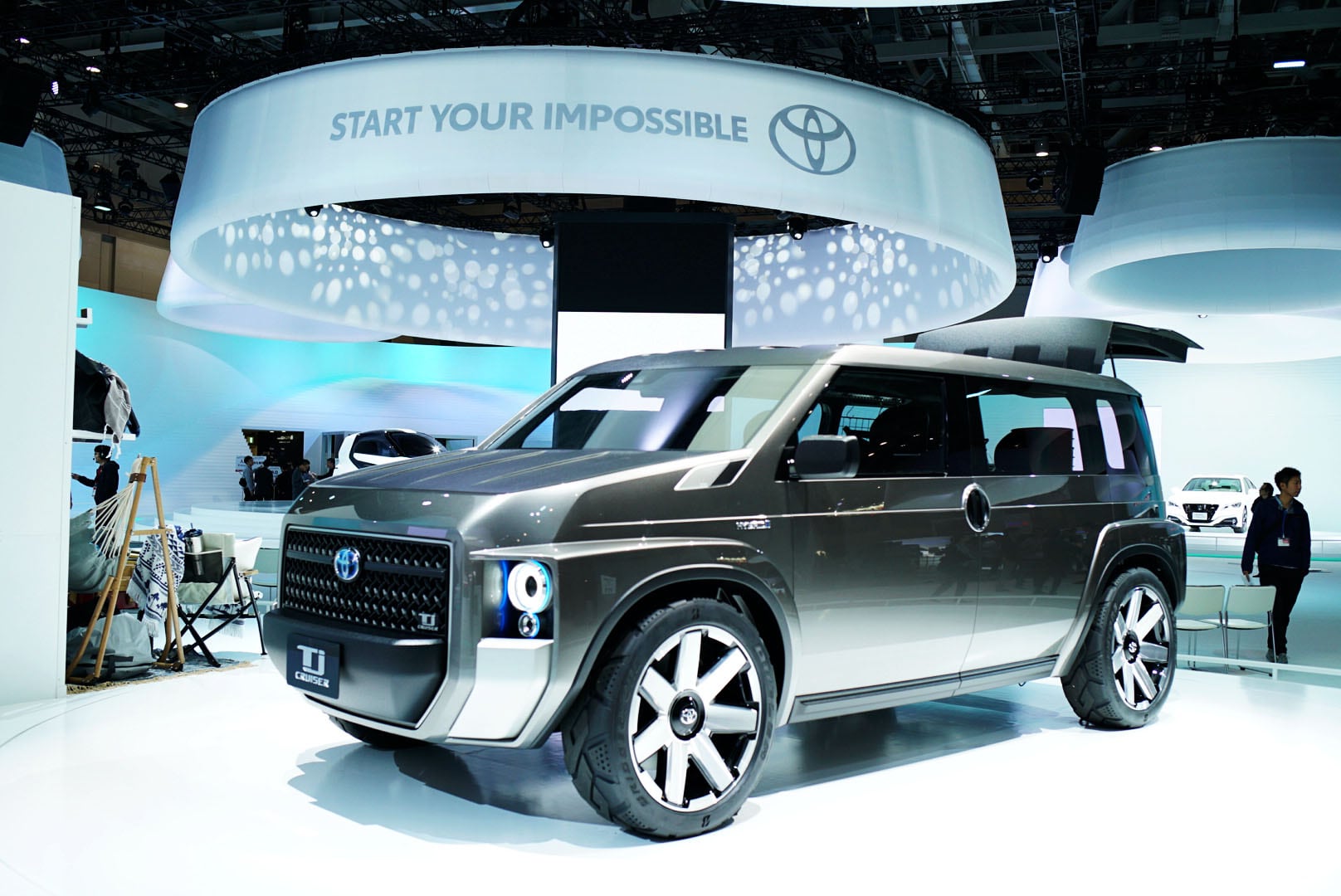
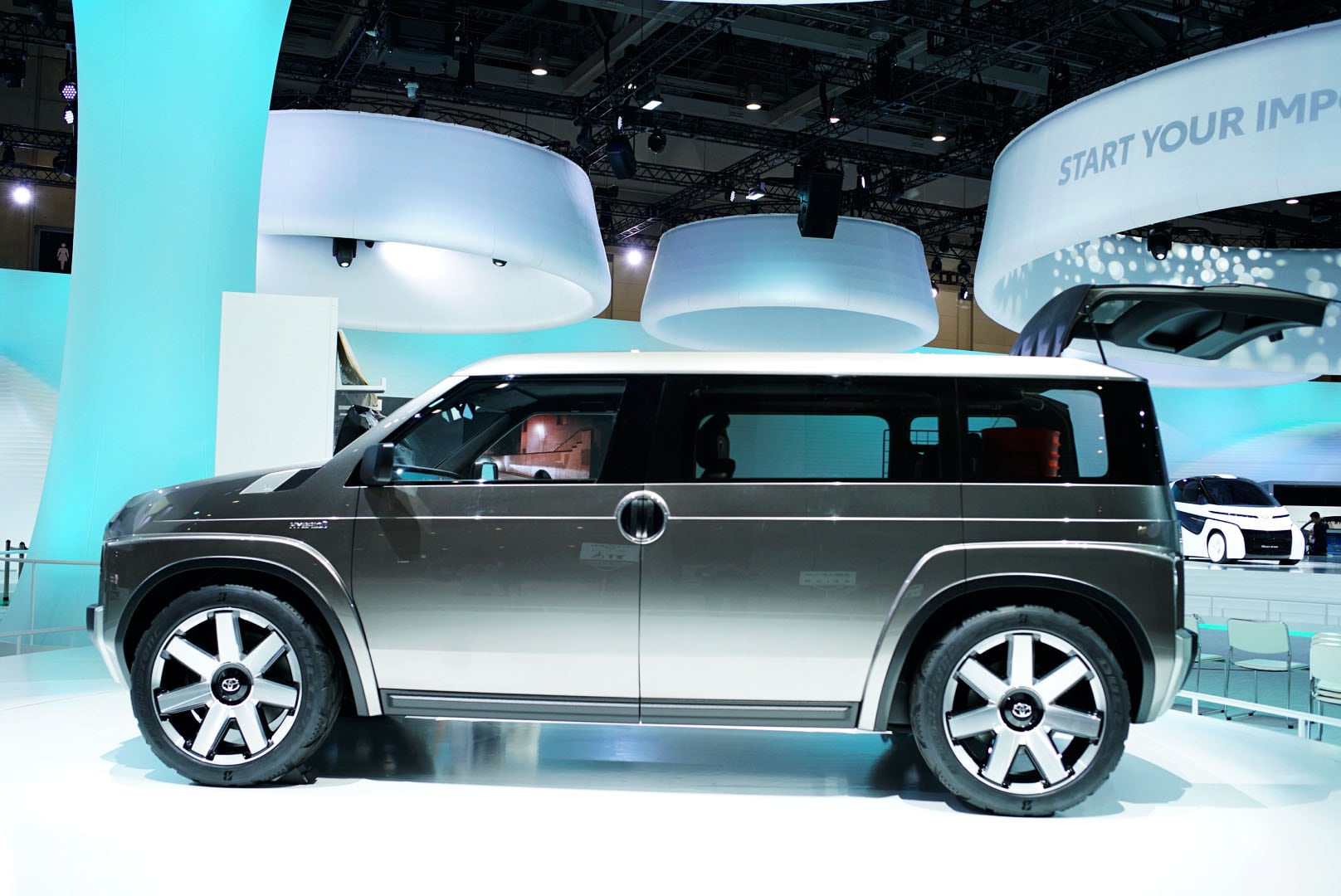
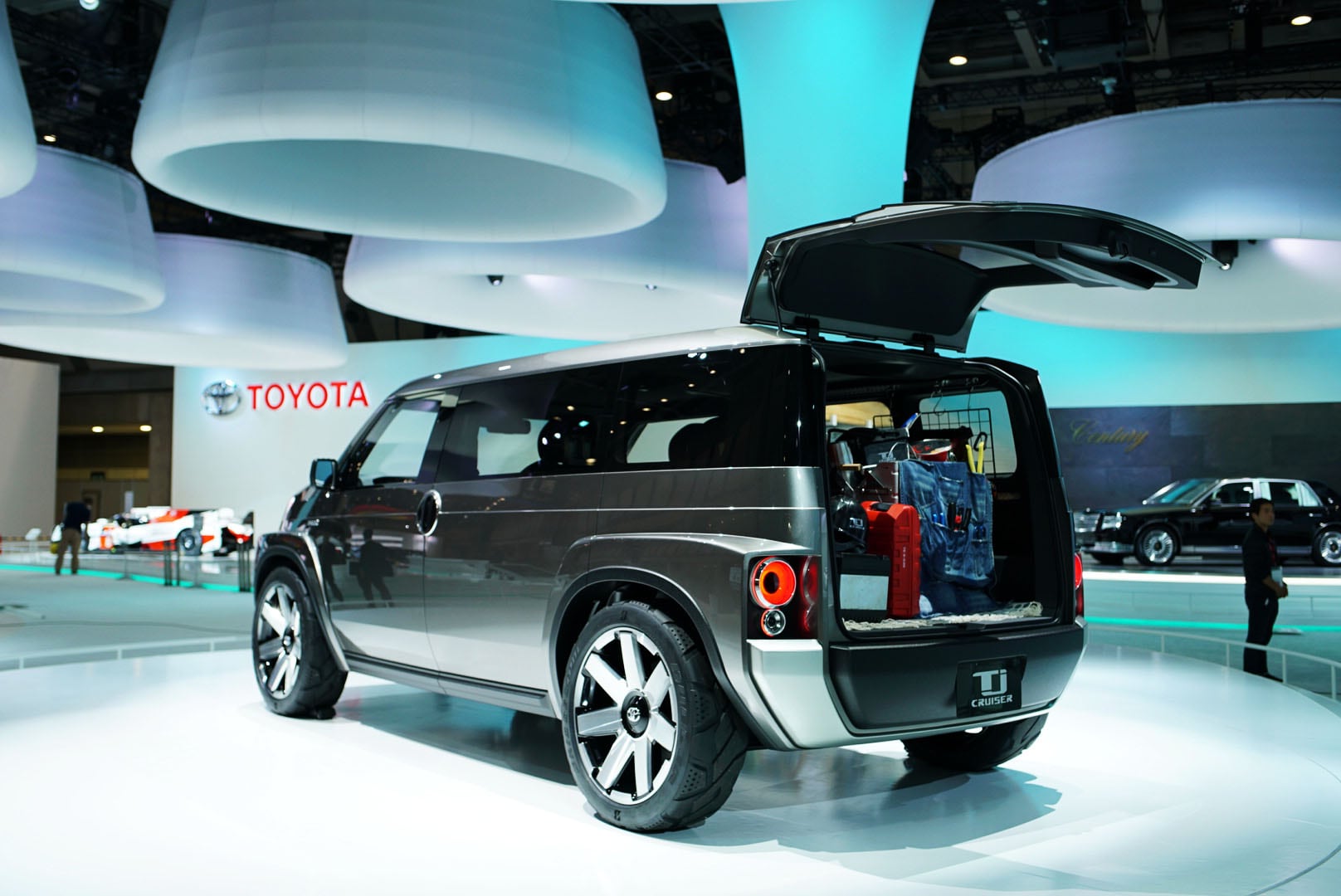
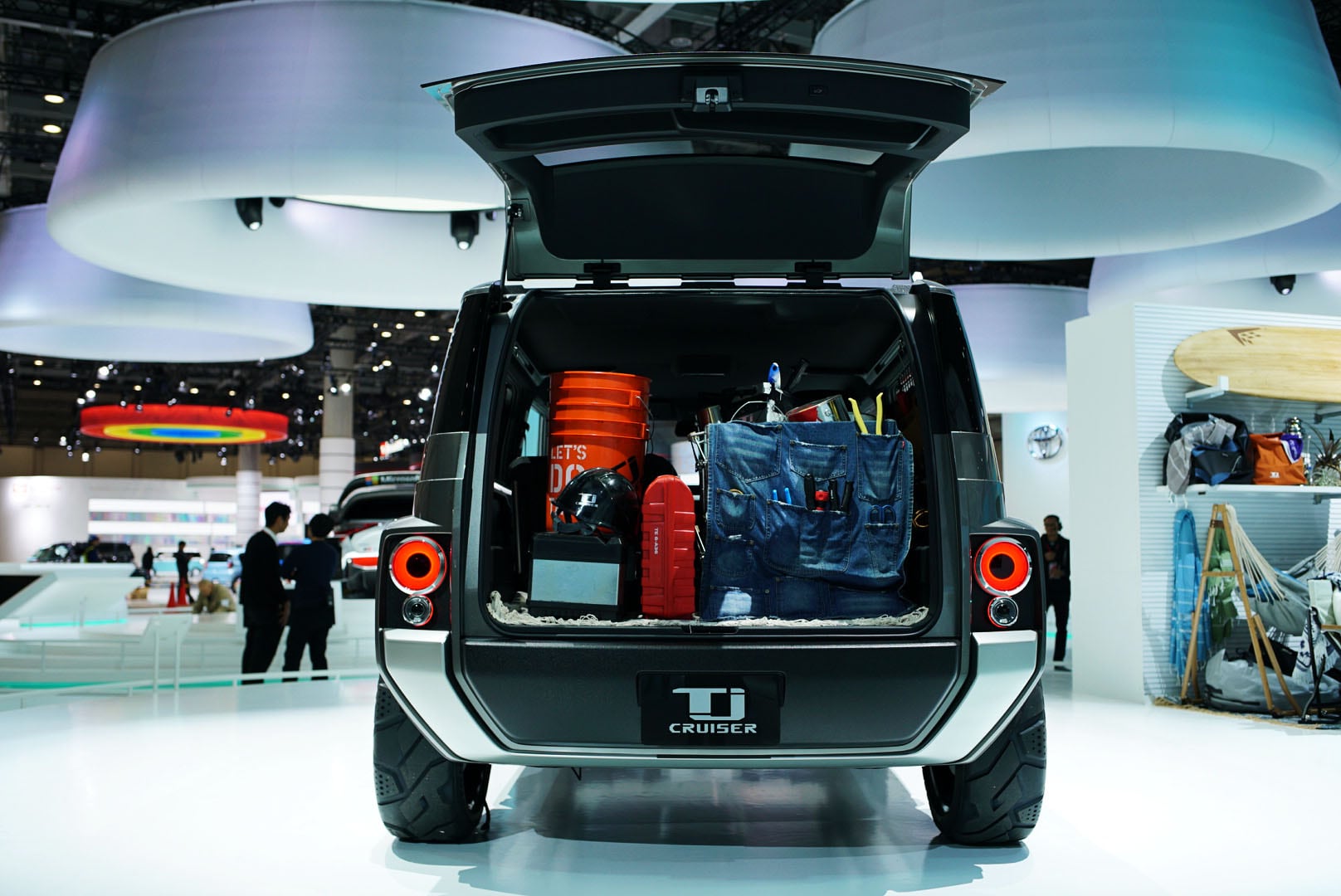
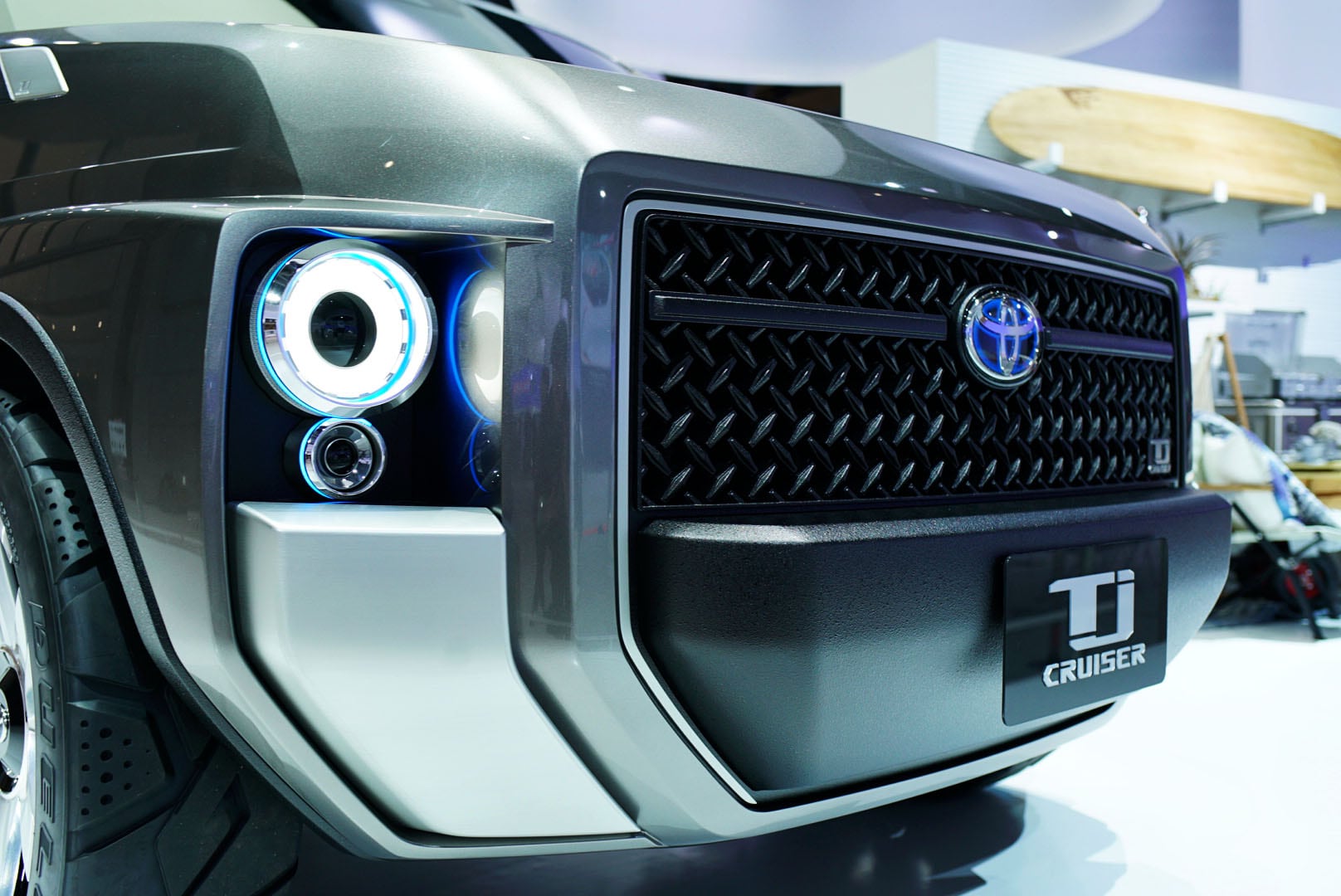
The Toyota Tj CRUISER is a crossover concept unveiled in October 2017 ahead of its world debut at the 45th Tokyo Motor Show. Developed around the idea of combining the cargo capacity of a van with the bold styling of an SUV, it was intended for people whose professional and personal lives revolve around an active lifestyle.
According to Toyota, the name reflects the concept’s core philosophy. The “T” stands for “Toolbox,” representing a vehicle designed to be used as a practical tool, while the “j” represents “joy” — the pleasure of travelling and exploring different places by car. The “CRUISER” name connects the concept to Toyota’s established SUV heritage.
Rather than simply creating another compact SUV with additional cargo space, Toyota envisioned a vehicle that could carry outdoor equipment, accommodate bulky objects and adapt to everyday needs without sacrificing its distinctive appearance.
The result was a crossover that looked equally at home outside a workshop, at a campsite or in an urban environment. Its combination of a van-like cabin, SUV proportions and large sliding doors gave it a character unlike that of most production SUVs.
Importantly, the Tj CRUISER remains a concept car rather than a production model. Toyota has not announced a production version.
A Sliding-Door SUV Designed for Everyday Utility
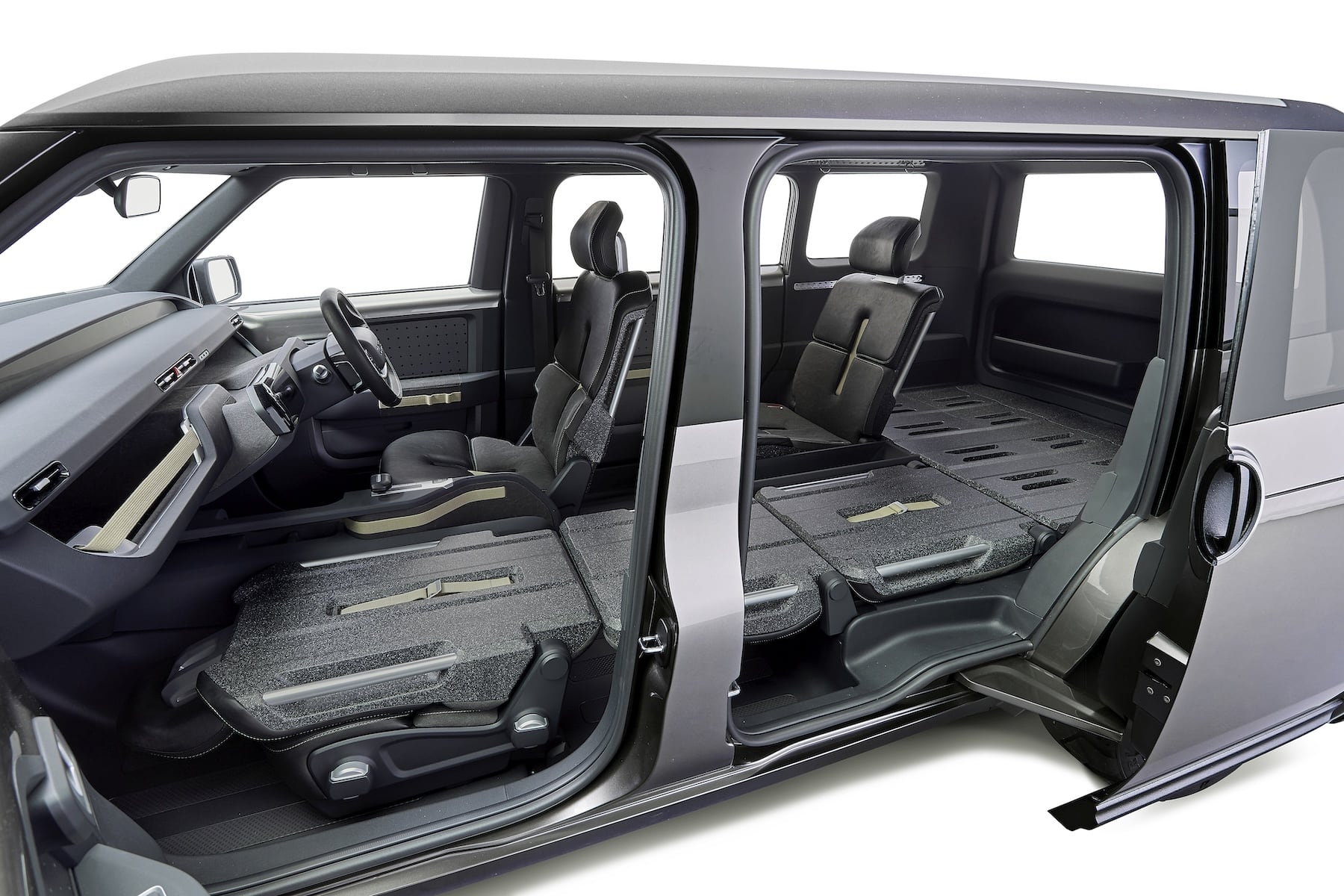
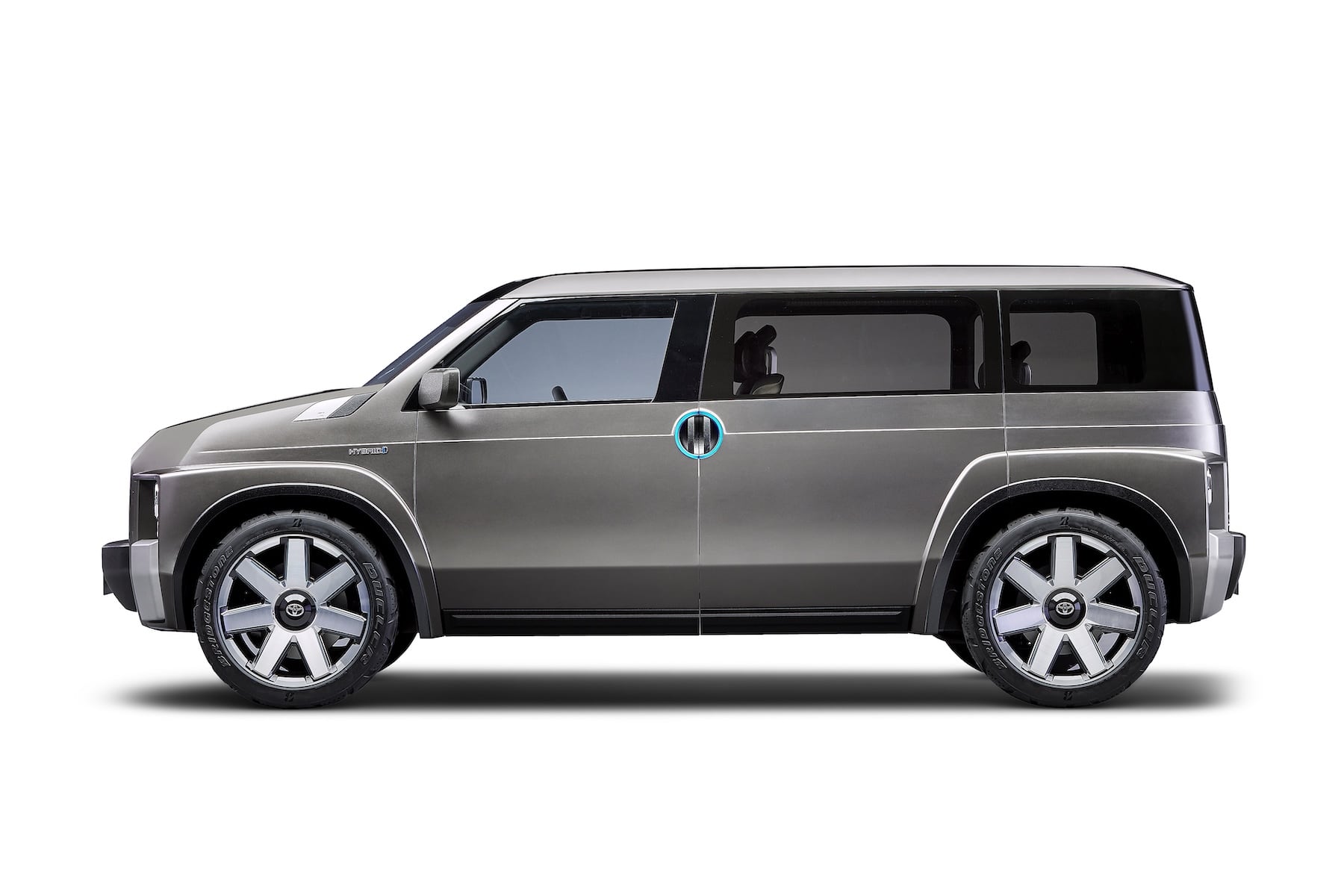
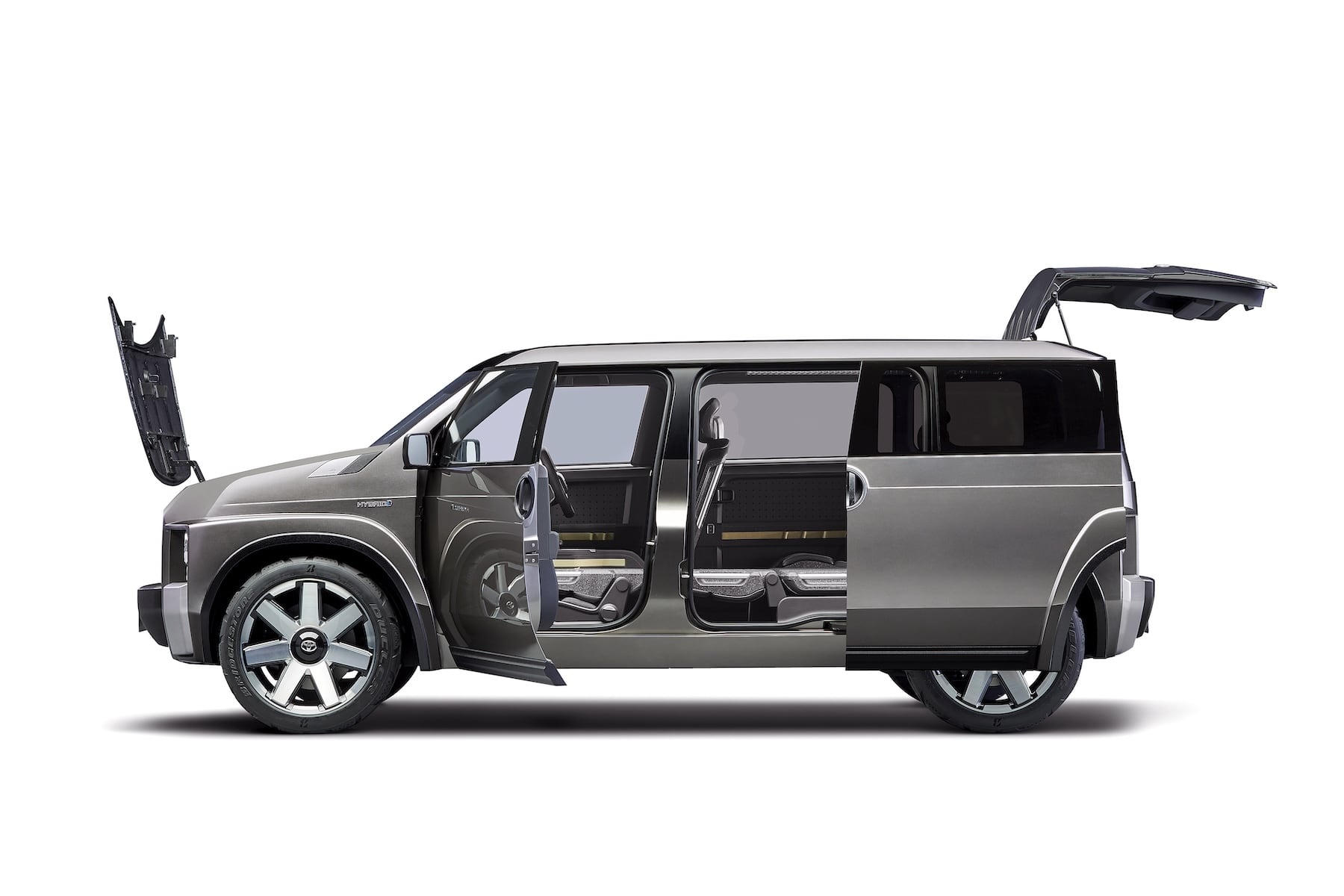
One of the Tj CRUISER’s most distinctive features is its large sliding doors — a layout more commonly associated with minivans and commercial vehicles than SUVs.
Sliding doors provide a practical advantage in confined parking spaces because they do not swing outward like conventional hinged doors. Their large openings also make it easier to load bulky equipment from the side of the vehicle.
For families, the arrangement would make entering and exiting the cabin more convenient in tight spaces. For outdoor enthusiasts and people carrying work equipment, the wide openings would make loading and unloading less cumbersome.
The concept therefore approached practicality from a different perspective. Instead of relying solely on a large rear cargo area, Toyota designed the entire cabin around flexibility and accessibility.
Room for Items Up to Three Metres Long
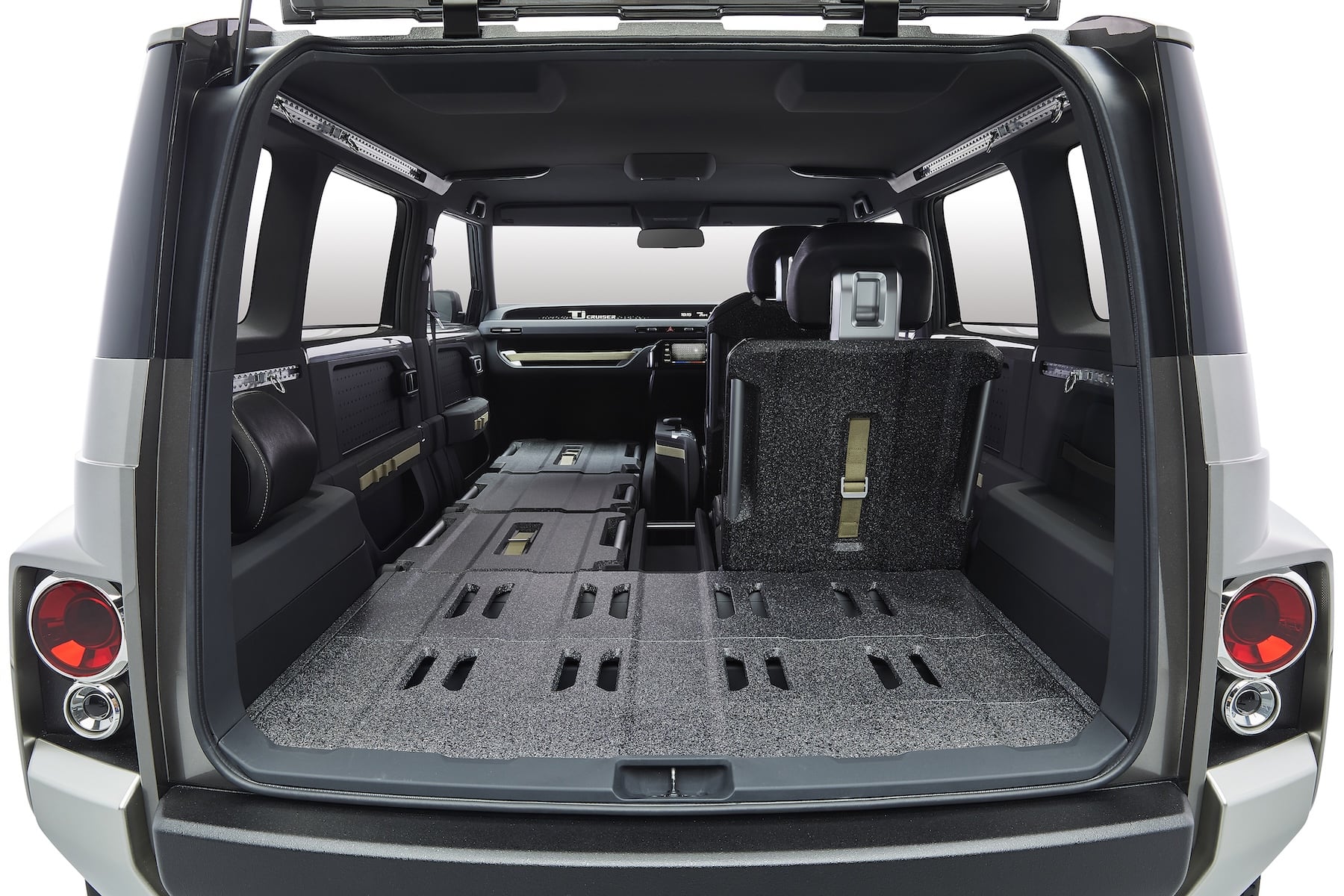
The interior was arguably the most compelling aspect of the Tj CRUISER.
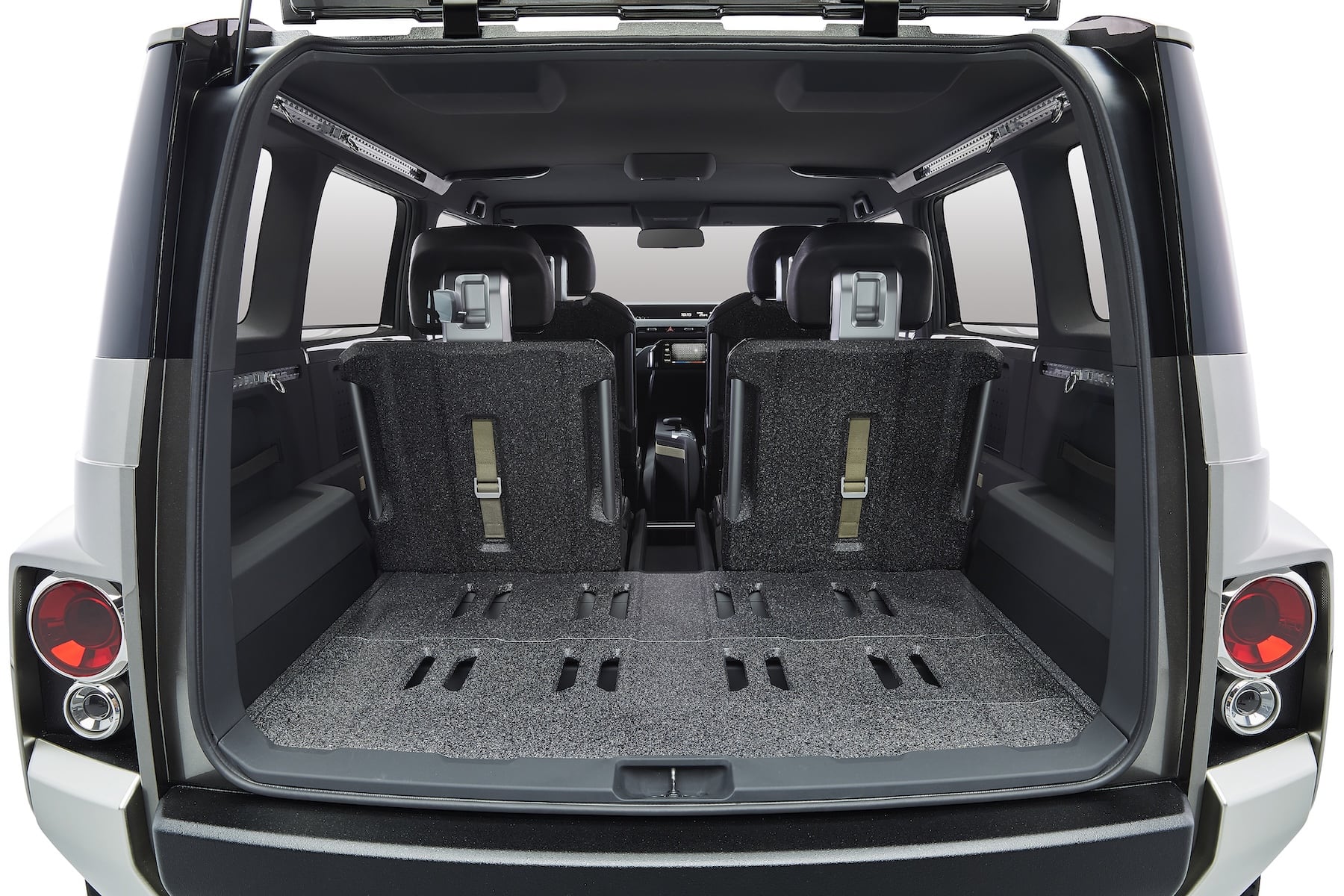
The front passenger seat and rear seats could be folded into a flat configuration, allowing the cabin to accommodate long objects measuring approximately three metres. Toyota specifically highlighted items such as long surfboards and bicycles.
This arrangement would be particularly useful for surfers, cyclists and campers who regularly transport equipment that is difficult to fit inside conventional passenger vehicles.
The interior also featured multiple tie-down points on the seatbacks and load floor, allowing objects of different shapes and sizes to be secured. A large rear opening made loading bulky items easier, while the cabin layout was designed to accommodate both small packages and longer pieces of equipment.
There was also a practical solution for everyday shopping. The rear seat behind the driver featured a cushion that could be flipped forward to create additional space for grocery bags and other items.
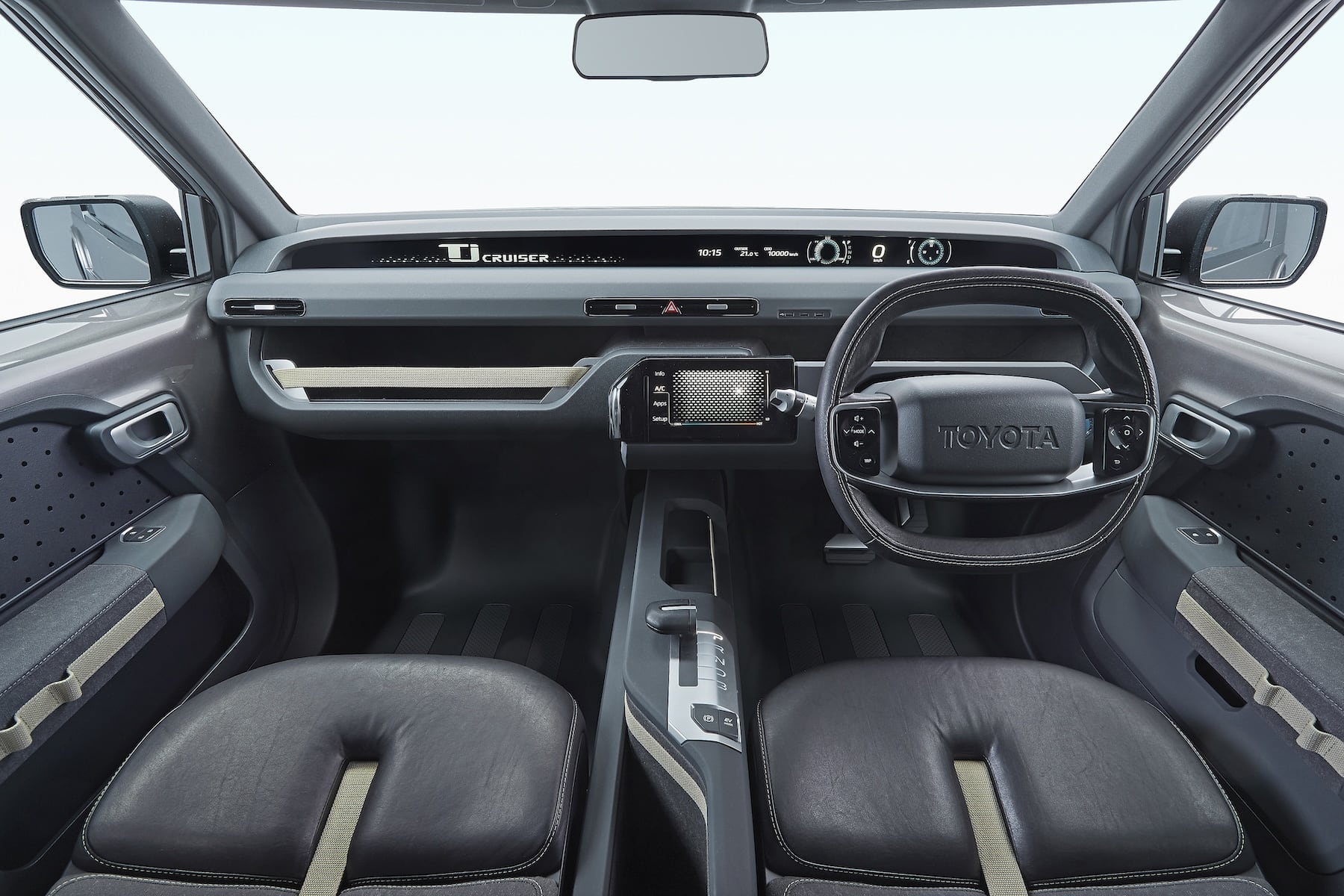
Rather than treating the cabin as a fixed arrangement of passenger seats and luggage space, Toyota designed the Tj CRUISER around the idea that the interior should adapt to whatever the owner needed to carry.
For a vehicle measuring just 4.3 metres in length, this emphasis on maximising usable space was particularly significant.
Rugged Styling Inspired by a Modern Toolbox
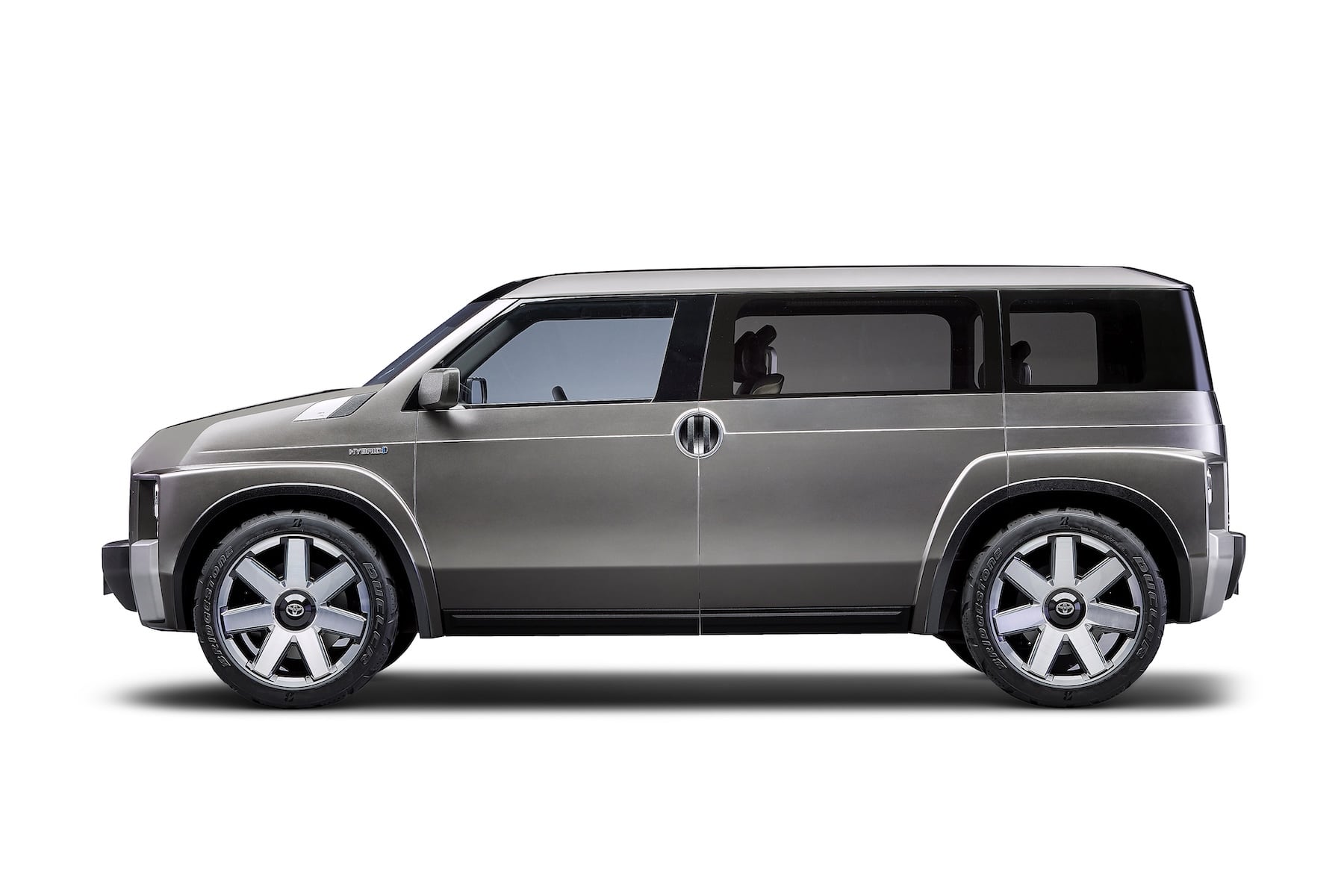
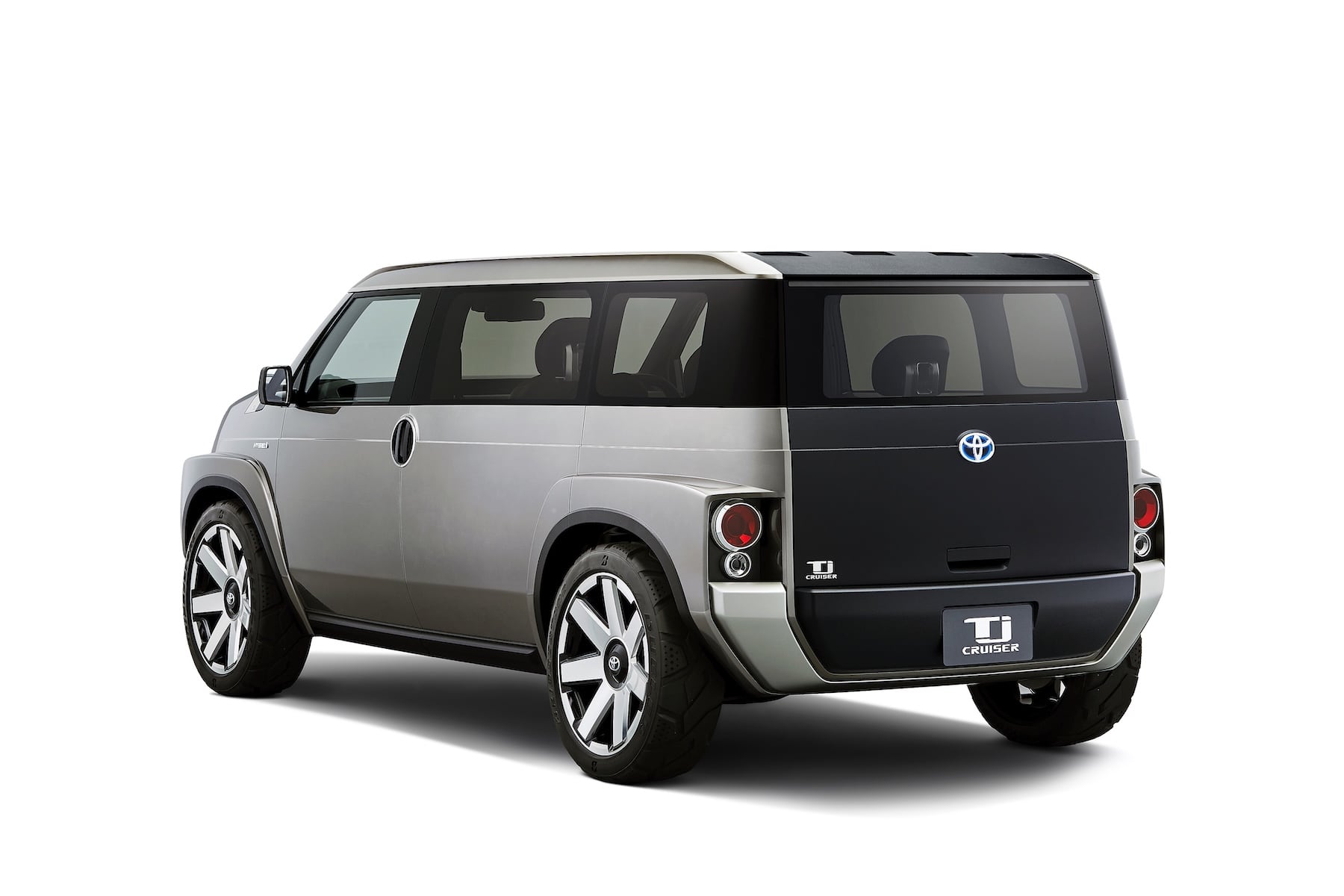
The Tj CRUISER’s exterior design followed the same functional philosophy as its interior.
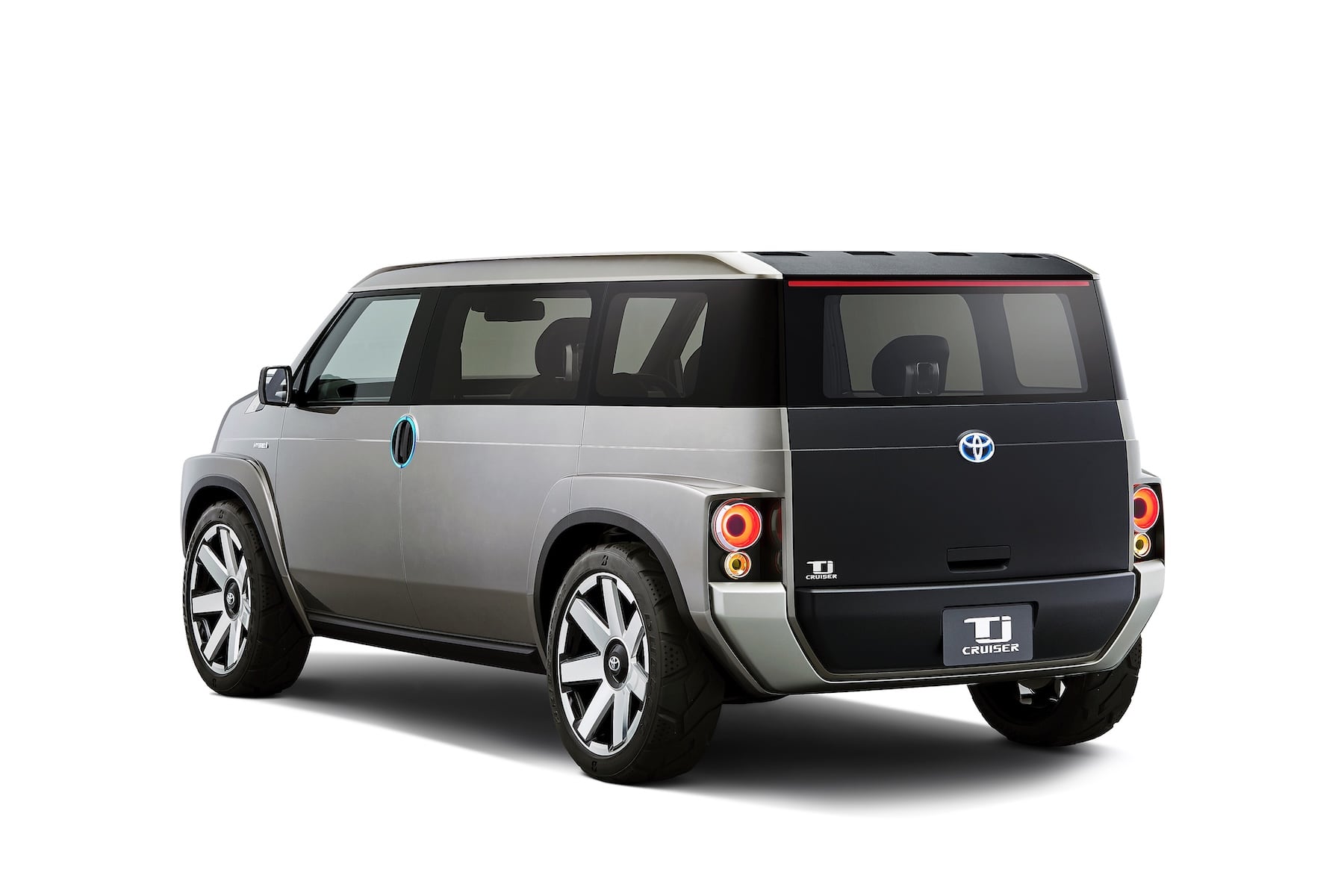
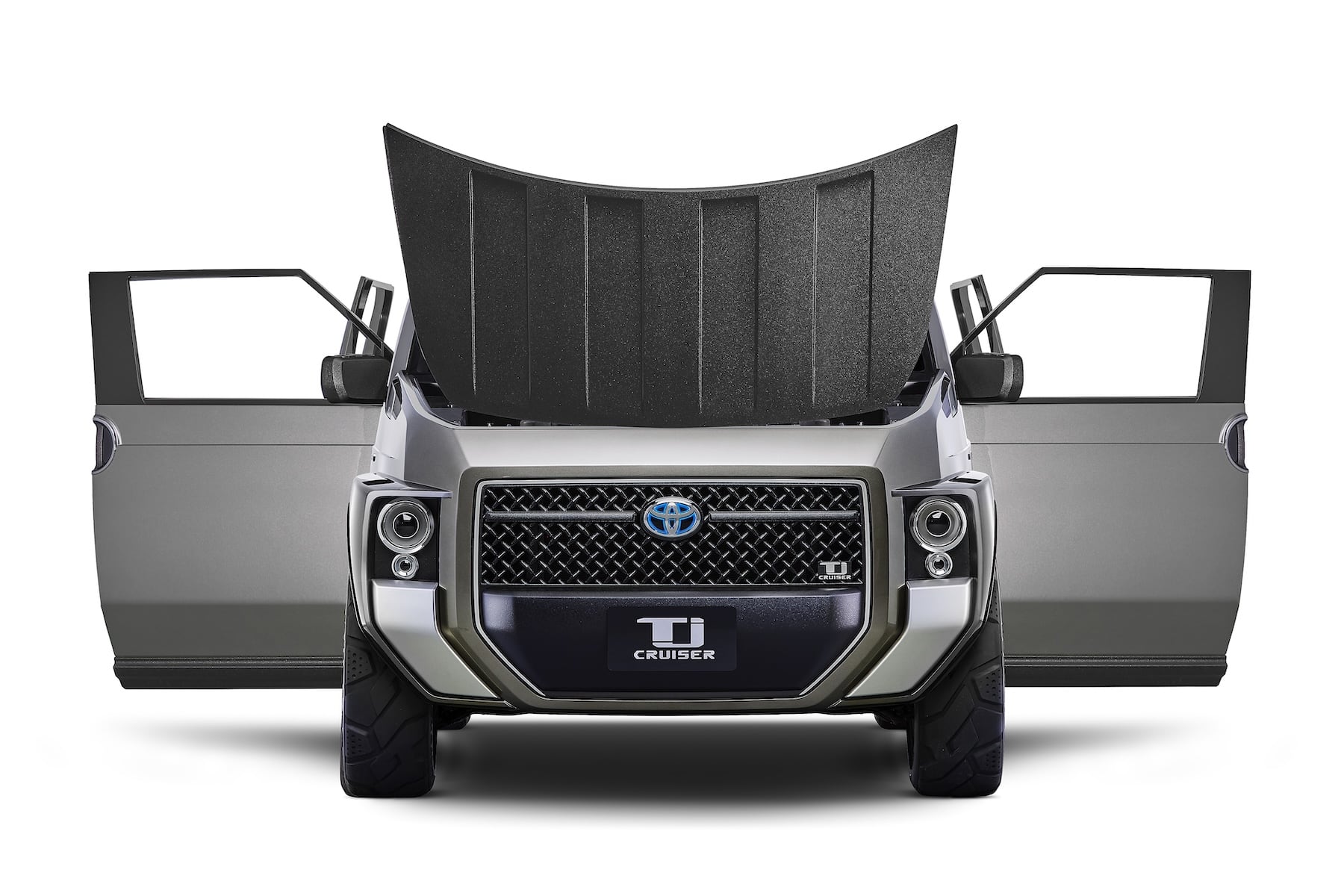
Its square-shaped cabin evoked the practicality of a cargo van, while large wheels, muscular fenders and a bold front end gave it the stance of an SUV. The overall silhouette was deliberately upright, with clean surfaces and angular detailing that emphasised its utilitarian character.
The design avoided the flowing rooflines and sculpted bodywork often associated with road-focused crossovers. Instead, its proportions suggested a vehicle built to carry equipment and withstand regular use.
Despite its rugged appearance, the Tj CRUISER did not look like a conventional commercial vehicle. Its carefully controlled surfaces and cohesive proportions gave it a modern, almost industrial aesthetic.
This balance between function and visual appeal was central to the concept. Toyota was not simply attempting to make a van look tougher; it was exploring a different way to express the practicality of a vehicle through its design.
Scratch- and Dirt-Resistant Body Surfaces
Toyota also proposed special protective coatings for the hood, roof and fenders. These surfaces were designed to resist scratches and dirt caused by objects coming into contact with the bodywork.
The idea complemented the vehicle’s toolbox-inspired philosophy. Owners could load equipment, place objects on the exterior surfaces or use the car for outdoor activities without treating every mark as a major concern.
Such an approach gives the Tj CRUISER a distinctive appeal even today. Many modern vehicles emphasise premium finishes and carefully maintained bodywork, whereas this concept celebrated the idea of a car that could be used hard and enjoyed without unnecessary fuss.
Its styling was not rugged merely for appearance’s sake. The visual language reinforced the vehicle’s intended role as a practical companion for work, hobbies and travel.
Toyota Tj CRUISER: Dimensions and Proposed Specifications
Despite its substantial-looking body and large wheels, the Tj CRUISER was relatively compact.
Toyota announced an overall length of 4,300 mm, a width of 1,775 mm and a height of 1,620 mm. Its 2,750 mm wheelbase provided the foundation for a cabin designed around flexible seating and cargo arrangements.
The concept was specified as a four-seater, reflecting its emphasis on versatile interior space rather than maximising passenger capacity.
| Specification | Toyota Tj CRUISER |
|---|---|
| Length | 4,300 mm |
| Width | 1,775 mm |
| Height | 1,620 mm |
| Wheelbase | 2,750 mm |
| Seating capacity | 4 |
| Proposed powertrain | 2.0-litre-class engine with hybrid system |
| Proposed drivetrains | Front-wheel drive / four-wheel drive |
| Platform | Next-generation TNGA platform envisioned |
Figures reflect Toyota’s 2017 concept specifications and proposed configuration, not a production vehicle. A final engine specification, fuel economy figure, performance data or retail price was never announced.
The proposed powertrain consisted of a 2.0-litre-class engine paired with a hybrid system. Toyota also indicated that both front-wheel drive and four-wheel drive were being considered.
The platform was described as a next-generation Toyota New Global Architecture (TNGA) platform. However, the announcement did not establish a definitive production specification, so it would be misleading to treat any particular engine code or platform configuration as confirmed.
The most important aspect of the package was its ability to combine a relatively modest exterior footprint with a highly configurable cabin. Rather than increasing the vehicle’s overall dimensions to create more cargo space, Toyota explored how seating arrangements and access points could make the available space more useful.
Why Did the Toyota Tj CRUISER Never Reach Production?
The Tj CRUISER generated interest as a distinctive proposal within Toyota’s crossover range, but it never became a production model.
Toyota has not publicly confirmed why the project did not proceed to mass production. Any explanation must therefore be treated as informed speculation rather than an established account of the company’s decision-making.
Nevertheless, its position between several established vehicle categories offers some clues about the challenges it might have faced.
A Difficult Position Between SUVs, Minivans and Commercial Vans
The Tj CRUISER attempted to combine the strengths of multiple vehicle types. Its SUV-inspired styling appealed to buyers looking for a rugged appearance, while the sliding doors and flexible interior reflected the practicality of a minivan or cargo van.
That combination was also a potential commercial challenge.
Customers prioritising passenger comfort and seating capacity could choose an established minivan such as the Toyota Noah or Voxy. Those seeking a conventional SUV had models such as the RAV4 to consider, while buyers focused on maximum cargo capacity could turn to a commercial van such as the HiAce.
The Tj CRUISER occupied a space between these categories. It was not designed to replace a full-size cargo van, nor was it intended to offer the same passenger capacity as a three-row minivan. Its unconventional styling and four-seat concept also set it apart from more conventional family SUVs.
For such a vehicle to succeed commercially, Toyota would have needed to establish a sufficiently large customer base that valued this particular combination of features.
That does not mean the concept was inherently flawed. Rather, it illustrates the difficulty of translating a highly distinctive show car into a mass-market product with a clear target audience.
Balancing Distinctive Features With Production Costs
Another possible consideration would have been the challenge of bringing the concept into production.
A show car can demonstrate an appealing combination of design and functionality, but a production vehicle must also satisfy requirements relating to safety, durability, manufacturing complexity, quality and cost.
The Tj CRUISER’s sliding-door arrangement, unconventional seating layout, protective body surfaces and SUV-inspired underpinnings would all have needed to be developed into a coherent production package.
Toyota would also have needed to determine an appropriate price and equipment level without making the vehicle difficult to position alongside its existing models.
These are common challenges in the development of new vehicle categories. However, there is no confirmed evidence that production costs, engineering complexity or a particular financial calculation was the reason the Tj CRUISER was shelved.
Without an official explanation, the most reasonable conclusion is that the concept’s production prospects remain unknown.
Would the Tj CRUISER Make Sense in Today’s Market?
Looking at the automotive market from today’s perspective, the Tj CRUISER’s underlying idea still feels relevant.
Its emphasis on flexible cargo space, easy access and a rugged exterior aligns with the needs of people who want a vehicle that can transition between everyday transport and outdoor activities.
A vehicle capable of carrying surfboards, bicycles and camping equipment inside the cabin would have practical appeal for enthusiasts who prefer not to rely on roof-mounted storage. Sliding doors would also provide everyday convenience, particularly in urban environments and crowded car parks.
Its design philosophy is equally compelling. Rather than making a vehicle larger or more luxurious to justify its appeal, Toyota explored the idea of creating value through adaptability and ease of use.
A production version priced appropriately and equipped with an efficient powertrain could potentially have occupied a distinctive position between compact SUVs and lifestyle-oriented vans.
However, that possibility remains hypothetical. Actual market demand would depend on factors such as pricing, performance, fuel economy, interior quality and how effectively the vehicle could distinguish itself from competing models.
The Land Cruiser FJ Is a Different Interpretation of Practicality
Toyota’s more recent approach to lifestyle-oriented SUVs provides an interesting point of comparison.
The Land Cruiser FJ made its world debut in October 2025 and went on sale in Japan on 14 May 2026. Developed around the idea of “Freedom & Joy,” it brings a more compact format to Toyota’s established Land Cruiser family.
The Land Cruiser FJ uses a ladder-frame platform and part-time four-wheel drive, with a strong emphasis on durability and off-road capability. Its boxy body and customisation options also reinforce its connection to outdoor activities.
Despite some similarities in their squared-off styling and lifestyle-oriented positioning, the Land Cruiser FJ and Tj CRUISER pursue different objectives. The FJ is a traditional off-road SUV, whereas the Tj CRUISER was conceived around sliding-door access and a highly adaptable cargo area.
The comparison nevertheless highlights the different ways an SUV can be made attractive to an active audience. One approach prioritises off-road capability; the other places greater emphasis on the practical use of interior space.
The Tj CRUISER represented an alternative interpretation of the SUV — one in which versatility and utility were as important as the vehicle’s exterior appearance.
Conclusion: The Toyota Tj CRUISER Remains an Intriguing SUV Concept
The Toyota Tj CRUISER was an ambitious attempt to combine the cargo-carrying practicality of a van with the rugged design of an SUV.
Its large sliding doors, flexible seating arrangements and ability to accommodate objects up to approximately three metres long made it a particularly interesting concept. Protective exterior coatings and a toolbox-inspired design further reinforced the idea of a vehicle intended to be used rather than simply admired.
Although it never reached production, the Tj CRUISER raised an interesting question: does a practical lifestyle vehicle need to follow the conventional SUV or minivan formula?
Its answer was a compact, boxy crossover that prioritised versatility, accessibility and a distinctive design identity.
Whether the concept would have succeeded as a production vehicle is impossible to know. Yet its combination of sliding-door convenience, adaptable cargo space and rugged styling still offers an appealing alternative to the increasingly familiar crossover formula.
For enthusiasts interested in unconventional Toyota concepts, the Tj CRUISER remains a reminder that some of the most interesting ideas emerge when designers move beyond established vehicle categories.